A 3-minute lesson from the New York course. Read the rules and examples, follow the handbook page references, and check your understanding before you move on.
Traffic lights are usually red, yellow and green, top to bottom or left to right. Some are single lights, some flash, and some are arrows. Each version means something different, and New York has its own twists on turning at a red light.
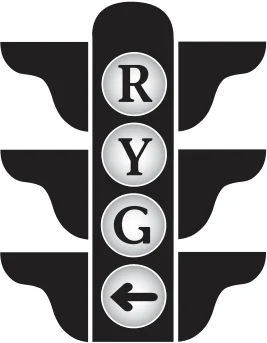
Traffic signal: red, yellow, green and green arrow
Know the rule
If traffic lights are out of service or not working correctly, stop as you would for a STOP sign, then continue according to the right-of-way rules, unless a traffic officer directs you.
Right on red: after a full stop, yielding to oncoming traffic and pedestrians. Left on red: only from a one-way road into another one-way road, after a full stop and yielding.
In Albany you stop at a red light, want to turn right, and see no sign. After a full stop you may turn once pedestrians and cross traffic are clear. At the same kind of intersection in Manhattan, you would wait for green unless a sign allowed the turn.
Check your understanding
Read the question, decide on an answer, then open it to check the explanation. These are Roadwise study questions based on the source handbook.
What must you do at a steady red light before turning right (where allowed)?
Slow down and proceed if no cars are visible
Stop only if a pedestrian is crossing
Treat it exactly like a green light
Stop, then yield to traffic and pedestrians
Answer: Stop, then yield to traffic and pedestrians
You can turn right at a steady red light only after a full stop and yielding to oncoming traffic and pedestrians.
Outside New York City, you may turn left on a steady red light from a one-way road into another one-way road after a full stop and yielding, unless a sign or marking prohibits it.
True
False
Answer: True
That left turn on red is allowed after a full stop and yielding, unless a sign, signal or marking prohibits it; in NYC turns on red need a sign permitting them.