New Hampshire driving lesson · Turning, Intersections, and Parking
Parking rules and no-parking zones
A 4-minute lesson from the New Hampshire course. Read the rules and examples, follow the handbook page references, and check your understanding before you move on.
A parked car must never be a hazard. Know how to leave a vehicle on a rural highway, how to secure it, and the long list of places where parking is illegal even without a sign.
Know the rule
On a rural highway, move off the paved or main travelled part. If you can't, pull off as far as you can, with a clear view for 200 feet in each direction and room for others to pass.
Police often tow abandoned vehicles even when well off the road. If you must leave it for several hours, leave a note: the problem, when it'll be moved, and how to reach you.
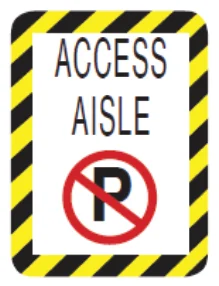
The crosshatched area (yellow or white diagonal stripes) beside an accessible space, needed to open doors and use a lift or ramp; can be up to 8 feet wide.
Parking in an access aisle brings a fine, increased for each later offense. People with walking disabilities or their drivers may submit a photo of the violation to local police with a sworn statement.
You stop across the street from a fire station's driveway, 60 feet away. That's illegal: on the opposite side of the street you can't park within 75 feet of the entrance.
Check your understanding
Read the question, decide on an answer, then open it to check the explanation. These are Roadwise study questions based on the source handbook.
If a vehicle must be parked along a rural highway and can't fully clear the road, how much clear view must remain in each direction?
50 feet
300 feet
100 feet
200 feet
Answer: 200 feet
Parked vehicles that can't fully clear the road must leave a 200-foot clear view each direction.