Roadwise States Nebraska Driving lessons Signals, lane changes and turns Nebraska driving lesson · Passing, Turning & Parking
Signals, lane changes and turns A 3-minute lesson from the Nebraska course. Read the rules and examples, follow the handbook page references, and check your understanding before you move on.
Read time 3 minutes
Course unit Passing, Turning & Parking
Checkpoint questions 6
Source pages 62, 63, 64 Other drivers can't read your mind. Signal early, check your blind spots, and turn from and into the correct lane.
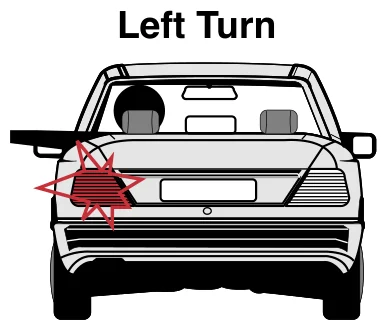
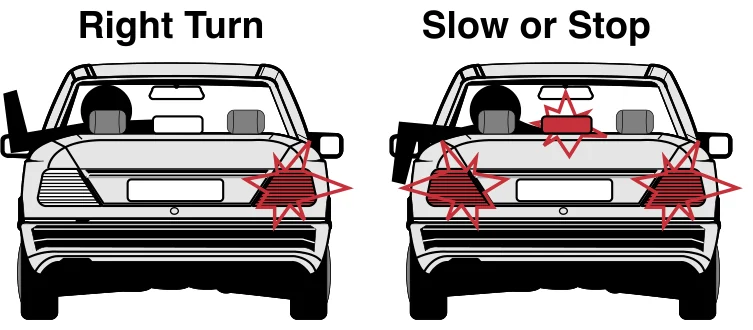
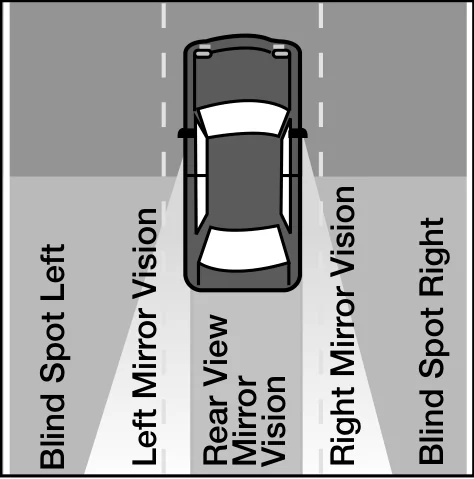
Always signal when: Changing lanes Pulling in or out of a parking space Pulling into traffic from a parking area or alley Turning or moving right or left, at least 100 feet before Handbook p. 62 ↗ Hand signal: left turn (arm straight out) Hand signals: right turn (arm up); slow or stop (arm down) Changing lanes: Signal Check your rearview and side mirrors Look over your left or right shoulder to check blind spots Watch for other drivers moving into the same lane Change lanes, but never in an intersection Handbook p. 63 ↗ Mirror views and blind spots Turning: Plan ahead and get in the proper lane well before the turn Signal the direction of the turn Slow and check for people and vehicles in your turning path and behind Turn into the proper lane, then adjust speed to the flow of traffic Handbook p. 63 ↗ Know the rule
Make a right turn as close as practical to the right side of the road or street.
Handbook p. 63 ↗ Know the rule
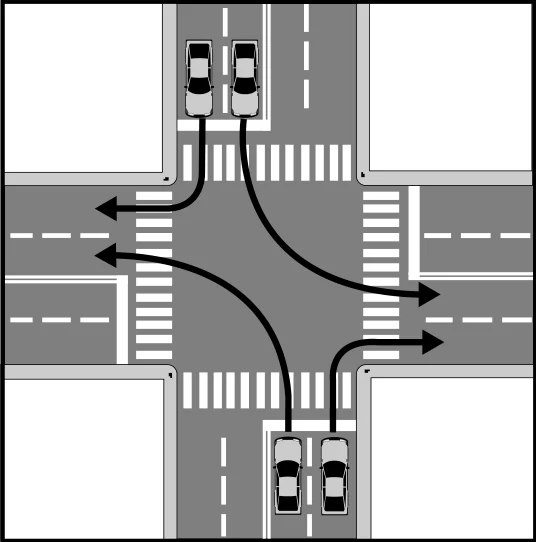
If no center lane is marked, make a left turn from the left lane lawfully available, into the left lane lawfully available.
Handbook p. 63 ↗ Turning from and into the proper lanes Know the rule
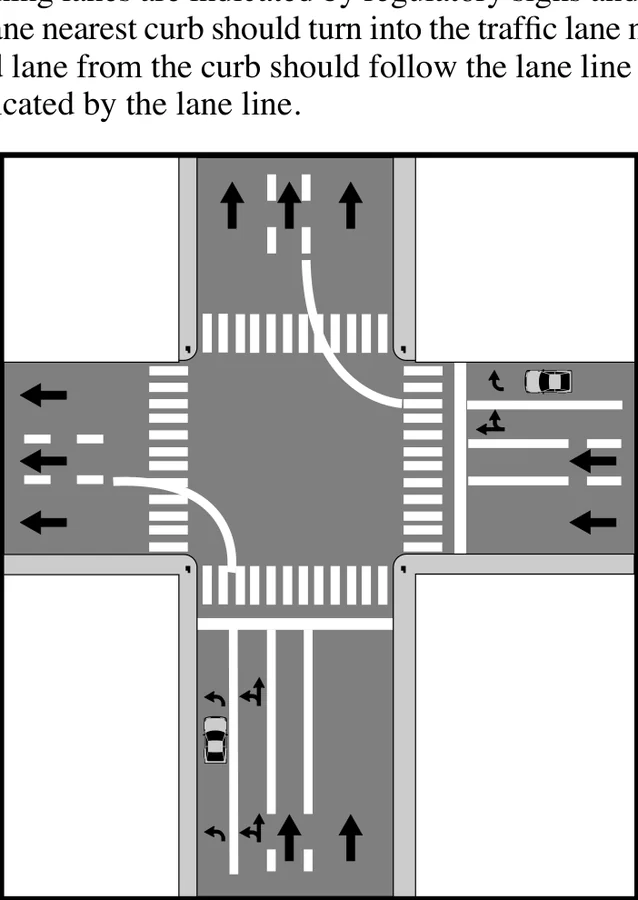
Double turning lanes are shown by regulatory signs and lane markings. The lane nearest the curb turns into the lane nearest the curb; the second lane follows the lane line into the next lane.
Handbook p. 64 ↗ Double turning lanes Put it into practice
You plan to turn right at a corner 300 feet ahead. Signal at least 100 feet before the turn, check your right mirror and blind spot, slow down, and turn close to the right curb into the right lane.
Check your understanding Read the question, decide on an answer, then open it to check the explanation. These are Roadwise study questions based on the source handbook.
You must signal at least how far before turning or moving right or left? 50 feet 300 feet 100 feet 500 feet Answer: 100 feet
Signal at least 100 feet before turning or changing direction.
Handbook p. 62 ↗ Before changing lanes, after checking mirrors you should also: Check over your shoulder for your blind spot Sound a short tap on the horn Slow to well below the speed limit Turn on your hazard lights Answer: Check over your shoulder for your blind spot
Always check your blind spot over your shoulder before changing lanes.
Handbook p. 63 ↗ Changing lanes inside an intersection is: Allowed if no other cars are present Not allowed Allowed only at four-way stops Allowed only in the rightmost lane Answer: Not allowed
Lane changes within an intersection are prohibited.
Handbook p. 63 ↗ When a center lane is not marked, a left turn should be made: From any lane into the nearest available lane From the right lane, crossing all others From the left lane available into the left lane available Only from a marked turn lane Answer: From the left lane available into the left lane available
Unmarked left turns go from the left available lane into the left available lane.
Handbook p. 63 ↗ A right turn should be made: From the center lane whenever possible Wide, swinging into the oncoming lane first From any lane, as long as you signal As close as practical to the right side of the road Answer: As close as practical to the right side of the road
Right turns should be made close to the right side of the road.
Handbook p. 63 ↗ With double turning lanes, the lane nearest the curb should turn into: The lane nearest the curb Whichever lane is open The far lane, crossing the inside lane The center lane only Answer: The lane nearest the curb
Double turn lanes keep drivers in their matching lane after the turn.
Handbook p. 64 ↗ Previous lesson Passing Next lesson Parking and emergency stops More in Passing, Turning & Parking About the source Roadwise’s Nebraska course uses the driver handbook edition supplied with this study pack. This lesson cites source pages 62, 63, 64. The linked PDF is a third-party mirror of the handbook, rather than a government-hosted page.
Open the handbook source PDF · View the source edition
For current application requirements, fees, appointments, and the format that applies to your age or license type, check Nebraska’s DMV. Roadwise provides study material and does not issue permits or licenses.