A 3-minute lesson from the Mississippi course. Read the rules and examples, follow the handbook page references, and check your understanding before you move on.
Regulatory signs state the law: what you must do and what you must not do. Most are white rectangles with black letters; the most urgent ones (STOP, YIELD, DO NOT ENTER, WRONG WAY) use red.
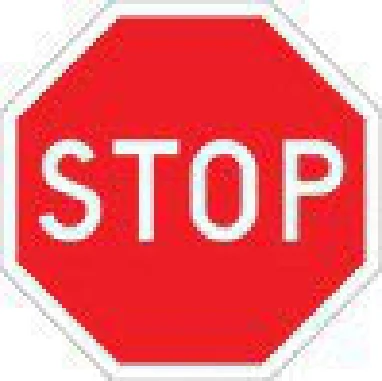
STOP
Know the rule
The STOP sign is the only sign with eight sides. Come to a COMPLETE STOP before entering the intersection, then yield to any traffic close enough to be a hazard.
WRONG WAY means you're traveling opposite to the other cars in your lane and are in danger of a head-on collision. Leave the roadway and turn around as soon as possible.
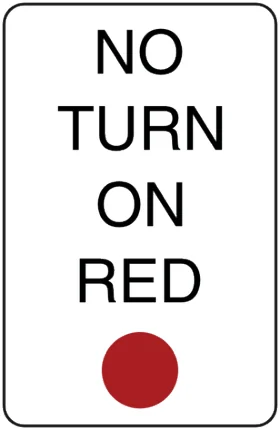
Usually you may turn right on red after you stop completely and make sure the way is clear. A NO TURN ON RED sign means right turns are never allowed on red: wait for the green light.
The handicapped parking sign reserves spaces for vehicles with an official indicator, such as a handicap license tag or temporary hangtag. For a handicap tag, contact your County Tax Collector's Office.
You're stopped at a red light, planning to turn right, and see NO TURN ON RED. Even if no traffic is coming, you must wait for the green light before turning.
Check your understanding
Read the question, decide on an answer, then open it to check the explanation. These are Roadwise study questions based on the source handbook.
After coming to a complete stop at a STOP sign, what must you do before proceeding?
Yield to any traffic close enough to be a hazard
Proceed, since stopping gives you the right-of-way
Proceed immediately if no vehicle is directly ahead
Wait until the cross street is completely empty
Answer: Yield to any traffic close enough to be a hazard
After stopping, you must yield to any traffic close enough to be a hazard before entering the intersection.