A 4-minute lesson from the Louisiana course. Read the rules and examples, follow the handbook page references, and check your understanding before you move on.
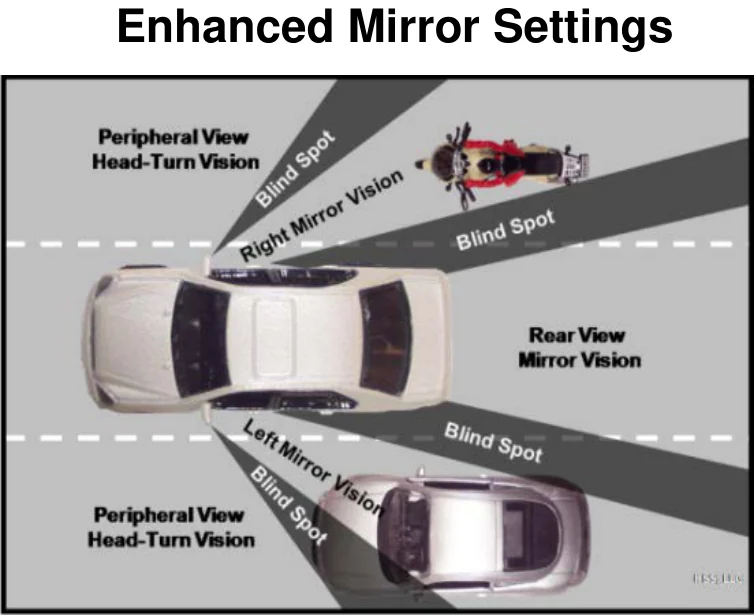
Hazards come from every direction. Search to the sides at intersections and busy areas, check behind you often, and set your mirrors so your blind spots shrink. Then check the blind spot with a head turn anyway.
Know the rule
Before entering an intersection, look to the front, left and right for vehicles and pedestrians. If you're stopped, look left, right, and left again.
Don't rely on signals or signs; some drivers run them. Look left and right even when cross traffic has a red light or stop sign, especially just after your light turns green.
Make sure your path is clear all the way through before entering, so you won't block the intersection. If your view is blocked, edge forward slowly until you can see; crossing drivers will see your front first.
Look to the sides near shopping centers, parking lots, construction areas, busy sidewalks, playgrounds and schoolyards, where someone is likely to enter the road.
Turning left: pull into the intersection, find a safe gap, and yield to oncoming vehicles going straight or turning right. Turning right: check for traffic from the left, oncoming left-turners and crossing pedestrians.
You're stopped at a stop sign and a hedge blocks your view to the left. Edge forward slowly until you can see. Crossing drivers will spot your bumper before you can see them, giving them a chance to slow down.
Check your understanding
Read the question, decide on an answer, then open it to check the explanation. These are Roadwise study questions based on the source handbook.
When changing lanes, what size gap in traffic should you identify before signaling?
4 to 5 seconds
1 to 2 seconds
2 to 3 seconds
8 to 10 seconds
Answer: 4 to 5 seconds
The handbook says to identify a 4 to 5 second gap, signal, and look again before moving over.