roadwise.Open study app

Louisiana driving lesson · Distraction, Fatigue & Emergencies

Floods, water & crash scenes

A 4-minute lesson from the Louisiana course. Read the rules and examples, follow the handbook page references, and check your understanding before you move on.

Read time
4 minutes
Course unit
Distraction, Fatigue & Emergencies
Checkpoint questions
6
Source pages
126, 127, 128

Floodwater and crash scenes call for fast, calm decisions. Never drive into floodwater, know how to get out of a sinking car, and know what Louisiana law requires of you after any crash.

6 inches

Water that reaches the bottom of most passenger cars, causing loss of control or stalling

Handbook p. 126 ↗
2 feet

Depth of rushing water that can carry away most vehicles

Handbook p. 126 ↗

Know the rule

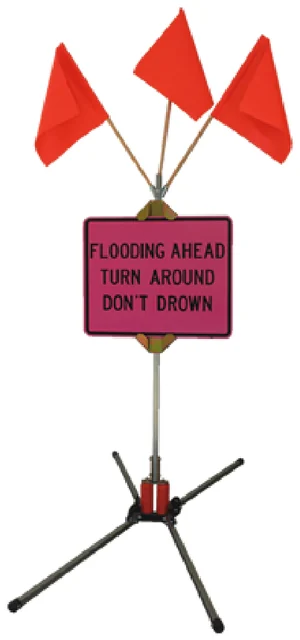
Don't drive through flooded areas, even if the water looks shallow; it can hide dips or washed-out pavement. Turn around and find another route, or go to higher ground and wait.

Handbook p. 126 ↗
Turn around don't drown (flood warning sign)
Flooding ahead warning sign
30-60 seconds

How long a vehicle floats before it starts to sink

Handbook p. 127 ↗

POGO

Pop the seat belt open, Open the windows (roll down or break), Get Out. Don't stay in the car waiting for help.

Handbook p. 127 ↗

Escaping a sinking car:

  • Unbuckle and roll down a window right away; power windows may work for a few seconds
  • Climb on top of the car if it isn't fully submerged
  • Keep your shoes on to kick out a side window; never try the windshield
  • Can't open anything? Wait for pressure to equalize; try the door when water reaches your shoulders
  • Unbuckle the oldest child first, then the younger ones
Handbook p. 127 ↗

Know the rule

One in every eight drivers will be involved in a crash this year, according to the National Safety Council.

Handbook p. 127 ↗

After a crash with injury, death or property damage:

  • Stop if safe; don't leave without identifying yourself; warn traffic; turn off ignitions
  • Check everyone; call police and an ambulance if needed (if in doubt, assume it is)
  • Get names of everyone involved and witnesses; give your name, address and plate number
  • Show your license to anyone involved in the crash who asks
  • Sketch seat positions, directions and lanes; note date, time and weather
  • Notify your insurer as soon as practical; see a doctor if you're hurt
Handbook p. 128 ↗

Know the rule

If you damage an unattended vehicle or property, notify the police and try to find the owner. Leave a note with your name, address and phone number where the owner will see it.

Handbook p. 128 ↗

Helping the injured:

  • Place a clean cloth over a wound to stop bleeding
  • Don't move an injured person unless there's immediate life-threatening danger
  • Have walking injured sit or lie down; don't give fluids
  • Don't drive the injured to a hospital yourself unless there's no other way
Handbook p. 128 ↗

Know the rule

'Move It, Move It, Move It - Steer It Clear': remove vehicles from the roadway to the nearest soft shoulder to reduce congestion and secondary crashes.

Handbook p. 128 ↗

Put it into practice

At night you reach a road covered by moving water that looks shallow. Turn around. Just 6 inches reaches the bottom of most cars, and 2 feet of rushing water can carry a car away.

Check your understanding

Read the question, decide on an answer, then open it to check the explanation. These are Roadwise study questions based on the source handbook.

About how much water will reach the bottom of most passenger cars, risking stalling or loss of control?
  1. 1 inch
  2. 2 feet
  3. 3 feet
  4. 6 inches

Answer: 6 inches

Just 6 inches of water can reach the underside of most passenger cars and cause problems.
Handbook p. 126 ↗
About how much rushing water can carry away most vehicles?
  1. 2 feet
  2. 6 inches
  3. 6 feet
  4. 10 feet

Answer: 2 feet

The handbook warns that 2 feet of rushing water is enough to sweep most vehicles away.

Handbook p. 126 ↗
What is the safest response to seeing a flooded roadway ahead?
  1. Drive through slowly and carefully
  2. Turn around and find another route
  3. Drive through quickly to minimize exposure
  4. Follow another vehicle through if it makes it

Answer: Turn around and find another route

The handbook's clear advice is to never attempt to cross a flooded road; turn around instead.

Handbook p. 126 ↗
If your vehicle enters a body of water, about how long will it float before it begins to sink?
  1. 5 minutes or more
  2. Less than 5 seconds
  3. 30 to 60 seconds
  4. It will not float at all

Answer: 30 to 60 seconds

A vehicle typically floats for only 30 to 60 seconds, so escaping quickly is critical.

Handbook p. 127 ↗
Your car has just gone into deep water. What should you do first?
  1. Wait until the car fills with water
  2. Call 911 and wait inside for help
  3. Stay buckled until the car settles
  4. Unbuckle and get out right away

Answer: Unbuckle and get out right away

A car floats only 30 to 60 seconds: pop the seat belt, open or break a window, and get out; do not wait for help.

Handbook p. 127 ↗
You should avoid driving through a flooded roadway, even if the water appears shallow.
  1. True
  2. False

Answer: True

Floodwaters can hide dips or wash away the road surface, so crossing should always be avoided.

Handbook p. 126 ↗
Take the lesson checkpoint in the app

More in Distraction, Fatigue & Emergencies