roadwise.Open study app

Illinois driving lesson · Safe Driving Tips

Skids, fire, water and other emergencies

A 3-minute lesson from the Illinois course. Read the rules and examples, follow the handbook page references, and check your understanding before you move on.

Read time
3 minutes
Course unit
Safe Driving Tips
Checkpoint questions
5
Source pages
90, 91

Emergencies happen fast, and your first instinct is often wrong. Jerking the wheel or slamming the brakes can make things worse. Learn the right response now so you can use it without thinking.

Know the rule

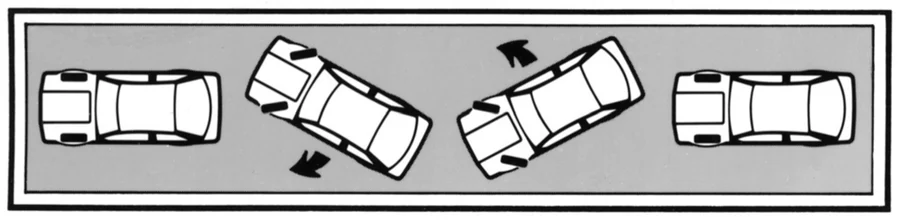
A skid happens when tires lose traction. Ease off the gas pedal or brakes, steer in the direction of the skid until you regain traction, then straighten the vehicle.

Handbook p. 90 ↗
Recovering from running off the pavement
Steer in the direction of the skid

Know the rule

If your wheels drift onto the shoulder, grip the wheel firmly, ease off the gas and brake gently. Check traffic behind you, then gently steer back onto the pavement. Don't jerk the wheel, which could send you into oncoming traffic.

Handbook p. 90 ↗

Know the rule

If smoke appears, pull off the road, turn off the engine, move away from the vehicle and call 911. Don't fight a vehicle fire yourself.

Handbook p. 91 ↗

If your vehicle goes into water:

  • If it doesn't sink right away, escape through a window
  • Water pressure may keep the doors from opening
  • If it sinks, move to the back seat, where an air pocket usually forms
  • If possible, take a deep breath and exit through a rear window
Handbook p. 91 ↗

Know the rule

Carbon monoxide is deadly. It is found in exhaust fumes whenever a vehicle burns fuel.

Handbook p. 91 ↗

Carbon monoxide symptoms (often called "flu-like"):

  • Headache and dizziness
  • Weakness
  • Upset stomach and vomiting
  • Chest pain
  • Confusion
Handbook p. 91 ↗

Know the rule

People asleep in a running vehicle, or with it running in a garage, can die before they feel symptoms. Older people, infants and people with heart, lung or blood disorders are most at risk. Have your exhaust checked yearly, and never run a vehicle in an attached garage.

Handbook p. 91 ↗

Know the rule

If power lines fall on your vehicle after a crash, you and your passengers should stay inside until help arrives.

Handbook p. 91 ↗

Know the rule

If fire forces you out, jump clear without touching the vehicle and the ground at the same time. Land on both feet and hop or shuffle away, arms close to your body.

Handbook p. 91 ↗
50 feet

How far to hop or shuffle away from a vehicle touched by power lines

Handbook p. 91 ↗

Know the rule

Always shut off the engine when refueling, never smoke near gas pumps, and stay with the pump while fueling.

Handbook p. 91 ↗

Put it into practice

Your rear wheels slide to the right on an icy curve. Ease off the gas and brakes, steer to the right (the direction of the skid) until the tires grip, then straighten out.

Check your understanding

Read the question, decide on an answer, then open it to check the explanation. These are Roadwise study questions based on the source handbook.

If your vehicle starts to skid, what should you do?
  1. Steer sharply opposite the skid direction
  2. Brake hard immediately
  3. Ease off and steer in the direction of the skid
  4. Accelerate out of the skid

Answer: Ease off and steer in the direction of the skid

Ease off and steer into the skid direction until you regain traction.
Handbook p. 90 ↗
If your vehicle sinks in water, what should you do?
  1. Move to the back and exit a rear window
  2. Stay in front and wait for rescue
  3. Break the windshield and swim out
  4. Force open the front doors

Answer: Move to the back and exit a rear window

An air pocket typically forms in the back seat; exit through a rear window.

Handbook p. 91 ↗
What is a symptom commonly associated with carbon monoxide poisoning?
  1. Sneezing and watery eyes
  2. Tingling hands and feet
  3. Headache, dizziness and confusion
  4. Increased hunger and thirst

Answer: Headache, dizziness and confusion

Carbon monoxide poisoning symptoms are commonly described as flu-like.

Handbook p. 91 ↗
What should you always do before refueling your vehicle?
  1. Roll down all the windows
  2. Shut off the engine
  3. Turn on the hazard lights only
  4. Leave the engine running for efficiency

Answer: Shut off the engine

Always shut off the engine before refueling to avoid fire hazards.

Handbook p. 91 ↗
You should never run a vehicle inside a garage that is attached to a house.
  1. True
  2. False

Answer: True

Running a vehicle in an attached garage risks fatal carbon monoxide exposure.

Handbook p. 91 ↗
Take the lesson checkpoint in the app

More in Safe Driving Tips