A 3-minute lesson from the Idaho course. Read the rules and examples, follow the handbook page references, and check your understanding before you move on.
Painted lines divide lanes and tell you where passing and lane changes are allowed, which lanes are for turns, where pedestrians walk, and where to stop. Yellow lines separate traffic moving in opposite directions; white lines separate lanes going the same way.
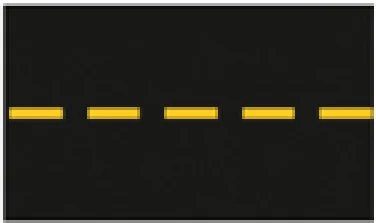
Dashed yellow center line
Know the rule
Dashed yellow line: vehicles in either lane may cross it to pass when it is safe.
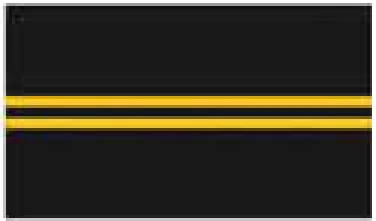
Double solid yellow: no passing, and neither lane may cross except to turn, such as turning left into or out of a driveway or business entrance, when safe.
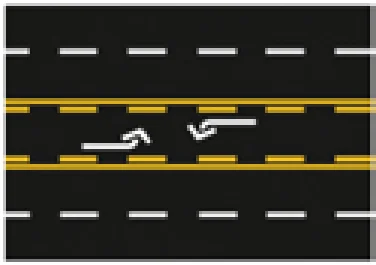
A center lane, bordered by solid and dashed yellow lines, reserved for left turns (or permitted U-turns) from either direction. Never travel in it or cut off a vehicle turning from it.
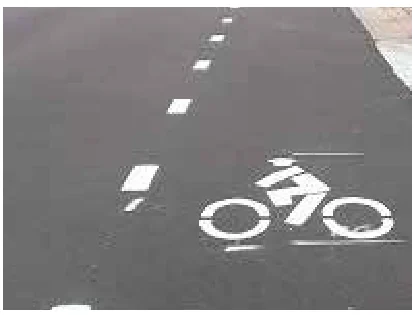
At intersections and some driveways: right-turning drivers may merge right and left-turning cyclists may merge left. Cyclists going straight should move left, out of the bike lane.
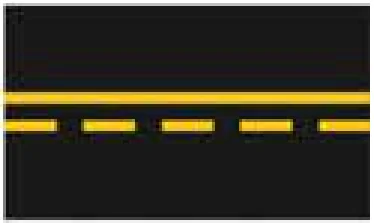
On a road with a solid yellow line on your side and dashed on the other, a slow tractor is ahead of you. You can't cross to pass. Drivers coming the other way, on the dashed side, may pass when safe.
Check your understanding
Read the question, decide on an answer, then open it to check the explanation. These are Roadwise study questions based on the source handbook.
A dashed yellow line means:
crossing is never allowed
crossing is allowed only for left turns
only the right-hand lane may cross
either lane may cross when safe
Answer: either lane may cross when safe
A dashed yellow line allows passing from either lane when safe.