A 3-minute lesson from the Hawaii course. Read the rules and examples, follow the handbook page references, and check your understanding before you move on.
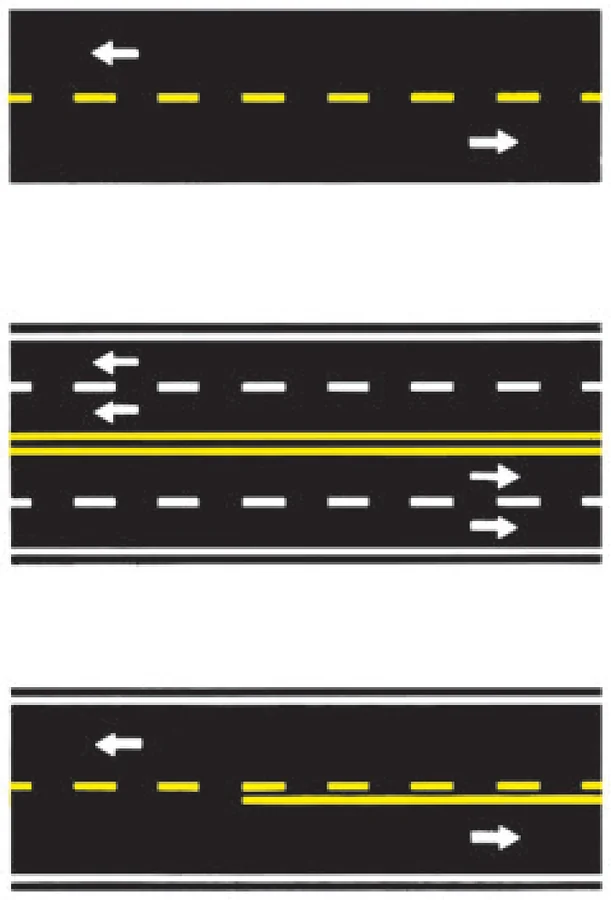
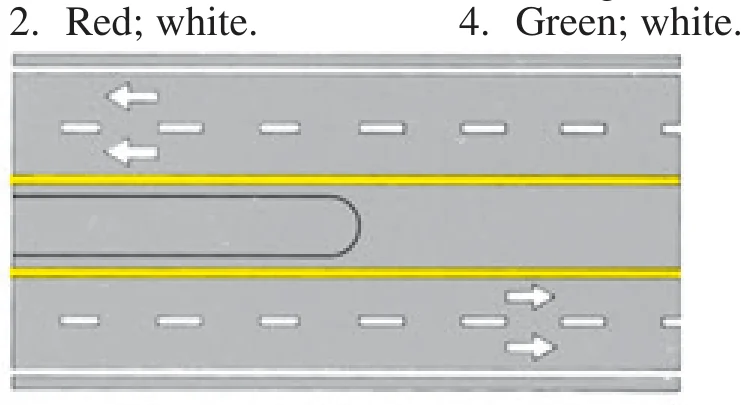
Lines on the pavement are traffic laws you can see. Color tells you direction: yellow separates traffic going opposite ways, white separates traffic going the same way. Solid versus broken tells you whether you may cross.
Pavement markings
Lines, words or figures marked on the pavement with paint, reflectors or other markers.
Solid white or yellow lines along the road's edge used as a safety guide. White marks the right edge; yellow may mark the left edge on divided streets and highways.
Yellow lines mark the left edge beside the median on a divided roadway
Put it into practice
You're behind a slow truck on a two-lane road. On your side of the center is a solid yellow line, beside a broken yellow line on the other side. The solid line is in your lane, so you may not pass. Only oncoming traffic, with the broken line, may pass.
Check your understanding
Read the question, decide on an answer, then open it to check the explanation. These are Roadwise study questions based on the source handbook.
Yellow centerlines are used to:
separate lanes moving the same way
mark the right edge of the road
separate traffic moving in opposite directions
mark a lane reserved for bicycles
Answer: separate traffic moving in opposite directions
Yellow centerlines separate opposing traffic flows.