Roadwise States Florida Driving lessons Turning, signals and three-point turns Florida driving lesson · Highways, Parking, and Turning
Turning, signals and three-point turns A 3-minute lesson from the Florida course. Read the rules and examples, follow the handbook page references, and check your understanding before you move on.
Read time 3 minutes
Course unit Highways, Parking, and Turning
Checkpoint questions 6
Source pages 77, 78 Many crashes come from turning wrong. Signal early so others know your plan, set up in the correct lane, and finish in the correct lane. When the road is too narrow to turn around normally, use a three-point turn.
Know the rule
Use your directional signals or hand signals to show that you're turning. Signals are required by law when changing lanes or overtaking a vehicle.
Handbook p. 77 ↗ Know the rule
It's against the law to use your turn signals to tell drivers behind you that they can pass.
Handbook p. 77 ↗ Know the rule
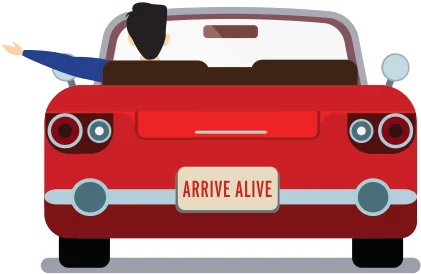
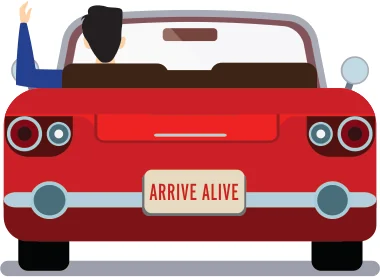
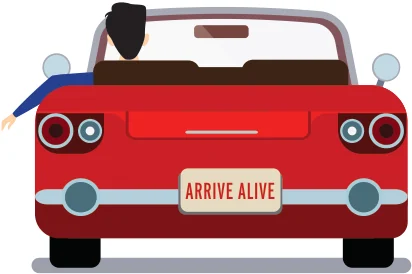
Give hand signals from the left side of the vehicle. Bicyclists may signal a right turn by extending the right arm horizontally.
Handbook p. 77 ↗ Hand signal: left turn (arm straight out) Hand signal: right turn (arm bent up) Hand signal: slow or stop (arm bent down) Turning steps: 1. Slow to a safe turning speed 2. Move into the correct lane as you near the intersection 3. Signal at least 100 feet before turning 4. Obey NO TURN ON RED or STOP HERE signs 5. Yield to bicyclists when crossing a bike lane, and to pedestrians 6. Stay in your lane and yield to vehicles and bicycles coming from the opposite direction 7. Finish in the proper lane: right turns into the right lane; left turns into any lane legal and safe Handbook p. 77 ↗ Know the rule
Never make last-minute turns. If you're in the wrong lane, drive to the next intersection and turn from the proper lane.
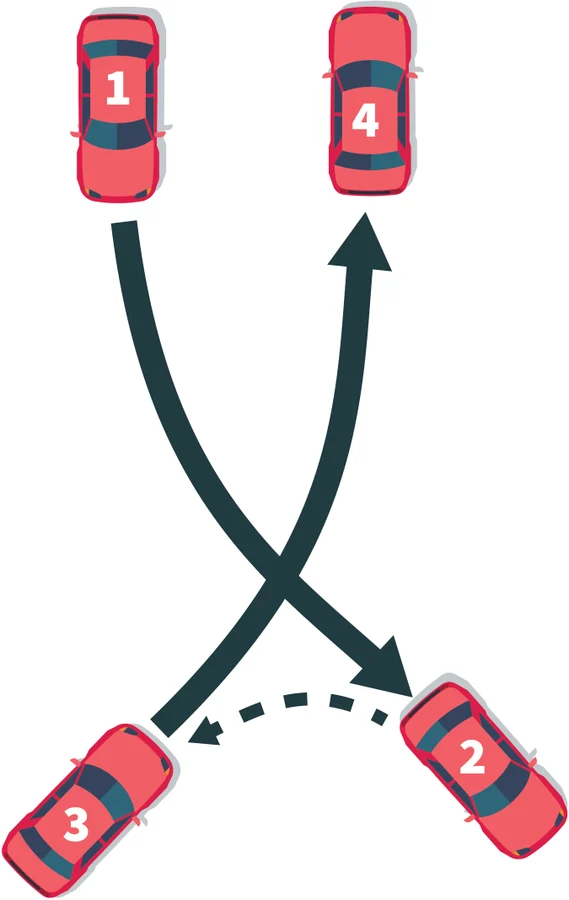
Handbook p. 78 ↗ Three-point turn (only if too narrow for a U-turn and you can't go around the block): 1. Move far right, check traffic, signal left; turn sharply left and creep forward to the curb 2. Shift to reverse, turn the wheels sharply right, check traffic, back to the right curb 3. Shift to drive and pull forward carefully Handbook p. 78 ↗ Three-point turn Know the rule
Never make a three-point turn or a U-turn on a curve, on a hill, on the highway, or where a sign prohibits U-turns.
Handbook p. 78 ↗ Put it into practice
You reach the intersection where you meant to turn left, but you're in the right lane. Don't swing across. Go straight, then turn from the proper lane at the next intersection.
Check your understanding Read the question, decide on an answer, then open it to check the explanation. These are Roadwise study questions based on the source handbook.
How far before making a turn must you signal, at minimum? 100 feet 50 feet 150 feet 200 feet Answer: 100 feet
You must give a turn signal at least 100 feet before making your turn.
Handbook p. 77 ↗ Is it legal to use your turn signal just to let drivers behind you know they can pass? Yes, it's a common courtesy No, it's against the law Only on two-lane roads Only on multi-lane highways Answer: No, it's against the law
It's against the law to use your directional signals to tell drivers behind you that they can pass.
Handbook p. 77 ↗ When making a right turn, you must finish the turn by entering: Any lane of the road entered The center lane only The right lane of the new road Whichever lane has less traffic Answer: The right lane of the new road
Turn right into the right lane of the roadway entered; a left turn may be completed in any lawfully available lane.
Handbook p. 78 ↗ When should you use a three-point turn instead of a U-turn? Only when directed by police On any highway When a No U-Turn sign is posted When the road is too narrow for a U-turn and you can't go around the block Answer: When the road is too narrow for a U-turn and you can't go around the block
Use a three-point turn only if the road is too narrow for a U-turn and you can't go around the block.
Handbook p. 78 ↗ Where should you never make a three-point turn or U-turn? On a curve, hill, or highway, or where prohibited by a sign On a quiet residential street In a parking lot In a cul-de-sac Answer: On a curve, hill, or highway, or where prohibited by a sign
Never make a three-point turn or U-turn on a curve, a hill, the highway, or where a sign prohibits U-turns.
Handbook p. 78 ↗ Hand signals for turning must be given from the left side of the vehicle. True False Answer: True
Hand signals must be given from the left side of the vehicle.
Handbook p. 77 ↗ Previous lesson Traffic lanes, HOV lanes and red reflectors Next lesson Animals and low visibility More in Highways, Parking, and Turning About the source Roadwise’s Florida course uses the driver handbook edition supplied with this study pack. This lesson cites source pages 77, 78. The linked PDF is a third-party mirror of the handbook, rather than a government-hosted page.
Open the handbook source PDF · View the source edition
For current application requirements, fees, appointments, and the format that applies to your age or license type, check Florida’s FLHSMV. Roadwise provides study material and does not issue permits or licenses.