District of Columbia driving lesson · Parking & Stopping Rules
Parallel & hill parking
A 3-minute lesson from the District of Columbia course. Read the rules and examples, follow the handbook page references, and check your understanding before you move on.
Parking rules protect you, your car and everyone around it. Park close to the curb, secure the vehicle so it can't roll, and check before you open your door.
Know the rule
When parking on a street: stop the engine, lock the ignition, remove the key and set the parking brake. It's also advisable to raise the windows, lock the doors and keep valuables out of sight.
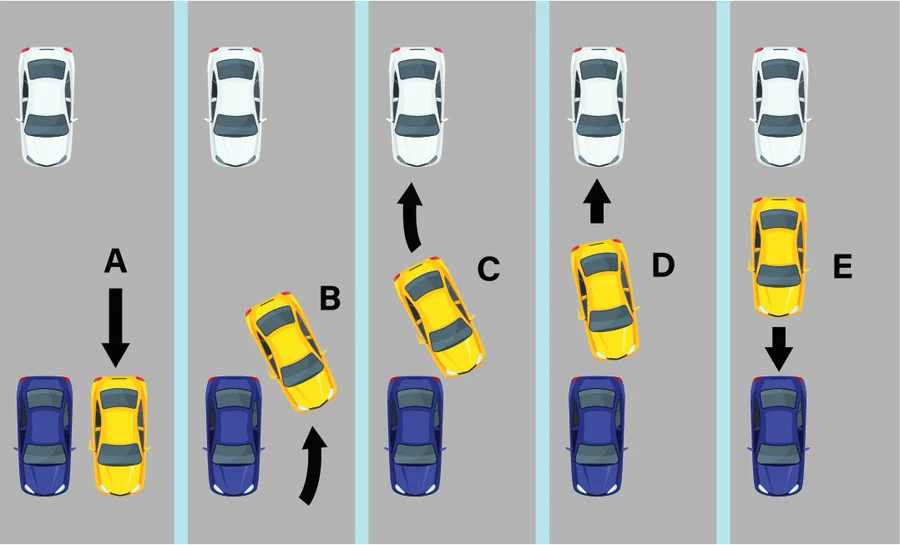
Signal as you approach the space and check your mirrors. A driver behind you should stop several lengths back; if someone is following too closely, don't stop suddenly. Keep driving and find another space.
Always check for passing vehicles and cyclists before opening your door. When leaving a parked position, signal, yield the right-of-way, and pull out only when it's safe.
You park facing uphill on a street with a curb. Set the parking brake, shift to park, and turn your front wheels away from the curb. If the car rolls back, the tires catch against the curb instead of rolling into traffic.
Check your understanding
Read the question, decide on an answer, then open it to check the explanation. These are Roadwise study questions based on the source handbook.
When parallel parking on a two-way street, how close to the curb must you park?
Within 6 inches
Within 12 inches
Within 24 inches
Within 36 inches
Answer: Within 12 inches
You must park parallel to and within 12 inches of the curb.