Roadwise States Colorado Driving lessons Traffic signals & arrows Colorado driving lesson · Traffic Signals, Signs & Markings
Traffic signals & arrows A 3-minute lesson from the Colorado course. Read the rules and examples, follow the handbook page references, and check your understanding before you move on.
Read time 3 minutes
Course unit Traffic Signals, Signs & Markings
Checkpoint questions 6
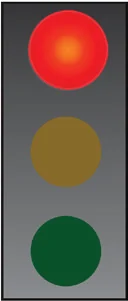
Source pages 10 Traffic signals tell you when and where to stop and go. Most have red, yellow and green lights from top to bottom, but some locations have single lights or arrows. A green light never removes your duty to yield to people already in the intersection.
Know the rule
You must obey directions from law enforcement, highway personnel and school crossing guards, who can also control traffic.
Handbook p. 10 ↗ Know the rule
If a traffic signal is not operating or is malfunctioning, treat the intersection as a four-way stop.
Handbook p. 10 ↗ Steady red light Know the rule
Steady red: stop until green appears. After stopping and yielding to pedestrians and other traffic, you may turn right unless a sign prohibits it.
Handbook p. 10 ↗ Know the rule
On red, you may also turn left from a one-way street onto another one-way street, unless a sign prohibits it.
Handbook p. 10 ↗ Know the rule
Steady yellow: a red light is about to appear. Stop unless you are already in the intersection.
Handbook p. 10 ↗ Know the rule
Steady green: after yielding to any vehicle or pedestrian in the intersection or adjacent crosswalk, go straight or turn right or left unless a sign prohibits the turn.
Handbook p. 10 ↗ Flashing yellow arrow Know the rule
If the green arrow goes off but the circular green stays on, you may still turn after yielding to through vehicles and pedestrians, unless a sign or red arrow prohibits it.
Handbook p. 10 ↗ Know the rule
Never rush a flashing yellow arrow. It changes to solid yellow (don't enter if you can stop safely), then red (stop).
Handbook p. 10 ↗ HAWK signal A pedestrian signal that runs a yellow-red flashing sequence to alert drivers that pedestrians need to cross.
Handbook p. 10 ↗ Put it into practice
The signal at a busy intersection is dark after a storm. Treat it as a four-way stop: stop fully, and the first vehicle to arrive goes first.
A useful reminder A steady yellow does not always mean stop: if you're already in the intersection, continue through.
Check your understanding Read the question, decide on an answer, then open it to check the explanation. These are Roadwise study questions based on the source handbook.
How should you treat an intersection if the traffic signal is not working or is malfunctioning? Treat it as a four-way stop Treat it as a yield sign Proceed with caution but do not stop Only vehicles going straight must stop Answer: Treat it as a four-way stop
If a traffic signal is malfunctioning, treat the intersection as a four-way stop.
Handbook p. 10 ↗ When may you legally turn left on a red light in Colorado? Only if a police officer directs you to Anytime there is no oncoming traffic Never under any circumstance When turning from a one-way street onto another one-way street, unless prohibited Answer: When turning from a one-way street onto another one-way street, unless prohibited
Left turns on red are allowed from a one-way street onto another one-way street, unless a sign prohibits it.
Handbook p. 10 ↗ What does a steady yellow light mean? Speed up to clear the intersection Yield only to pedestrians Stop unless you are already in the intersection Proceed with caution as if it were green Answer: Stop unless you are already in the intersection
A steady yellow light warns that red is about to appear — stop unless you're already in the intersection.
Handbook p. 10 ↗ If a green arrow goes off but the circular green light stays on, what should you do? You must treat it as a red light You must stop immediately You may still turn after yielding to traffic and pedestrians Turning is no longer allowed at all Answer: You may still turn after yielding to traffic and pedestrians
When the green arrow turns off but circular green remains, you may still turn after yielding, unless a sign or red arrow prohibits it.
Handbook p. 10 ↗ What does a flashing yellow arrow mean for a driver turning left? Speed through before it turns red The turn is prohibited Proceed with caution and yield to oncoming traffic and pedestrians Stop completely and wait for green Answer: Proceed with caution and yield to oncoming traffic and pedestrians
A flashing yellow arrow means the left-turning driver should proceed with caution, yielding to oncoming traffic and pedestrians.
Handbook p. 10 ↗ On a lighted flashing yellow arrow, what happens right before the signal changes to red? It turns solid yellow first It switches directly from flashing yellow to red It switches to a steady green arrow first The flashing yellow arrow simply turns off with no other signal Answer: It turns solid yellow first
After the flashing yellow arrow, the signal switches to solid yellow before turning red, telling the driver not to enter if they can stop safely.
Handbook p. 10 ↗ Previous lesson Basic controls: starting, steering & backing Next lesson Regulatory signs More in Traffic Signals, Signs & Markings About the source Roadwise’s Colorado course uses the driver handbook edition supplied with this study pack. This lesson cites source pages 10. The linked PDF is a third-party mirror of the handbook, rather than a government-hosted page.
Open the handbook source PDF · View the source edition
For current application requirements, fees, appointments, and the format that applies to your age or license type, check Colorado’s DMV. Roadwise provides study material and does not issue permits or licenses.