Roadwise States California Driving lessons Blind intersections, alleys & railroad crossings California driving lesson · Special Zones, Laws & Enforcement
Blind intersections, alleys & railroad crossings A 3-minute lesson from the California course. Read the rules and examples, follow the handbook page references, and check your understanding before you move on.
Read time 3 minutes
Course unit Special Zones, Laws & Enforcement
Checkpoint questions 6
Source pages 57, 58 Some places have low speed limits because you can't see what's coming: blind intersections, alleys and railroad crossings with a blocked view. Trains can't stop quickly, so crossing rules are strict.
Blind intersection An intersection with no stop signs at any corner. If your view is blocked, move slowly forward until you can see.
Handbook p. 57 ↗ Alley Any road no wider than 25 feet used to access the rear or side entrances of buildings or properties.
Handbook p. 57 ↗ Know the rule
You may drive on or cross a sidewalk to enter or exit a driveway or alley.
Handbook p. 57 ↗ Know the rule
You may drive faster than 15 mph near a railroad crossing if it is controlled by gates, a warning signal, or a flagman.
Handbook p. 57 ↗ At railroad or train crossings: Flashing red lights mean stop; don't cross until they stop flashing, even if the gate rises When devices or a person warn a train is coming, stop at least 15 feet from the nearest track Never go under lowering gates or around lowered gates Gates down and no train in sight? Call the posted railroad emergency number or 911 Stop, look, and listen; if you see a train or hear a horn or bell, do not cross Many crossings have multiple tracks; look both ways and cross only when safe Handbook p. 57 ↗ 15 ft Stop at least this far from the nearest track when a train is coming
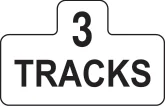
Handbook p. 57 ↗ Number of tracks sign: expect more than one track Know the rule
Expect a train on any track, at any time, traveling in either direction.
Handbook p. 58 ↗ Know the rule
Never stop on the railroad tracks. Do not start across unless you have enough room to completely cross.
Handbook p. 58 ↗ Know the rule
Watch for vehicles that must stop before crossing train tracks: buses, school buses, and vehicles with a hazardous materials placard.
Handbook p. 58 ↗ Put it into practice
The crossing gates have gone up after a train passed, but the red lights are still flashing. Stay stopped. Another train may be coming on a different track. Go only when the lights stop flashing.
A useful reminder 15 is the railroad number: 15 mph near an uncontrolled crossing with a blocked view, and stop 15 feet from the nearest track.
Check your understanding Read the question, decide on an answer, then open it to check the explanation. These are Roadwise study questions based on the source handbook.
What is the speed limit at a blind intersection (one with no stop signs at any corner)? 15 mph 25 mph 10 mph 35 mph Answer: 15 mph
The speed limit for a blind intersection is 15 mph.
Handbook p. 57 ↗ What is the maximum width of a road to be classified as an alley? 15 feet 25 feet 40 feet 10 feet Answer: 25 feet
An alley is any road no wider than 25 feet used to access the rear or side of buildings.
Handbook p. 57 ↗ What is the speed limit in an alley? 10 mph 25 mph 15 mph 20 mph Answer: 15 mph
The speed limit in an alley is 15 mph.
Handbook p. 57 ↗ What is the speed limit within 100 feet of a railroad crossing where you cannot see the tracks for 400 feet? 25 mph 10 mph 35 mph 15 mph Answer: 15 mph
The speed limit is 15 mph within 100 feet of a railroad crossing when visibility of the tracks is under 400 feet.
Handbook p. 57 ↗ At a railroad crossing, how far from the nearest track must you stop when warned of an approaching train? At least 15 feet At least 50 feet At least 5 feet At least 100 feet Answer: At least 15 feet
Stop at least 15 feet from the nearest track when crossing devices or a person warns of a train.
Handbook p. 57 ↗ May you go around lowered railroad crossing gates if you don't see a train? Yes, if you look both ways first Yes, if the gates have been down a long time No; call the posted number or 911 Yes, if you cross slowly Answer: No; call the posted number or 911
Never go under or around lowered gates; if you don't see a train, call the posted emergency number or 911.
Handbook p. 57 ↗ Previous lesson School zones & school buses Next lesson Other roadway laws, evading & reckless driving More in Special Zones, Laws & Enforcement About the source Roadwise’s California course uses the driver handbook edition supplied with this study pack. This lesson cites source pages 57, 58. The linked PDF is a third-party mirror of the handbook, rather than a government-hosted page.
Open the handbook source PDF · View the source edition
For current application requirements, fees, appointments, and the format that applies to your age or license type, check California’s DMV. Roadwise provides study material and does not issue permits or licenses.