65 entries. Sign images and page references belong to the handbook edition used for the California course.
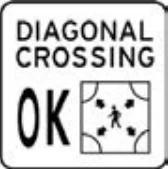
Diagonal crossing permitted sign
Indicates pedestrians may cross an intersection diagonally when the signal allows.
What to do: As a driver, watch for pedestrians crossing diagonally during their signal phase.
Shape: rectangle vertical · Color: white
Handbook p. 41 ↗
Do not block intersection
You must not stop in the intersection even if your light is green.
What to do: Do not enter the intersection unless you can clear it before the light changes.
Shape: square · Color: white
Handbook p. 42 ↗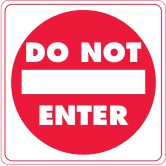
Do not enter
Entry is prohibited in this direction.
What to do: Do not drive past this sign; find another route.
Shape: circle · Color: red
Handbook p. 44 ↗
Do not pass
Passing other vehicles is not allowed here.
What to do: Stay behind the vehicle ahead; do not pass.
Shape: rectangle vertical · Color: white
Handbook p. 42 ↗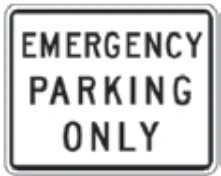
Emergency parking only
This area is reserved for emergency parking only.
What to do: Do not park here except in an emergency.
Shape: rectangle vertical · Color: white
Handbook p. 42 ↗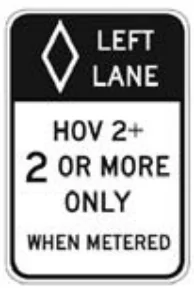
HOV lane
Marks a lane reserved for carpools or vehicles meeting occupancy rules when metered.
What to do: Only use this lane if your vehicle meets the posted occupancy requirement.
Shape: rectangle vertical · Color: white
Handbook p. 21 ↗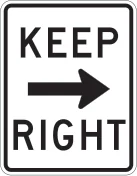
Keep right
Traffic must keep to the right of a divider or island.
What to do: Stay to the right of the obstruction or divider ahead.
Shape: rectangle vertical · Color: white
Handbook p. 42 ↗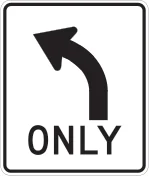
Left turn only
Traffic in this lane must turn left.
What to do: Move to another lane if you are not turning left.
Shape: square · Color: white
Handbook p. 42 ↗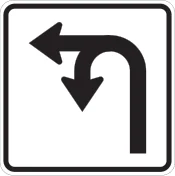
Left turn or U-turn permitted sign
Indicates a left turn or U-turn is permitted at this location.
What to do: You may turn left or make a U-turn here if it is safe.
Shape: square · Color: white
Handbook p. 42 ↗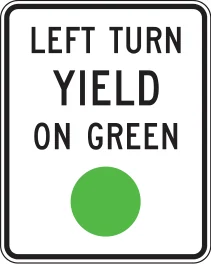
Left turn yield on green
You may turn left on a green light but must yield to oncoming traffic.
What to do: Turn left only after yielding to oncoming vehicles and pedestrians.
Shape: rectangle vertical · Color: white
Handbook p. 42 ↗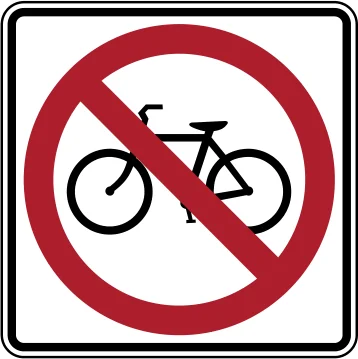
No bicycles
Bicycles are not allowed on this roadway.
What to do: Do not ride a bicycle here; use an alternate route.
Shape: square · Color: white
Handbook p. 42 ↗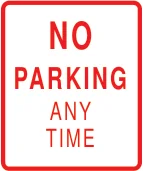
No parking any time
Parking is never allowed at this location.
What to do: Do not park here at any time.
Shape: square · Color: white
Handbook p. 42 ↗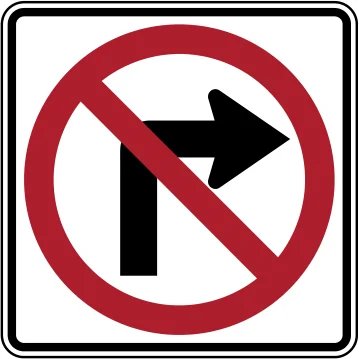
No right turn
Right turns are not allowed here.
What to do: Do not turn right; continue straight or choose another lane.
Shape: square · Color: white
Handbook p. 42 ↗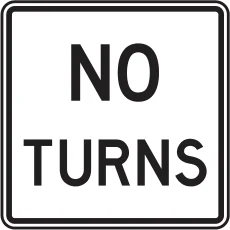
No turns
Turning in any direction is not allowed here.
What to do: Continue straight; do not turn left or right at this intersection.
Shape: rectangle vertical · Color: white
Handbook p. 42 ↗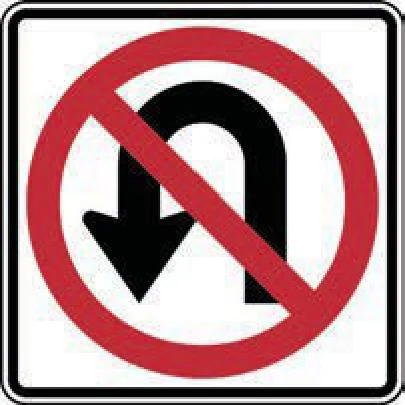
No U-turn
U-turns are not allowed here.
What to do: Do not turn around; continue straight or use another route.
Shape: square · Color: white
Handbook p. 42 ↗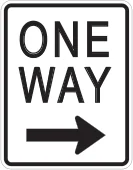
One way
Traffic on this street moves in only one direction.
What to do: Travel only in the direction of the arrow.
Shape: rectangle vertical · Color: white
Handbook p. 42 ↗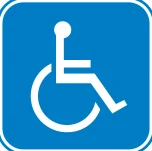
Reserved parking (accessible)
Marks a parking space reserved for drivers with a disabled placard or plate.
What to do: Only park here if you have a valid disabled placard or plate.
Shape: square · Color: blue
Handbook p. 34 ↗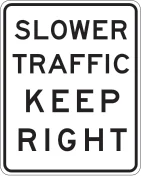
Slower traffic keep right
Slower vehicles must stay in the right lane.
What to do: Move to the right lane if you are driving slower than other traffic.
Shape: rectangle vertical · Color: white
Handbook p. 42 ↗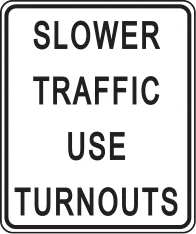
Slower traffic use turnouts
Slower vehicles should use turnouts to let faster traffic pass.
What to do: Pull into a turnout to let vehicles behind you pass on a narrow road.
Shape: rectangle vertical · Color: white
Handbook p. 22 ↗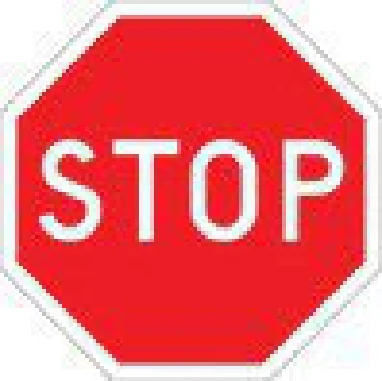
Stop
Come to a complete stop.
What to do: Stop fully at the line, crosswalk or intersection edge; go only when safe.
Shape: octagon · Color: red
Handbook p. 41 ↗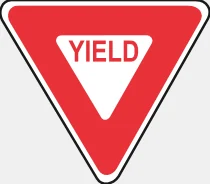
Yield
Slow down and let other traffic or pedestrians go first.
What to do: Slow or stop if needed and yield the right-of-way before proceeding.
Shape: triangle · Color: red
Handbook p. 41 ↗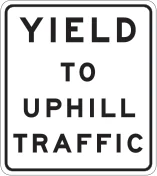
Yield to uphill traffic
On a narrow mountain road, downhill traffic must yield to uphill traffic.
What to do: If driving downhill, pull over or yield to let uphill traffic pass.
Shape: rectangle vertical · Color: white
Handbook p. 42 ↗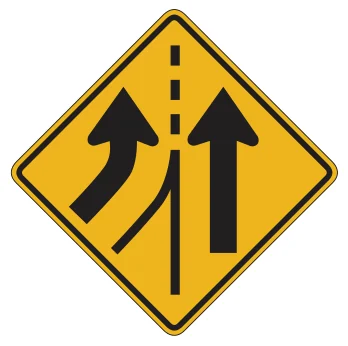
Added lane
An additional lane begins ahead without merging.
What to do: Continue in your lane; no need to merge for the new lane.
Shape: diamond · Color: yellow
Handbook p. 43 ↗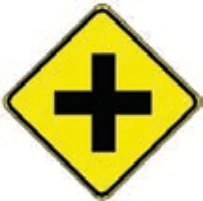
Crossroad
Warns of an intersecting road ahead.
What to do: Slow down and watch for cross traffic.
Shape: diamond · Color: yellow
Handbook p. 43 ↗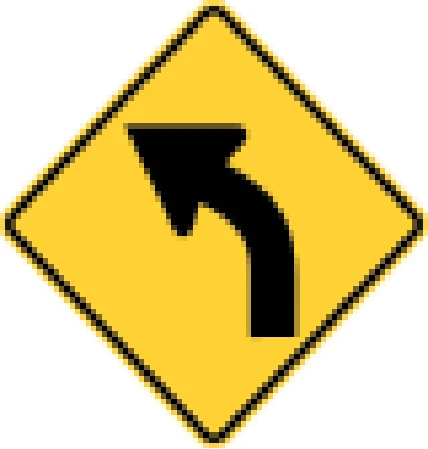
Curve left
Road curves to the left ahead.
What to do: Slow down and steer smoothly through the left curve.
Shape: diamond · Color: yellow
Handbook p. 43 ↗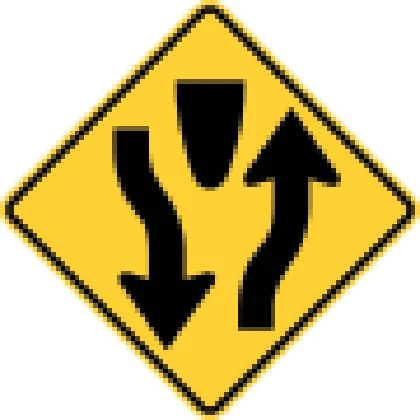
Divided highway begins
Road ahead splits into a divided highway with a median.
What to do: Keep right of the median and stay alert for the lane split ahead.
Shape: diamond · Color: yellow
Handbook p. 43 ↗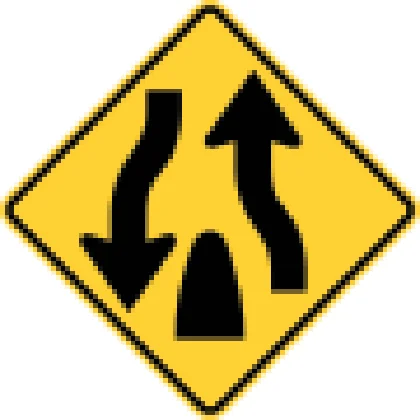
Divided highway ends
Divided highway ahead merges back into a two-way road.
What to do: Move back toward the right and be ready to meet oncoming traffic.
Shape: diamond · Color: yellow
Handbook p. 43 ↗
Large arrow
Marks a sharp turn or curve in the road.
What to do: Slow down and steer in the direction the arrow points.
Shape: rectangle horizontal · Color: yellow
Handbook p. 43 ↗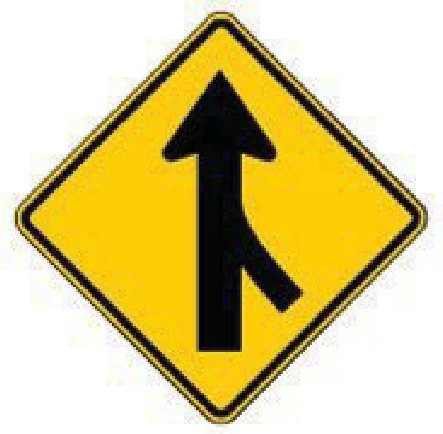
Merge
A lane from the side joins your road ahead.
What to do: Adjust speed and merge safely; yield to traffic already in your lane.
Shape: diamond · Color: yellow
Handbook p. 43 ↗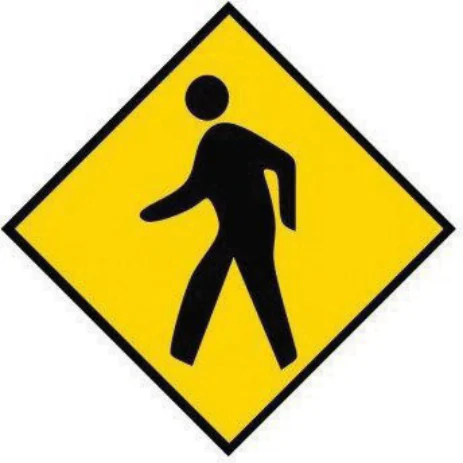
Pedestrian crossing
Pedestrians may be crossing the road ahead.
What to do: Slow down and yield to any pedestrians in or near the crosswalk.
Shape: diamond · Color: yellow
Handbook p. 43 ↗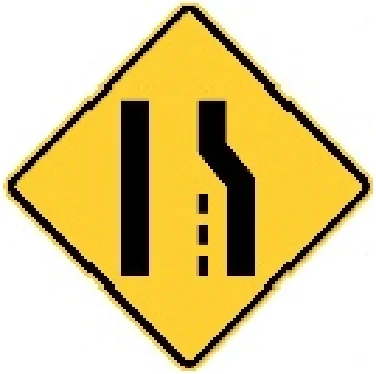
Right lane ends
The right lane ends ahead and traffic must merge.
What to do: Merge left safely before your lane ends.
Shape: diamond · Color: yellow
Handbook p. 43 ↗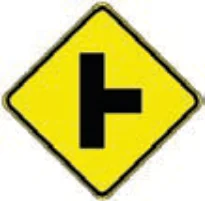
Side road right
A side road joins the highway from the right ahead.
What to do: Watch for vehicles entering from the side road on the right.
Shape: diamond · Color: yellow
Handbook p. 43 ↗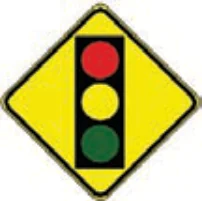
Signal ahead
Warns of a traffic signal ahead.
What to do: Slow down and be ready to stop for the signal.
Shape: diamond · Color: yellow
Handbook p. 43 ↗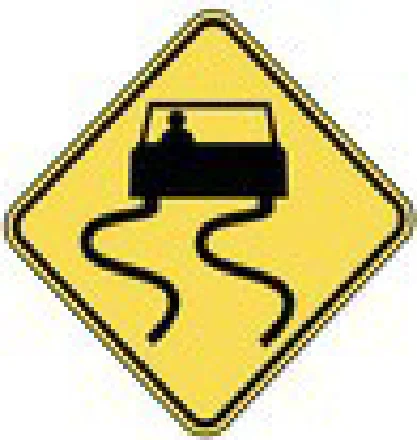
Slippery when wet
Road may be slick from rain, ice or oil.
What to do: Slow down, avoid sudden braking or sharp turns, and increase following distance.
Shape: diamond · Color: yellow
Handbook p. 43 ↗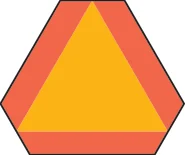
Slow-moving vehicle emblem
Identifies a vehicle that travels 25 mph or slower.
What to do: Slow down and pass with care when you see this emblem on a vehicle ahead.
Shape: triangle · Color: orange
Handbook p. 42 ↗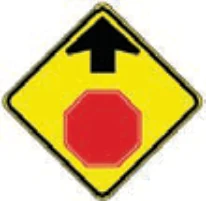
Stop ahead
Warns of a stop sign ahead.
What to do: Slow down and be ready to come to a complete stop.
Shape: diamond · Color: yellow
Handbook p. 43 ↗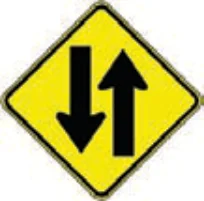
Two-way traffic
Warns that the road ahead carries traffic in both directions.
What to do: Stay in your lane and watch for oncoming traffic.
Shape: diamond · Color: yellow
Handbook p. 43 ↗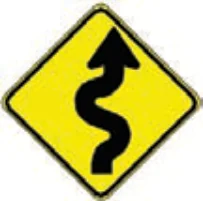
Winding road
Warns of a series of curves ahead.
What to do: Slow down and follow the curves in the road.
Shape: diamond · Color: yellow
Handbook p. 43 ↗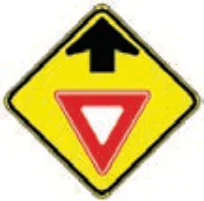
Yield ahead
Warns of a yield sign ahead.
What to do: Slow down and be ready to yield the right-of-way.
Shape: diamond · Color: yellow
Handbook p. 43 ↗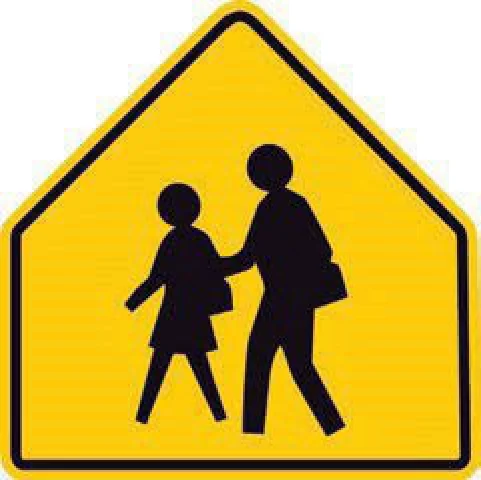
School zone
You are approaching a school area or crossing.
What to do: Slow down, watch for children, and be ready to stop.
Shape: pentagon · Color: yellow
Handbook p. 44 ↗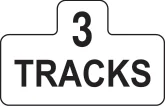
Multiple tracks
Warns how many railroad tracks are at the crossing.
What to do: Check for trains on every track before crossing.
Shape: rectangle horizontal · Color: white
Handbook p. 42 ↗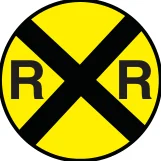
Railroad crossing ahead
Warns that a railroad crossing is ahead.
What to do: Slow down, look and listen for trains, and be ready to stop.
Shape: circle · Color: yellow
Handbook p. 44 ↗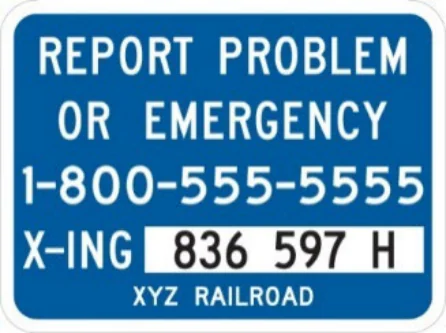
Railroad emergency notification sign
Gives a phone number and crossing ID to report railroad problems.
What to do: Call the posted number to report a stalled vehicle or hazard at the crossing.
Shape: rectangle horizontal · Color: blue
Handbook p. 44 ↗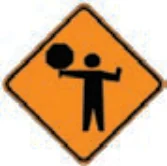
Flagger ahead
Warns that a flagger is controlling traffic ahead.
What to do: Slow down and be ready to stop or proceed as the flagger directs.
Shape: diamond · Color: orange
Handbook p. 42 ↗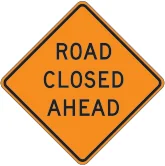
Road closed
Warns that the road ahead is closed.
What to do: Prepare to stop or follow the marked detour route.
Shape: diamond · Color: orange
Handbook p. 42 ↗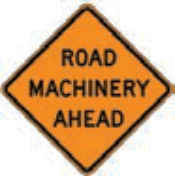
Road machinery ahead
Warns of slow-moving road machinery working ahead.
What to do: Slow down and be prepared to pass machinery with care.
Shape: diamond · Color: orange
Handbook p. 42 ↗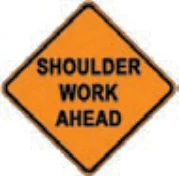
Shoulder work
Warns of workers or equipment on the road shoulder ahead.
What to do: Slow down and move away from the shoulder if possible.
Shape: diamond · Color: orange
Handbook p. 42 ↗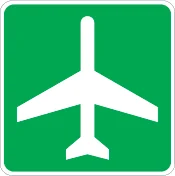
Airport
Indicates the direction of a nearby airport.
What to do: Follow the sign if you are heading to the airport.
Shape: square · Color: green
Handbook p. 42 ↗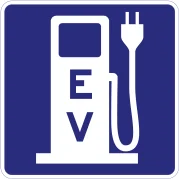
Electric vehicle charging station
Indicates a location with electric vehicle charging.
What to do: Follow the sign if you need to charge an electric vehicle.
Shape: square · Color: purple
Handbook p. 35 ↗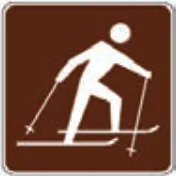
Recreational area
Indicates a recreational area, such as a ski area, ahead.
What to do: Follow the sign if you plan to visit the recreational area.
Shape: square · Color: brown
Handbook p. 42 ↗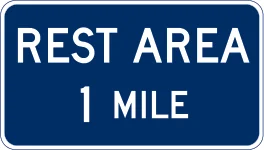
Rest area
Indicates the distance to the next rest area.
What to do: Follow the sign if you want to stop and rest ahead.
Shape: rectangle horizontal · Color: blue
Handbook p. 42 ↗
Flashing red light
Treat as a stop sign; stop, then go when safe.
What to do: Come to a complete stop, then proceed when it is safe.
Shape: n/a · Color: n/a
Handbook p. 39 ↗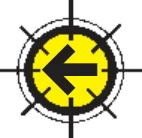
Flashing yellow arrow
You may turn but must first yield to oncoming traffic and pedestrians.
What to do: Yield to oncoming traffic and pedestrians, then turn when it is safe.
Shape: n/a · Color: n/a
Handbook p. 40 ↗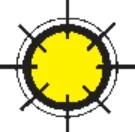
Flashing yellow light
Warns you to slow down and proceed with caution.
What to do: Slow down and cross the intersection carefully, watching for other traffic.
Shape: n/a · Color: n/a
Handbook p. 40 ↗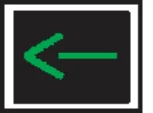
Green arrow
You may go in the direction of the arrow.
What to do: Proceed in the arrow's direction after yielding to traffic still in the intersection.
Shape: n/a · Color: n/a
Handbook p. 39 ↗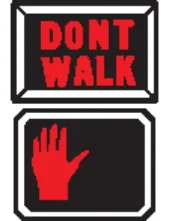
Pedestrian don't walk signal
Tells pedestrians not to begin crossing.
What to do: As a driver, still watch for pedestrians already in the crosswalk.
Shape: n/a · Color: n/a
Handbook p. 41 ↗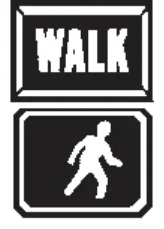
Pedestrian walk signal
Tells pedestrians it is time to begin crossing.
What to do: As a driver, yield to pedestrians crossing on the WALK signal.
Shape: n/a · Color: n/a
Handbook p. 41 ↗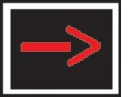
Red arrow
Vehicles must not make the movement shown by the arrow.
What to do: Stop and wait; do not turn in the arrow's direction until it changes.
Shape: n/a · Color: n/a
Handbook p. 39 ↗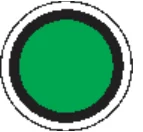
Steady green light
Vehicles may go if the way is clear.
What to do: Proceed through the intersection if it is clear and safe, yielding to traffic still in it.
Shape: n/a · Color: n/a
Handbook p. 40 ↗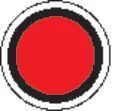
Steady red light
Vehicles must stop and wait.
What to do: Come to a complete stop and wait until the light turns green.
Shape: n/a · Color: n/a
Handbook p. 39 ↗
Steady yellow light
Warns that the signal is about to turn red.
What to do: Stop if you can do so safely; otherwise cross the intersection with caution.
Shape: n/a · Color: n/a
Handbook p. 39 ↗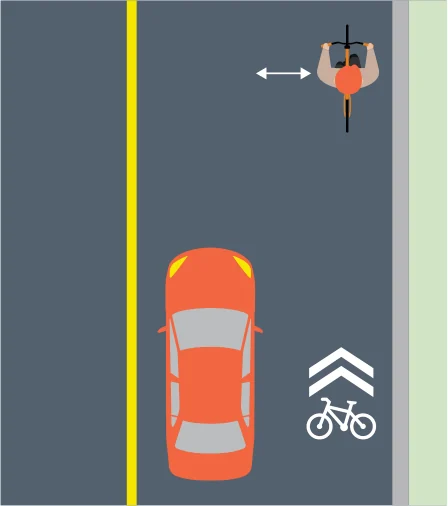
Shared lane marking (sharrow)
Shows the lane is shared by bicycles and motor vehicles.
What to do: Expect and safely share the lane with bicyclists riding in it.
Shape: n/a · Color: n/a
Handbook p. 23 ↗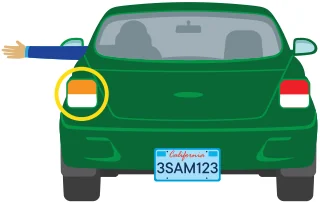
Hand signal left turn
Left arm held straight out signals a left turn.
What to do: Recognize this as a driver or cyclist signaling an upcoming left turn.
Shape: n/a · Color: n/a
Handbook p. 16 ↗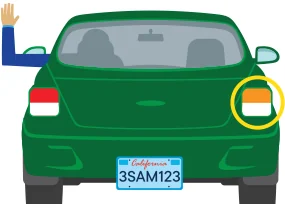
Hand signal right turn
Left arm out and bent upward at the elbow signals a right turn.
What to do: Recognize this as a driver or cyclist signaling an upcoming right turn.
Shape: n/a · Color: n/a
Handbook p. 16 ↗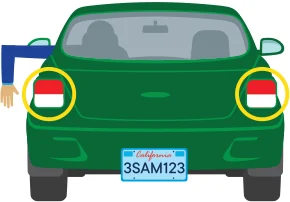
Hand signal stop or slow
This hand-and-arm position signals slowing down or stopping.
What to do: Recognize this as a driver or cyclist signaling they are slowing or stopping.
Shape: n/a · Color: n/a
Handbook p. 16 ↗