A 3-minute lesson from the Alaska course. Read the rules and examples, follow the handbook page references, and check your understanding before you move on.
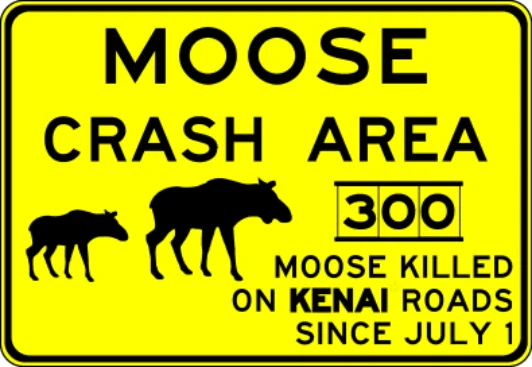
Moose, caribou, deer and other large animals are common on Alaska roads, and hitting one can be deadly. Your best defense is your own careful driving, not gadgets.
Know the rule
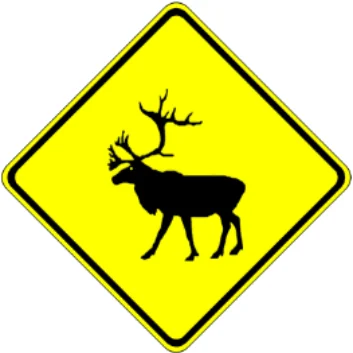
Caribou are common on the Kenai Peninsula, sheep and bear in South Central, and mountain goats and deer in the Southeast.
If an animal runs in front of you, brake firmly but do not swerve. Swerving can cause a crash with another vehicle, a pedestrian, or a fixed object such as a tree or utility pole.
After a collision with a big game animal, contact local police or the Alaska State Troopers. If you kill or injure one, notify a State Trooper or Fish & Wildlife Officer as soon as possible. The animal is state property.
Moose crash area warning signCaribou crossing warning sign
Put it into practice
At dusk a moose steps onto the highway ahead. Brake firmly and stay in your lane. Don't swerve toward the ditch or oncoming traffic, and watch for a second moose following.
Check your understanding
Read the question, decide on an answer, then open it to check the explanation. These are Roadwise study questions based on the source handbook.
When are most vehicle-moose collisions most likely to occur?
At dawn and dusk when light is low
At midday under bright sun
Only during winter storms
Only on highways with high speed limits
Answer: At dawn and dusk when light is low
Most vehicle-moose crashes occur at dawn and dusk when light is low and moose are active.