Roadwise States Alaska Driving lessons Large trucks & buses Alaska driving lesson · Sharing the Road
Large trucks & buses A 3-minute lesson from the Alaska course. Read the rules and examples, follow the handbook page references, and check your understanding before you move on.
Read time 3 minutes
Course unit Sharing the Road
Checkpoint questions 6
Source pages 69, 82, 83 Large trucks and buses take much longer to stop, have big blind spots, and make wide turns. In a crash with a truck, the people in the car nearly always lose, so give trucks room.
78% Share of fatalities in large truck crashes suffered by car occupants, usually the driver
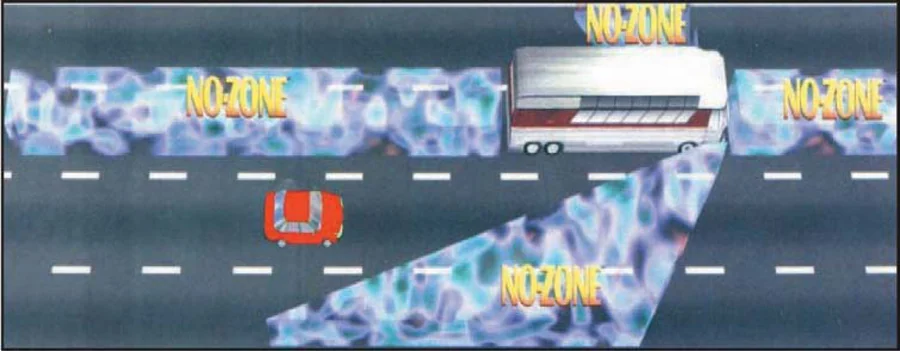
Handbook p. 82 ↗ No-Zone The blind spots around the front, back and sides of trucks and buses, where crashes are more likely because the driver can't see you.
Handbook p. 82 ↗ The No-Zones around a truck Know the rule
If you can't see the truck or bus driver in their side mirrors, they can't see you. Don't hang out in the No-Zone.
Handbook p. 82 ↗ Know the rule
If you cut in front of a truck and brake suddenly, you cut its available stopping distance in half.
Handbook p. 82 ↗ More than 60% Share of fatal car/truck crashes involving the front of the truck
Handbook p. 83 ↗ Know the rule
When passing a truck, look for its whole front in your rear-view mirror before pulling in front, and then don't slow down.
Handbook p. 83 ↗ Know the rule
Don't tailgate. Trucks are almost as wide as your lane and block your view, and their metal bumpers may not line up with yours. Leave more room than for a passenger vehicle.
Handbook p. 83 ↗ Know the rule
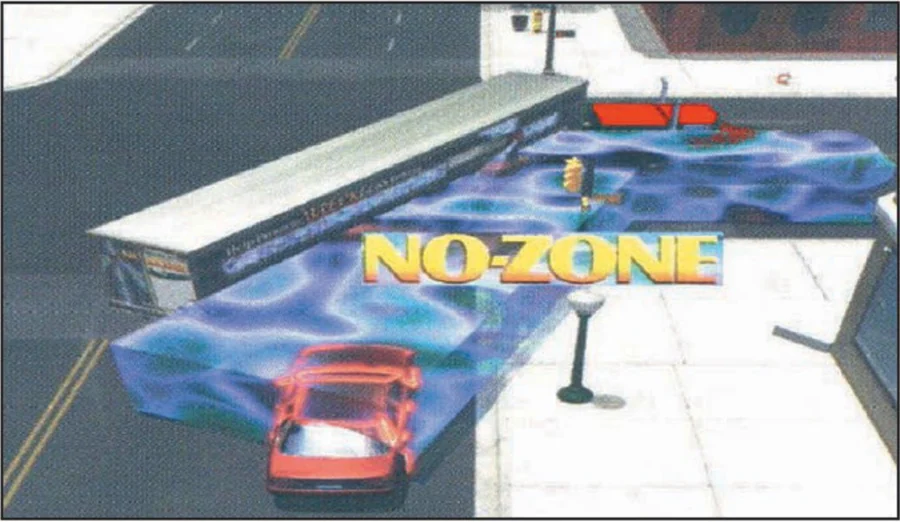
Trucks swing wide to the left to make right turns. Don't get between a turning truck and the curb, or you'll be caught in a "squeeze."
Handbook p. 83 ↗ Truck No-Zone while turning Know the rule
A truck has a "deaf spot": partial vacuum often prevents the driver from hearing your horn.
Handbook p. 69 ↗ Put it into practice
A semi ahead signals a right turn and swings wide to the left. Stay back. Don't pull up on its right; it needs that space to turn, and you'd be squeezed against the curb.
Check your understanding Read the question, decide on an answer, then open it to check the explanation. These are Roadwise study questions based on the source handbook.
What percentage of fatalities in large truck/car crashes are sustained by the car's occupants? 78 percent 25 percent 50 percent 95 percent Answer: 78 percent
Occupants of the car, usually the driver, sustain 78% of fatalities in these crashes.
Handbook p. 82 ↗ What is the 'No-Zone' around large trucks and buses? A designated passing lane for trucks The blind spots where crashes are more likely because truck drivers can't see you A zone where cars are banned entirely The area directly behind a truck only Answer: The blind spots where crashes are more likely because truck drivers can't see you
The No-Zone is the blind spot area around trucks and buses where crashes are more likely.
Handbook p. 82 ↗ If you can't see a truck driver in their side mirror, what does that mean? It means they are unusually cautious It has no relevance to visibility They can't see you either The truck has no blind spot on that side Answer: They can't see you either
If you can't see the driver in their mirror, they can't see you.
Handbook p. 82 ↗ At 55 mph, roughly how far does a car need to stop, compared to a truck needing about 400 feet? About 400 feet, the same as a truck About 50 feet About 250 feet About 130 to 140 feet Answer: About 130 to 140 feet
A car traveling 55 mph can stop in about 130-140 feet, while a truck needs about 400 feet.
Handbook p. 82 ↗ What percentage of fatal car/truck crashes involve impact with the front of the truck? Over 60 percent About 10 percent About 25 percent About 90 percent Answer: Over 60 percent
More than 60% of fatal car/truck crashes involve impacts with the front of the truck.
Handbook p. 83 ↗ What is dangerous about cutting between a truck and the curb during its wide right turn? It has no real danger if you're alert It only risks minor paint scratches It is illegal but not dangerous You can get caught in a 'squeeze' and suffer a serious collision Answer: You can get caught in a 'squeeze' and suffer a serious collision
Cutting in between the truck and curb risks a dangerous squeeze collision.
Handbook p. 83 ↗ Previous lesson School buses & slow-moving vehicles Next lesson Moose & other animals About the source Roadwise’s Alaska course uses the driver handbook edition supplied with this study pack. This lesson cites source pages 69, 82, 83. The linked PDF is a third-party mirror of the handbook, rather than a government-hosted page.
Open the handbook source PDF · View the source edition
For current application requirements, fees, appointments, and the format that applies to your age or license type, check Alaska’s DMV. Roadwise provides study material and does not issue permits or licenses.