Roadwise States Wisconsin Driving lessons Bicycles & Truck No-Zones Wisconsin driving lesson · Sharing the Road
Bicycles & Truck No-Zones A 2-minute lesson from the Wisconsin course. Read the rules and examples, follow the handbook page references, and check your understanding before you move on.
Read time 2 minutes
Course unit Sharing the Road
Checkpoint questions 6
Source pages 56 Bicyclists have a right to the lane, and large trucks have huge blind spots. Give both plenty of space.
Know the rule
Bicyclists can use the whole traffic lane. Don't share a lane with a bicyclist: they can move into your path quickly and without warning.
Handbook p. 56 ↗ Know the rule
Wait for oncoming traffic to clear before passing a bicyclist.
Handbook p. 56 ↗ Know the rule
Bicyclists should have reflectors or lights, but some don't, so be watchful and alert around them.
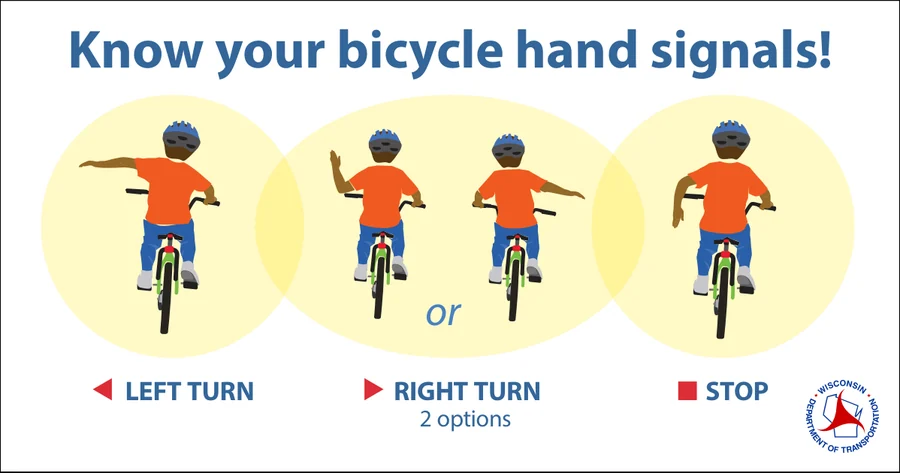
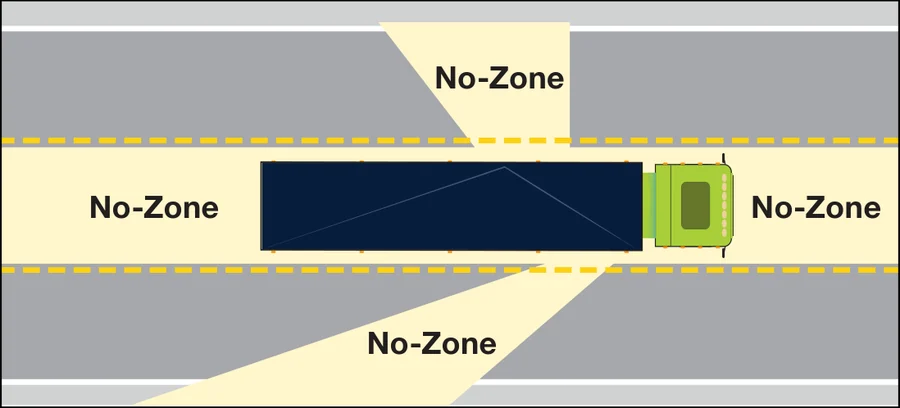
Handbook p. 56 ↗ Bicycle hand signals: left turn, right turn (2 options), stop No-Zones Areas around large vehicles where the driver cannot see you, including close behind and right in front of big trucks.
Handbook p. 56 ↗ Know the rule
Either speed up or drop back so the truck driver can see you. When passing, get out of the blind spot quickly.
Handbook p. 56 ↗ No-Zones in front, behind and beside a truck Put it into practice
You're about to pass a bicyclist on a two-lane road when an oncoming car appears. Slow down and stay behind the bike. After the car passes, move over so you leave at least 3 feet as you go by.
A useful reminder Truck No-Zones: about 200 feet behind, 20 feet in front. Speed up or drop back so the driver can see you.
Check your understanding Read the question, decide on an answer, then open it to check the explanation. These are Roadwise study questions based on the source handbook.
How much room must you give a bicyclist when passing? At least 6 feet At least 1 foot At least 3 feet At least 10 feet Answer: At least 3 feet
Give bicyclists at least three feet of room when you pass.
Handbook p. 56 ↗ Should you share a lane with a bicyclist? Yes, if you're going the same speed Yes, if the lane is wide enough Yes, only on residential streets No, never Answer: No, never
Do not share a lane with bicyclists; they can use the whole traffic lane.
Handbook p. 56 ↗ Before passing a bicyclist with oncoming traffic present, you should: Straddle the center line Wait for oncoming traffic to clear Pass quickly before the oncoming car arrives Pass while the bicyclist moves right Answer: Wait for oncoming traffic to clear
Wait for oncoming traffic to clear before passing a bicyclist.
Handbook p. 56 ↗ About how far behind a large truck does its No-Zone extend? About 200 feet About 20 feet About 50 feet About 500 feet Answer: About 200 feet
The No-Zone extends about 200 feet behind a large truck.
Handbook p. 56 ↗ About how far in front of a large truck does its No-Zone extend? About 10 feet About 200 feet About 20 feet About 100 feet Answer: About 20 feet
The No-Zone extends about 20 feet in front of a large truck.
Handbook p. 56 ↗ If you're stuck in a truck's No-Zone, what should you do? Flash your high beams and wait Speed up or drop back so the driver can see you Honk so the driver knows you're there Stay beside the truck's cab Answer: Speed up or drop back so the driver can see you
Either speed up or drop back so the other driver can see you.
Handbook p. 56 ↗ Previous lesson School Buses & Motorcycles Next lesson Point System & Habitual Offenders About the source Roadwise’s Wisconsin course uses the driver handbook edition supplied with this study pack. This lesson cites source pages 56. The linked PDF is a third-party mirror of the handbook, rather than a government-hosted page.
Open the handbook source PDF · View the source edition
For current application requirements, fees, appointments, and the format that applies to your age or license type, check Wisconsin’s DMV. Roadwise provides study material and does not issue permits or licenses.