West Virginia driving lesson · Driving on Interstates
Interstate routes, entering and exiting
A 4-minute lesson from the West Virginia course. Read the rules and examples, follow the handbook page references, and check your understanding before you move on.
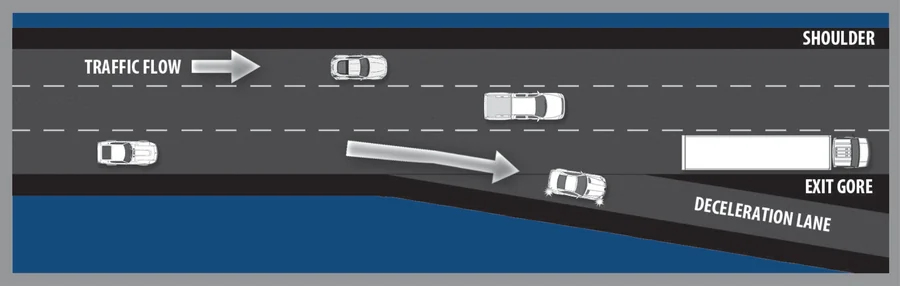
Interstates have largely removed head-on collisions, but high speeds demand constant alertness. Most of the danger is at the ends: getting on, getting off, and changing lanes near interchanges.
Interstate route numbers:
Even numbers run east to west
Odd numbers run north to south
Three digits with an even first number: beltways or bypasses around cities
Three digits with an odd first number: spur routes
Interstates are marked with red, white, and blue shields. Plan your route ahead, since entrances and exits can be far apart, and check gas, water, oil and tires (including the spare) before you go.
The first guide sign for an interchange comes well before the exit, so you can change lanes smoothly. A lane that is ending is usually marked by a black and yellow panel below the green overhead sign.
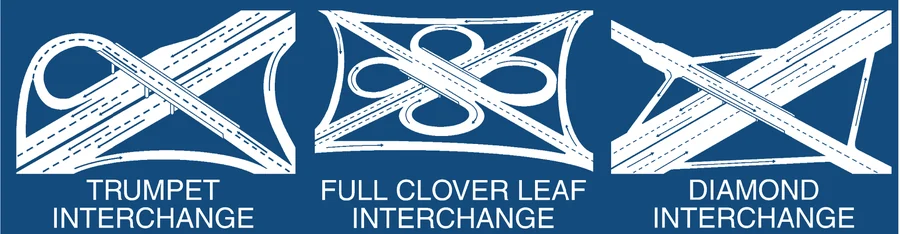
Where two highways cross at different levels, with connecting roads so traffic can cross, enter or leave without interfering. Common types: cloverleaf, diamond, trumpet.
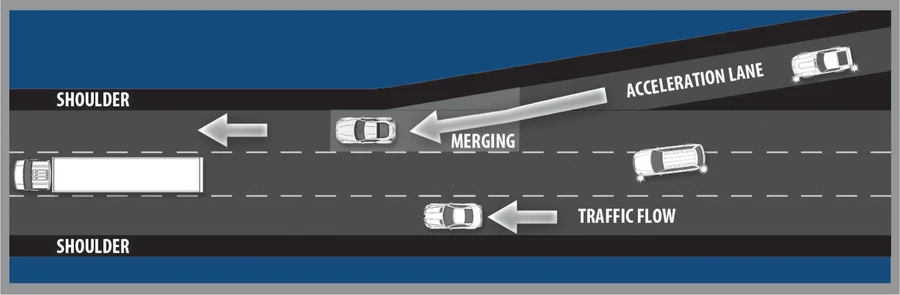
You're merging onto I-79 and a truck fills the gap you picked. Don't stop on the ramp. Adjust your speed to the next gap. Only if none appears, pull onto the shoulder beyond the acceleration lane and stop as a last resort.
Check your understanding
Read the question, decide on an answer, then open it to check the explanation. These are Roadwise study questions based on the source handbook.
Even-numbered interstate highways generally run in which direction?
North to south
Northeast to southwest
In a circular loop only
East to west
Answer: East to west
Even-numbered interstates generally run east to west, while odd-numbered ones run north to south.