Roadwise States Washington Driving lessons Stop, yield, speed, and camera signs Washington driving lesson · Signs and Signals
Stop, yield, speed, and camera signs A 3-minute lesson from the Washington course. Read the rules and examples, follow the handbook page references, and check your understanding before you move on.
Read time 3 minutes
Course unit Signs and Signals
Checkpoint questions 6
Source pages 114, 115 These are the signs you'll meet every day. Stop and yield signs decide who goes first, and speed signs set limits that still depend on conditions. Some intersections and school zones have cameras that enforce the rules for you.
Know the rule
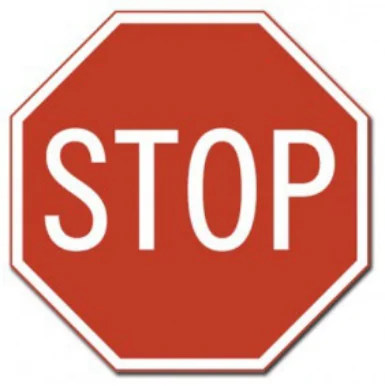
Stop sign: stop at the line, crosswalk, or corner. Look for crossing vehicles and pedestrians in all directions and yield the right-of-way.
Handbook p. 114 ↗ Stop sign Know the rule
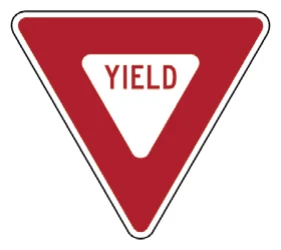
Yield sign: slow down and let traffic that has the right-of-way cross first.
Handbook p. 114 ↗ Yield sign Know the rule
The maximum speed limit is for ideal conditions. Slow down when the road is slippery or it's foggy and hard to see.
Handbook p. 114 ↗ Know the rule
Even under the posted limit, you can get a ticket for driving too fast for conditions.
Handbook p. 114 ↗ Know the rule
Some roads have minimum speed limits. You must travel at least that fast so you aren't a hazard to other drivers.
Handbook p. 114 ↗ Know the rule
Keep Right signs remind you to stay in the right lane unless you're passing another vehicle.
Handbook p. 114 ↗ Automated traffic safety cameras record images if you: Fail to stop at a steady red light Fail to stop at a railroad crossing signal Exceed the speed limit in a school zone Handbook p. 115 ↗ Know the rule
All camera locations are clearly marked. Tickets from them are mailed to the vehicle's owner.
Handbook p. 115 ↗ Know the rule
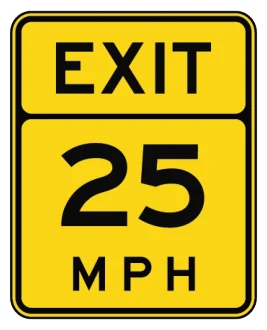
Speed warning signs recommend a slower speed for a hazard, often a curve or turn. Adjust for road, weather, and traffic, and follow the warning speed.
Handbook p. 115 ↗ Speed warning sign: exit 25 mph Know the rule
Variable speed limit signs are digital signs that post changing limits to spread out traffic. Advance notification signs can close entire lanes and warn you of slower traffic ahead.
Handbook p. 115 ↗ Know the rule
One Way signs mark streets where traffic flows only in the arrow's direction. Never drive the wrong way on a one-way street.
Handbook p. 115 ↗ Put it into practice
The freeway limit is 60 mph, but thick fog cuts your visibility to a few car lengths. Driving 55 isn't automatically legal: you can be ticketed for going too fast for conditions. Slow down to what's safe.
A useful reminder Cameras catch three things: running a steady red, running a railroad signal, and speeding in a school zone.
Check your understanding Read the question, decide on an answer, then open it to check the explanation. These are Roadwise study questions based on the source handbook.
The posted speed limit represents the maximum safe speed under what conditions? Nighttime conditions Heavy traffic conditions Ideal conditions Rainy conditions Answer: Ideal conditions
The maximum speed limit is for ideal conditions; you must slow further when conditions require it.
Handbook p. 114 ↗ You're driving exactly at the posted speed limit, but the road is icy. Can you still get a ticket? Only if you're driving at night Yes, for going too fast for conditions No, the posted limit is always a safe harbor No, unless you exceed the limit by 5 mph Answer: Yes, for going too fast for conditions
Even driving under the posted limit, you can be ticketed for traveling too fast for road conditions.
Handbook p. 114 ↗ Why do some roads post a minimum speed limit? So slow driving doesn't become a hazard to others To keep trucks out of the left lane Because of a state law requiring one on all highways To reduce fuel consumption Answer: So slow driving doesn't become a hazard to others
Minimum speed limits require you to travel fast enough that you aren't a hazard to other drivers.
Handbook p. 114 ↗ Which violation can an automated traffic safety camera record you for? Parking too close to a hydrant Failing to signal a lane change Driving with expired tabs Speeding in a school zone Answer: Speeding in a school zone
Automated cameras can record you for running a red light, running a railroad signal, or speeding in a school zone.
Handbook p. 115 ↗ A Keep Right sign reminds you to stay in the right lane unless you're passing another vehicle. True False Answer: True
The Keep Right sign reminds drivers to stay right except when passing.
Handbook p. 114 ↗ Variable speed limit signs are meant to do what during changing traffic conditions? Only apply to commercial trucks Distribute traffic flow by posting changing speed limits and closing lanes Fix the speed limit at the highest posted value Replace all static speed limit signs permanently Answer: Distribute traffic flow by posting changing speed limits and closing lanes
These digital signs help distribute traffic flow with changing speed limits and can quickly close lanes when needed.
Handbook p. 115 ↗ Previous lesson Sign colors and guide signs Next lesson No-go, lane, roundabout, and work zone signs More in Signs and Signals About the source Roadwise’s Washington course uses the driver handbook edition supplied with this study pack. This lesson cites source pages 114, 115. The linked PDF is a third-party mirror of the handbook, rather than a government-hosted page.
Open the handbook source PDF · View the source edition
For current application requirements, fees, appointments, and the format that applies to your age or license type, check Washington’s DOL. Roadwise provides study material and does not issue permits or licenses.