A 3-minute lesson from the Washington course. Read the rules and examples, follow the handbook page references, and check your understanding before you move on.
Merging and turning in front of traffic both come down to time: how much you need, and how much the gap really gives you. Judge it well and nobody has to swerve or brake for you. Judge it badly and a small gap becomes a crash.
Know the rule
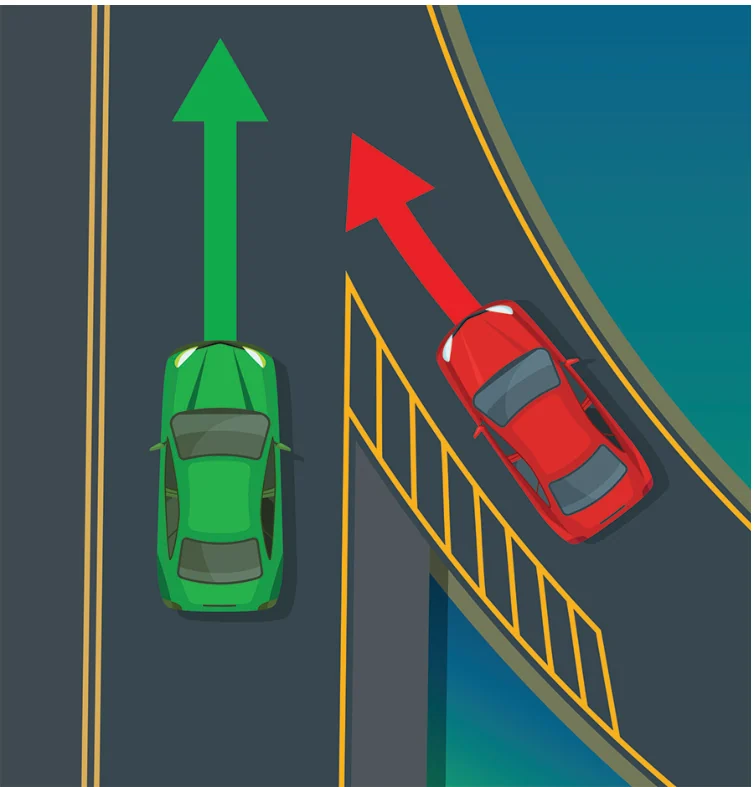
Merge with enough space that the people around you don't have to swerve, slow, or stop. Squeezing into a gap that's too small is dangerous.
Drivers already on the interstate have the right-of-way. Adjust your speed, faster or slower, and use the entire on-ramp, your turn signal, and your mirrors to merge into a safe space.
Scanning as far ahead as you can see, and to the sides, so you have time to see, analyze, and respond to hazards. It's a proactive part of defensive driving.
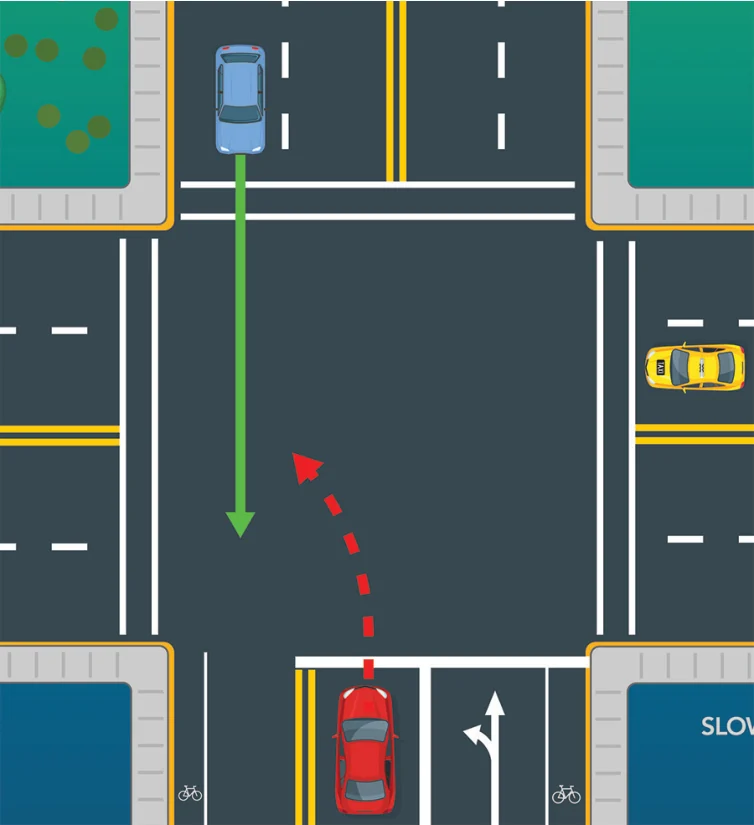
Turning in front of oncoming traffic, remember it has the right-of-way. Count how many seconds an oncoming car takes to pass a marker and clear your road, then use that to judge the next gap. Too much time beats not enough.
Two lanes narrow to one at a construction zone, and traffic is slow. Don't merge early and don't race ahead to cut in. Stay in your lane to the merge point, then alternate: one car from the other lane, then you.
Check your understanding
Read the question, decide on an answer, then open it to check the explanation. These are Roadwise study questions based on the source handbook.
By about how much does zipper merging improve traffic flow through a lane closure?
20 percent
90 percent
10 percent
60 percent
Answer: 60 percent
Zipper merging improves traffic flow by about 60 percent.