A 3-minute lesson from the South Dakota course. Read the rules and examples, follow the handbook page references, and check your understanding before you move on.
You can't control other drivers or road conditions, but you can control your vehicle's condition. A car in good shape gives you an extra safety margin in an emergency; one in bad shape can break down or cause a collision.
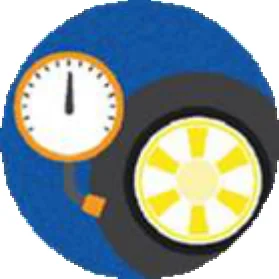
Check tire pressure monthly with a gauge:
Find the PSI number on the sticker inside the driver's door jamb (or in the owner's manual)
Check when the tires are cold
Remove the valve cap and read the gauge
Too high: let air out. Too low: inflate until the numbers match
Have the brakes checked if they're noisy, smell funny, or the pedal goes to the floor. Check turn signals, brake lights, taillights and headlights from outside the vehicle; an out-of-line headlight can blind other drivers.
Exhaust leaks can cause death inside a vehicle in a very short time. Never run the motor in a closed garage, and open a window if you sit in a running vehicle for a long time.
Other drivers keep flashing their headlights at you at night, even though your low beams are on. Your headlights may be out of line and shining into their eyes. Have a mechanic check them.
Check your understanding
Read the question, decide on an answer, then open it to check the explanation. These are Roadwise study questions based on the source handbook.
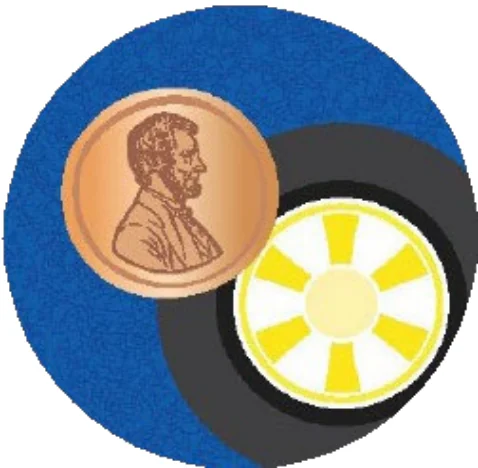
When checking tread depth with a penny, what does it mean if you can see all of Lincoln's head?
The tire needs to be rotated
The tire pressure is too low
The tire is too worn to keep using
The tire has plenty of tread left
Answer: The tire is too worn to keep using
If you can see all of Lincoln's head when the penny is placed in the tread, the tire is too worn and must be replaced.