Oregon driving lesson · Buses, Railroads & Special Situations
Railroad Crossings
A 4-minute lesson from the Oregon course. Read the rules and examples, follow the handbook page references, and check your understanding before you move on.
Trains can't swerve and can't stop quickly, and they're closer and faster than they look. At every crossing: look, listen and slow down, because you may have to stop. Cross only when you're sure you can completely clear the tracks.
How crossings are marked
A railroad advance sign warns that a crossing is ahead
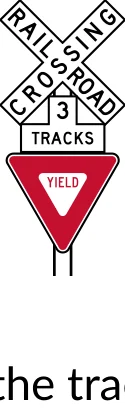
A crossbuck assembly includes a yield or stop sign — obey the posted sign
With more than one track, a sign below the crossbuck shows the number of tracks
A crossing signal has flashing red lights and may have a gate with flashing red lights
Pavement markings include a large “X” with the letters “RR”
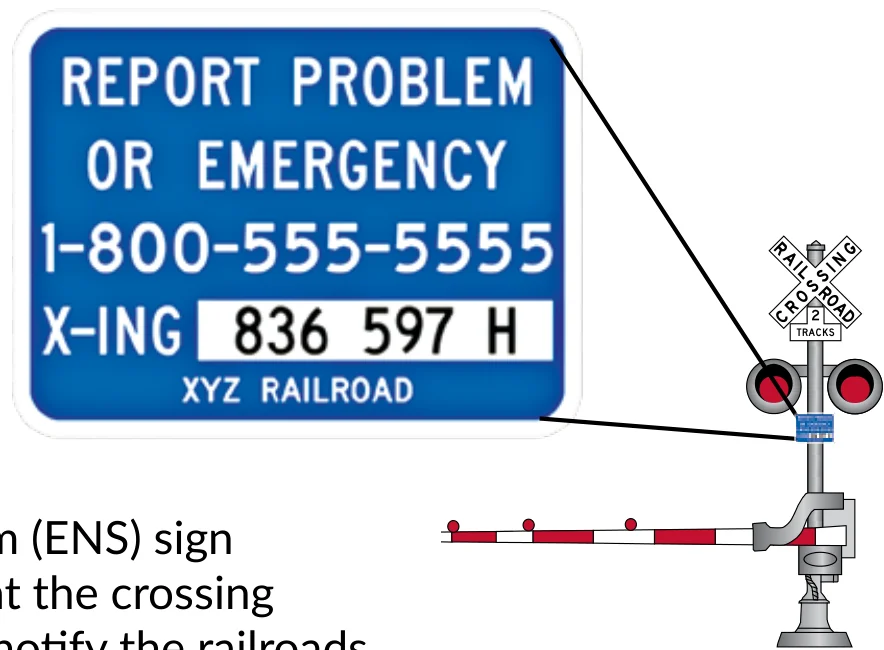
Your car stalls on the tracks. Get everyone out and away first — don't try to restart it. Then, if it's safe, use the ENS sign posted at the crossing to notify the railroad so it can alert trains. If a train approaches, move away at a 45 degree angle toward the train.
Check your understanding
Read the question, decide on an answer, then open it to check the explanation. These are Roadwise study questions based on the source handbook.
If there is no stop line at a railroad crossing where you must stop, how far from the nearest rail should you stop?
At least 12 feet
At least 20 feet
At least 50 feet
At least 15 feet
Answer: At least 15 feet
Without a stop line, stop at least 15 feet from the nearest rail.