roadwise.Open study app

North Dakota driving lesson · Emergencies & Winter Driving

Snowplows & correcting skids

A 3-minute lesson from the North Dakota course. Read the rules and examples, follow the handbook page references, and check your understanding before you move on.

Read time
3 minutes
Course unit
Emergencies & Winter Driving
Checkpoint questions
4
Source pages
32, 33

Snowplows and slick roads bring their own hazards. Give plows lots of room. If your car starts to skid, how you correct it depends on which wheels drive the car. Most skids come from going too fast for the conditions.

Around snowplows:

  • Stay well back; plows stop and back up, can't see directly behind, and throw sand
  • On multi-lane roads, know where the plow is: it could be in either lane or on the shoulder
  • Pass with extreme caution; drifts and hard snow-pack can push a plow sideways
  • Never drive into whiteouts from crosswinds or plowing; wait until you can see
  • Watch for plows on Interstate ramps and turning on authorized-vehicle-only crossovers
Handbook p. 32 ↗

Know the rule

Snowplows pull over and stop often to let traffic pass. Be patient.

Handbook p. 32 ↗

Know the rule

Don't assume you'll have good traction because the road looks sanded. The sand can sink into the snow-pack, leaving a slick surface.

Handbook p. 32 ↗

Know the rule

Most winter crashes are caused by driving too fast for conditions, and most skids come from driving too fast on slippery roads. The key is slower speed.

Handbook p. 33 ↗

Correcting a skid

Correcting a skid
VehicleWhat to do
Rear-wheel driveStay off brakes, ease off gas, steer where rear slides
Front-wheel drive, moderate speedAccelerate slightly and steer where you want to go
Four-wheel drive, moderate speedAccelerate and steer into the direction of the skid
4WD at higher speed or no roomPush in the clutch or shift into neutral
Handbook p. 33 ↗

Know the rule

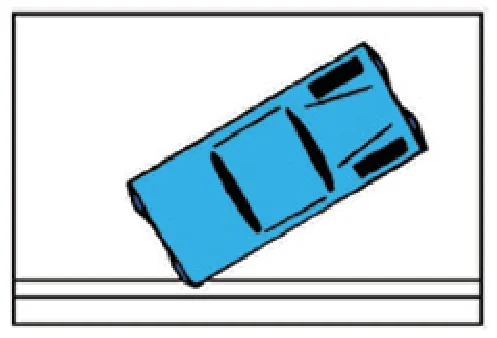
Rear-wheel drive: if the rear end skids right, steer right. If it skids left, steer left.

Handbook p. 33 ↗

Know the rule

Front-wheel drive: if there's no room to accelerate, shift into neutral or push in the clutch. Front-wheel drive steers positively, accurately and quickly: the vehicle goes exactly where you point it.

Handbook p. 33 ↗

Know the rule

Four-wheel drive vehicles tend to give drivers a false sense of security, so slower speeds on slippery surfaces are extremely important.

Handbook p. 33 ↗
Vehicle in floodwater (illustration)
Vehicle in a rear-end skid

Put it into practice

In your rear-wheel-drive pickup, the back end slides left on an icy curve. Take your foot off the brake, ease off the gas, and steer left, the way the rear is skidding, until you regain control.

Check your understanding

Read the question, decide on an answer, then open it to check the explanation. These are Roadwise study questions based on the source handbook.

In a rear-wheel drive vehicle that begins to skid, what should you do?
  1. Brake hard immediately
  2. Stay off the brakes and steer in the direction the rear end is skidding
  3. Turn the wheel opposite the direction of the skid
  4. Accelerate hard to regain traction

Answer: Stay off the brakes and steer in the direction the rear end is skidding

In a rear-wheel drive vehicle, stay off the brakes, ease off the accelerator, and steer in the direction the rear end is skidding.
Handbook p. 33 ↗
In a front-wheel drive vehicle skidding at moderate speed, what should you do?
  1. Brake firmly and steer opposite the skid
  2. Brake hard and hold the wheel straight
  3. Turn the wheel sharply away from your intended path
  4. Accelerate slightly and steer in the direction you want to go

Answer: Accelerate slightly and steer in the direction you want to go

A front-wheel drive vehicle skidding at moderate speed should be steered by accelerating slightly and pointing where you want to go.

Handbook p. 33 ↗
When following a snowplow, what should you avoid?
  1. Waiting for the plow to pull over
  2. Crowding the plow or following too closely
  3. Staying in your own lane
  4. Slowing down behind the plow

Answer: Crowding the plow or following too closely

Stay well back from snowplows and never crowd the plow, since they may stop or back up suddenly.

Handbook p. 32 ↗
Four-wheel drive vehicles can give drivers a false sense of security on slippery roads.
  1. True
  2. False

Answer: True

The handbook warns that four-wheel drive vehicles tend to give drivers a false sense of security, so slower speeds remain important.

Handbook p. 33 ↗
Take the lesson checkpoint in the app

More in Emergencies & Winter Driving