Roadwise States New York Driving lessons Parallel parking & parking on a hill New York driving lesson · Parallel Parking
Parallel parking & parking on a hill A 4-minute lesson from the New York course. Read the rules and examples, follow the handbook page references, and check your understanding before you move on.
Read time 4 minutes
Course unit Parallel Parking
Checkpoint questions 6
Source pages 42, 43 Parallel parking is part of every New York road test, and many drivers find it the hardest skill. Practice teaches you to back up correctly and judge distances and angles. These steps are general, so adjust them to each space.
Know the rule
Backup cameras, range sensors and self-parking features can help, but you must still check the area behind you before backing. You, the driver, are ultimately responsible for operating the vehicle safely.
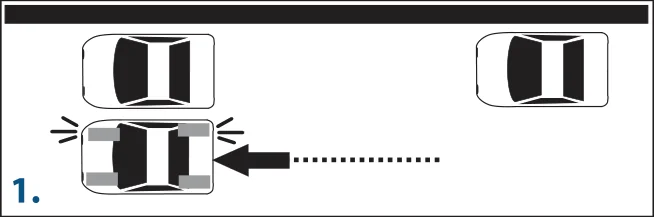
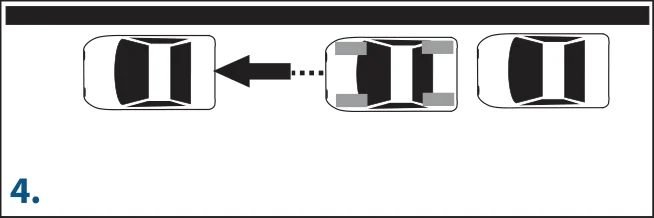
Handbook p. 42 ↗ Step 1: stop beside the car in front of the space How to parallel park: 1. Pick a space big enough on your side of the road; check mirrors and signal before you stop 2. Stop beside the vehicle in front of the space, about two feet from it 3. Look over both shoulders; back slowly, turning the wheel fully toward the near curb 4. Look through the rear window, not the mirrors, and glance ahead so you don't touch the car in front 5. When your front wheels are opposite the back bumper of the car ahead, turn the wheel the other way 6. Look back and stop before you bump the vehicle behind you 7. Straighten the wheels and pull forward, leaving room in front and behind Handbook p. 42 ↗ Final step: straighten out and center the car in the space 2 feet Gap to leave beside the vehicle in front of the space as you start
Handbook p. 42 ↗ 1 foot Maximum distance between your wheels and the curb in your final position
Handbook p. 42 ↗ Know the rule
To get nearer the curb, alternately pull forward and back up, turning the wheel first toward the curb and then quickly straight again.
Handbook p. 42 ↗ Know the rule
After parking, don't open the door on the road side if it will interfere with bicyclists and other traffic.
Handbook p. 42 ↗ Know the rule
Parking on a hill: set the parking brake, put the transmission in "Park" (manual: 1st gear) and turn the wheels toward the curb or side of the road, so they'll keep the vehicle from rolling into traffic.
Handbook p. 42 ↗ Pulling out of a parallel space: straighten your wheels, back up toward the car behind, turn your wheels away from the curb, then: 1. Look over your right shoulder through the rear window for pedestrians, bicyclists and vehicles 2. Use your interior mirror to watch hazards behind you 3. Signal your intention to move into traffic 4. Check your side mirrors for oncoming vehicles, cyclists, skaters and others 5. Look over your left shoulder and begin slowly driving forward, clearing the car ahead 6. Look over your left shoulder again and drive into the lane when it is safe Handbook p. 43 ↗ Put it into practice
You've finished backing into a space and your wheels are about 18 inches from the curb. That's too far: the limit is one foot. Pull forward and back up again, turning toward the curb and then straightening, until you're within one foot.
A useful reminder Back up looking through the rear window, not the mirrors.
Check your understanding Read the question, decide on an answer, then open it to check the explanation. These are Roadwise study questions based on the source handbook.
After parallel parking, how close to the curb must your wheels be? No more than six inches No more than three feet No more than one foot Exactly touching the curb Answer: No more than one foot
In your final parking position, your wheels must be no more than one foot from the curb.
Handbook p. 42 ↗ You've parked on a hill facing downhill. What should you do with your front wheels? Turn them away from the curb Leave them straight Turn them toward oncoming traffic Turn them toward the curb Answer: Turn them toward the curb
After parking on a hill, turn the wheels toward the curb or side of the road so they keep the vehicle from heading into traffic.
Handbook p. 42 ↗ What should you do with your vehicle's transmission after parking on a hill? Park, or 1st gear if manual Leave it in Drive with the brake on Put it in neutral Put it in reverse Answer: Park, or 1st gear if manual
After setting the parking brake, put an automatic in Park or a manual in 1st gear.
Handbook p. 42 ↗ Before pulling out of a parallel parking space, what is one of the six recommended steps? Only check your side mirrors Look over your right shoulder Signal and pull out at once Only check your rearview mirror Answer: Look over your right shoulder
The six steps include looking over your right shoulder through the rear window to check for pedestrians and other hazards.
Handbook p. 43 ↗ When can you open your door on the road side of your parked vehicle? Anytime, as long as no cars are in your lane Never, under any circumstances Only if it won't hinder bikes or traffic Only if you're picking up a passenger Answer: Only if it won't hinder bikes or traffic
You must not open the door on the road side if it will interfere with bicyclists and other traffic.
Handbook p. 42 ↗ When backing into a parallel parking space, where should you look? Through the rear window Only in your rearview mirror Only in your side mirrors Straight ahead through the windshield Answer: Through the rear window
Look through the rear window, not the mirrors, when you back up while parallel parking.
Handbook p. 42 ↗ Previous lesson Stopping for school buses Next lesson No parking, no standing, no stopping About the source Roadwise’s New York course uses the driver handbook edition supplied with this study pack. This lesson cites source pages 42, 43. The linked PDF is a third-party mirror of the handbook, rather than a government-hosted page.
Open the handbook source PDF · View the source edition
For current application requirements, fees, appointments, and the format that applies to your age or license type, check New York’s DMV. Roadwise provides study material and does not issue permits or licenses.