A 3-minute lesson from the New Mexico course. Read the rules and examples, follow the handbook page references, and check your understanding before you move on.
You also need to know what's behind you, checking more often in heavy traffic. It's the only way to know if someone is tailgating or closing fast. Check behind whenever you change lanes, slow down, back up, or drive down a long or steep hill.
Changing lanes
Includes moving from one lane to another, merging onto a road from an entrance ramp, and entering the road from the curb or shoulder.
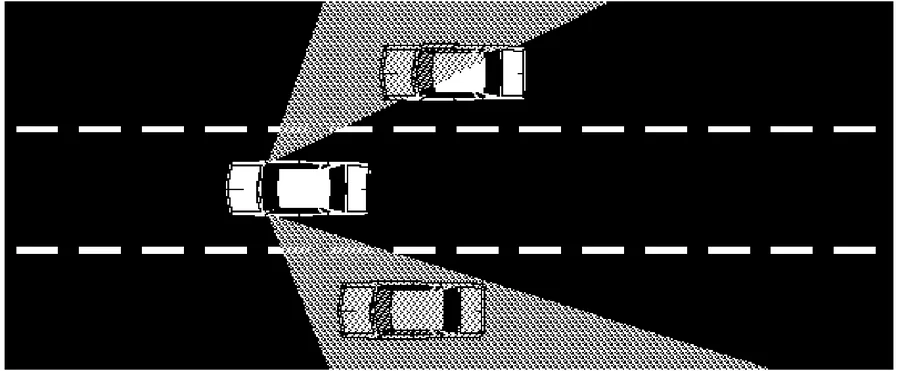
Use your mirrors while preparing to change lanes, so you can watch ahead at the same time; check over your shoulder just before you move. Look several short times rather than one long look.
Check behind whenever you slow down, especially if you slow quickly or where a following driver wouldn't expect it, like a private driveway or parking space.
You're about to move left on the highway. Your mirrors look clear, but a quick shoulder check reveals a car in your blind spot. You wait until it passes, then signal and move.
Check your understanding
Read the question, decide on an answer, then open it to check the explanation. These are Roadwise study questions based on the source handbook.
Why shouldn't you rely on your mirrors alone when backing up?
Mirrors don't show directly behind you
Mirrors make objects seem farther away
Mirrors can't be adjusted while backing
Mirrors distort colors at night
Answer: Mirrors don't show directly behind you
Do not depend on your rearview or side mirrors when backing, since you cannot see directly behind you in them.