New Jersey driving lesson · Signs, Signals, and Road Markings
Warning, work zone, and regulatory signs
A 3-minute lesson from the New Jersey course. Read the rules and examples, follow the handbook page references, and check your understanding before you move on.
Warning signs tell you what's ahead, work zone signs tell you how the road is changing, and regulatory signs tell you what you must do. Flaggers in work zones carry the same authority as a regulatory sign.
Know the rule
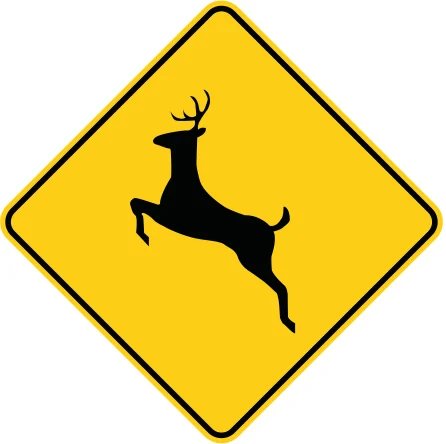
Warning signs cover road conditions needing caution and specific hazards, such as deer crossings, railroad crossings, school crossings or curves.
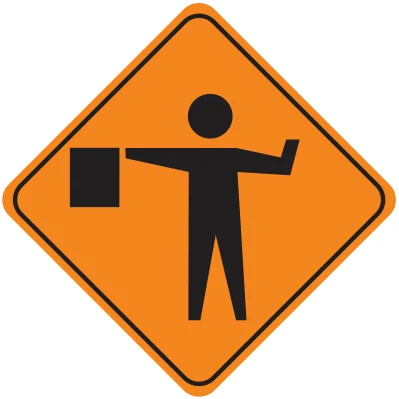
Road work signs are orange diamonds warning of lane closings, lane shifts, flaggers, uneven pavement and detours. Reduced speed limit signs are posted alongside them, and all traffic fines are doubled in work zones.
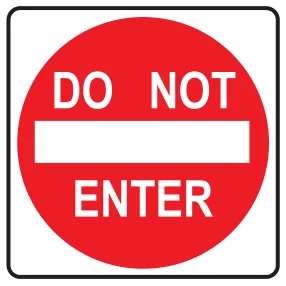
Regulatory signs are generally vertical rectangles with black wording and border on white. STOP is an octagon with white wording on red; YIELD is a white inverted triangle with red wording and border.
Two national truck-route signs are used in New Jersey: green marks routes and ramps where trucks are permitted (and routes to services and terminals); red marks where trucks are prohibited and the end of designated routes.
In a work zone, a flagger holds up a STOP paddle even though the lane ahead looks clear. Stop: the flagger's direction carries the same force as a regulatory sign.
Check your understanding
Read the question, decide on an answer, then open it to check the explanation. These are Roadwise study questions based on the source handbook.
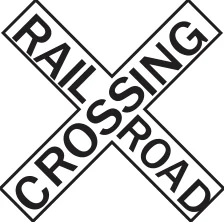
What does an X-shaped (crossbuck) railroad crossing sign mean?
The same as a Stop sign
The same as a Yield sign
A railroad crossing is 500 feet ahead
Nothing unless its lights are flashing
Answer: The same as a Yield sign
A crossbuck sign means the same as a Yield sign, and motorists must always yield the right-of-way to trains.