A 3-minute lesson from the Nevada course. Read the rules and examples, follow the handbook page references, and check your understanding before you move on.
Freeways are usually the safest roads: limited access, one-way traffic, and no intersections, signals, sharp curves or railroad crossings. The risky moments are getting on and off, so plan your route and know your entrances and exits.
Entering a freeway:
Use the on-ramp — "Do Not Enter" and "Wrong Way" signs mean you've made a mistake
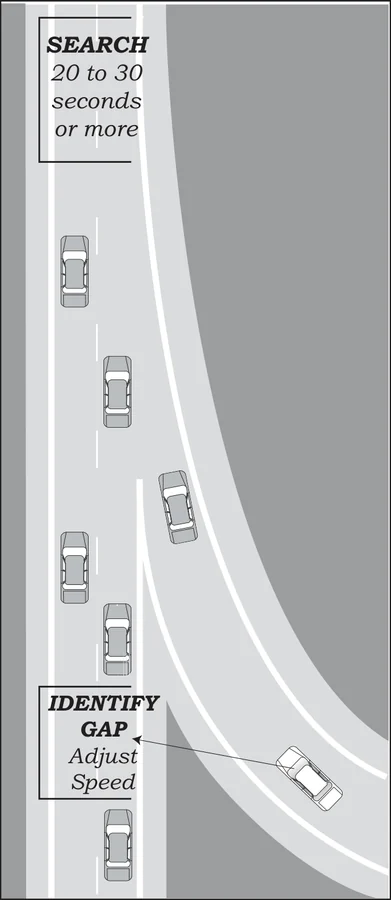
In the merge (acceleration) lane, find an opening, signal and speed up to or near freeway speed
Don't stop before merging unless necessary — it means a slow, dangerous start into fast traffic
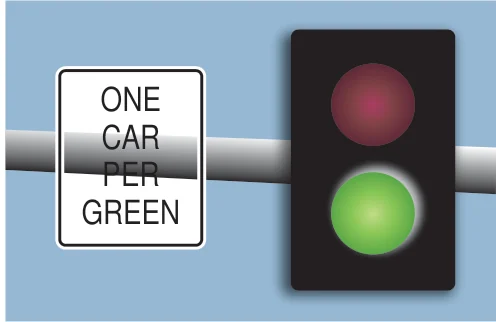
On ramps with more than one lane, each lane has its own meter: use both lanes and obey your lane's signal. HOV bypass lanes (diamond on the pavement) aren't metered — carpools of two or more may use them without stopping.
You realize too late that you're passing the Sahara Avenue exit. Stay in your lane, take the next exit, get back on the freeway going the other way, and return to Sahara.
Check your understanding
Read the question, decide on an answer, then open it to check the explanation. These are Roadwise study questions based on the source handbook.
When entering a freeway using the merge lane, you should:
Come to a complete stop before merging
Drive well below the speed of traffic for safety
Accelerate to or near the speed of freeway traffic
Keep to the ramp's posted speed
Answer: Accelerate to or near the speed of freeway traffic
Use the merge lane to accelerate to or near freeway speed before merging.