A 3-minute lesson from the Nebraska course. Read the rules and examples, follow the handbook page references, and check your understanding before you move on.
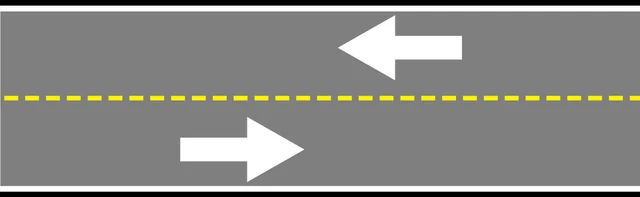
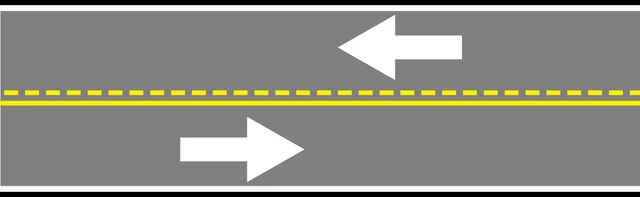
Road markings guide, warn and regulate traffic, and they may be yellow or white. Yellow lines separate traffic moving in opposite directions, and whether they're broken or solid tells you if you may pass.
Know the rule
Yellow center lines mean two-way traffic flowing in opposite directions.
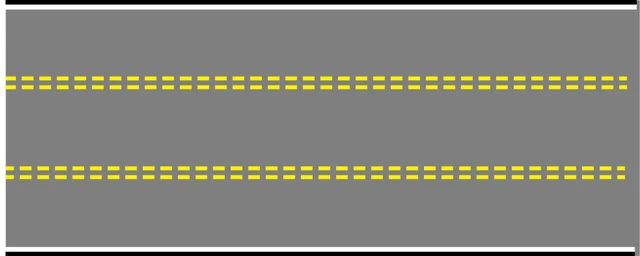
The only lawful crossings of double yellow lines are making a left turn into or from an alley, private road or driveway, or avoiding an obstruction, unless signs prohibit it.
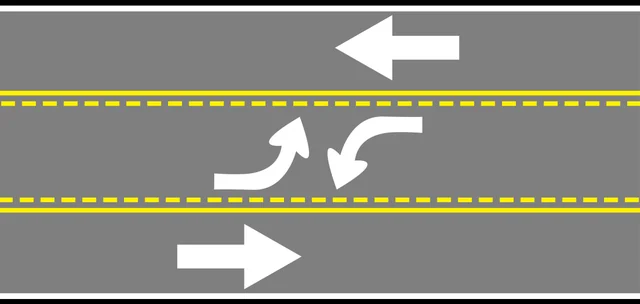
A center lane with solid and broken yellow lines on each side is a shared left-turn lane for traffic from both directions. Enter with caution and only to turn left; passing in it is prohibited. Signs or pavement arrows help identify it.
You're behind a slow tractor. On your side of the center is a solid yellow line with a broken line beyond it. You may not pass. Wait until the broken line is on your side and the way ahead is clear.
Check your understanding
Read the question, decide on an answer, then open it to check the explanation. These are Roadwise study questions based on the source handbook.
Yellow center line markings indicate:
One-way traffic only
Two-way traffic flowing in opposite directions
A reversible lane ahead
A pedestrian crossing zone
Answer: Two-way traffic flowing in opposite directions
Yellow center lines mark two-way, opposite-direction traffic.