roadwise.Open study app

Mississippi driving lesson · Hazards, Crashes & Emergencies

Yielding to emergency vehicles

A 2-minute lesson from the Mississippi course. Read the rules and examples, follow the handbook page references, and check your understanding before you move on.

Read time
2 minutes
Course unit
Hazards, Crashes & Emergencies
Checkpoint questions
4
Source pages
67

Sirens and flashing lights mean someone's life may be on the line. Get out of the way predictably: pull to the right and wait, and give extra room to emergency vehicles stopped at the roadside.

Know the rule

Any ambulance, fire engine or police car flashing red or blue lights, or signaling with a bell or siren, always has the right of way on any street, in any traffic situation.

Handbook p. 67 ↗
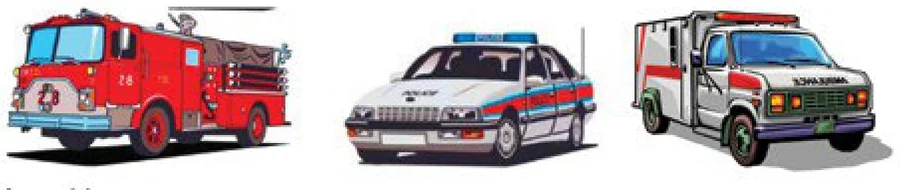
Emergency vehicles (fire, police, ambulance)
Fire engine, police car and ambulance

Know the rule

If possible, pull over to the extreme right shoulder of the road until the emergency vehicle has passed.

Handbook p. 67 ↗

Know the rule

If you're at an intersection, proceed through the intersection, then pull over to the extreme right shoulder.

Handbook p. 67 ↗

Know the rule

If an emergency vehicle with its lights or siren on is parked beside a four-lane highway, merge into the lane away from it if it's safe to do so.

Handbook p. 67 ↗

Know the rule

If merging into the next lane isn't safe, slow down and prepare to stop if necessary. You MUST yield the right of way.

Handbook p. 67 ↗

Put it into practice

You're in the right lane of a four-lane highway and see a police car with lights flashing stopped on the shoulder ahead. Check your mirrors and move into the left lane if it's safe; if it isn't, slow down and be ready to stop.

Check your understanding

Read the question, decide on an answer, then open it to check the explanation. These are Roadwise study questions based on the source handbook.

What must you do when you notice an emergency vehicle approaching with lights or siren active?
  1. Yield the right of way
  2. Speed up to clear the area quickly
  3. Continue at normal speed and let it pass
  4. Stop wherever you are immediately, even in the travel lane

Answer: Yield the right of way

Emergency vehicles always have the right of way; pull over to the extreme right shoulder if possible.
Handbook p. 67 ↗
If you're already in an intersection when an emergency vehicle approaches, what should you do?
  1. Stop immediately in the intersection
  2. Turn left to get out of the way
  3. Proceed through the intersection
  4. Reverse out of the intersection

Answer: Proceed through the intersection

If at an intersection, proceed through it first, then pull over to the extreme right shoulder.

Handbook p. 67 ↗
An emergency vehicle with its lights on is parked beside a four-lane highway. What should you do?
  1. Keep your speed and stay in your lane
  2. Move to the lane away from it if safe, or slow down
  3. Stop in your lane until it leaves
  4. Speed up to pass it quickly

Answer: Move to the lane away from it if safe, or slow down

Merge into the lane away from the emergency vehicle if safe; if not, slow down and prepare to stop.

Handbook p. 67 ↗
An ambulance, fire engine, or police car flashing red or blue lights always has the right of way on any street.
  1. True
  2. False

Answer: True

Emergency vehicles signaling with lights or sirens always have the right of way in any traffic situation.

Handbook p. 67 ↗
Take the lesson checkpoint in the app

More in Hazards, Crashes & Emergencies