A 3-minute lesson from the Mississippi course. Read the rules and examples, follow the handbook page references, and check your understanding before you move on.
Signal lights control who moves, but they never cancel your duty to yield. Every time you go through an intersection, you must yield to pedestrians and to any traffic already in the intersection, even on green.
Solid red light
Know the rule
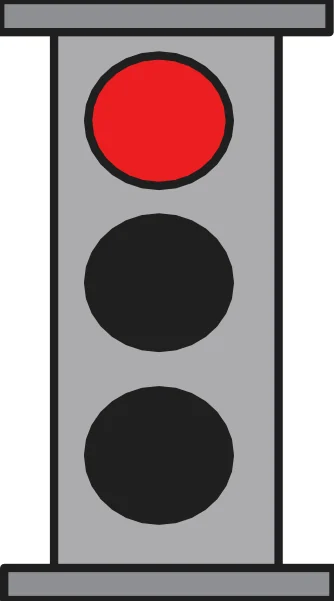
Solid red: make a complete stop and remain stopped until the light turns green.
Exception: you may turn right on red, but first you must STOP COMPLETELY and yield to other traffic and pedestrians. No turn on red if a sign prohibits it. Only yielding without stopping first is illegal.
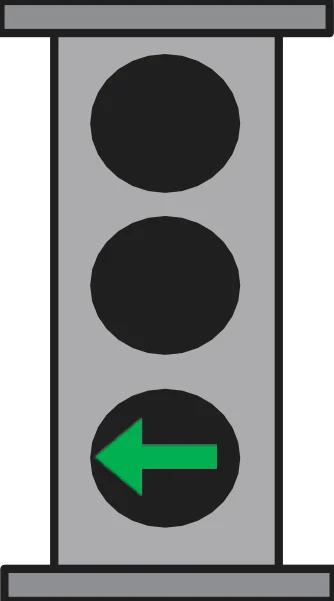
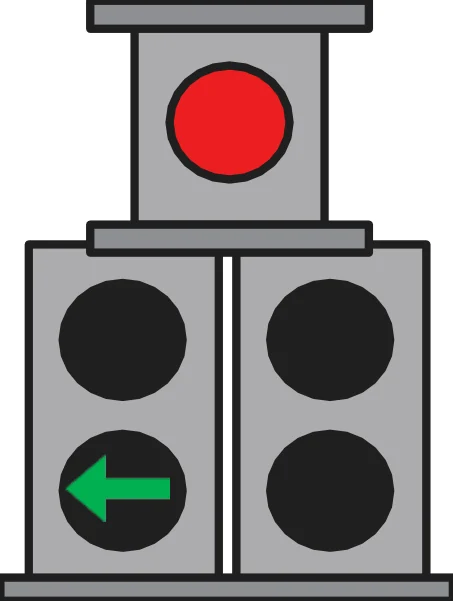
Solid green: you may go if it's safe, yielding to pedestrians and traffic already in the intersection. If you're turning left on a solid green, you must YIELD TO ONCOMING TRAFFIC.
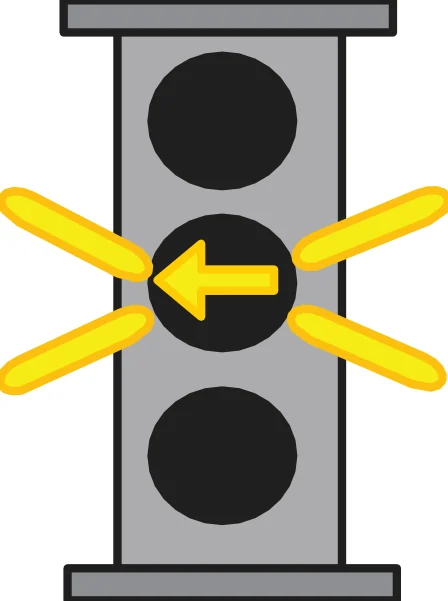
Flashing yellow arrow: you may turn from the proper lane but must YIELD TO ONCOMING TRAFFIC. Oncoming traffic has a green light, so the turn is NOT protected.
Your left-turn signal shows a flashing yellow arrow while oncoming cars have a green light. Pull forward from the proper lane and wait for a safe gap in oncoming traffic and pedestrians before turning.
Check your understanding
Read the question, decide on an answer, then open it to check the explanation. These are Roadwise study questions based on the source handbook.
Before turning right on a solid red light, what must you do first?
Signal and turn if no cars are coming
Only check your mirrors, since stopping isn't required
Come to a complete stop and yield to traffic and pedestrians
Slow down and merge into the turn if the way looks clear
Answer: Come to a complete stop and yield to traffic and pedestrians
Before turning right on red, you must first stop completely — merely yielding without stopping is illegal.