roadwise.Open study app

Mississippi driving lesson · Parking, Night Driving & Seat Belts

Night driving & headlights

A 3-minute lesson from the Mississippi course. Read the rules and examples, follow the handbook page references, and check your understanding before you move on.

Read time
3 minutes
Course unit
Parking, Night Driving & Seat Belts
Checkpoint questions
6
Source pages
63

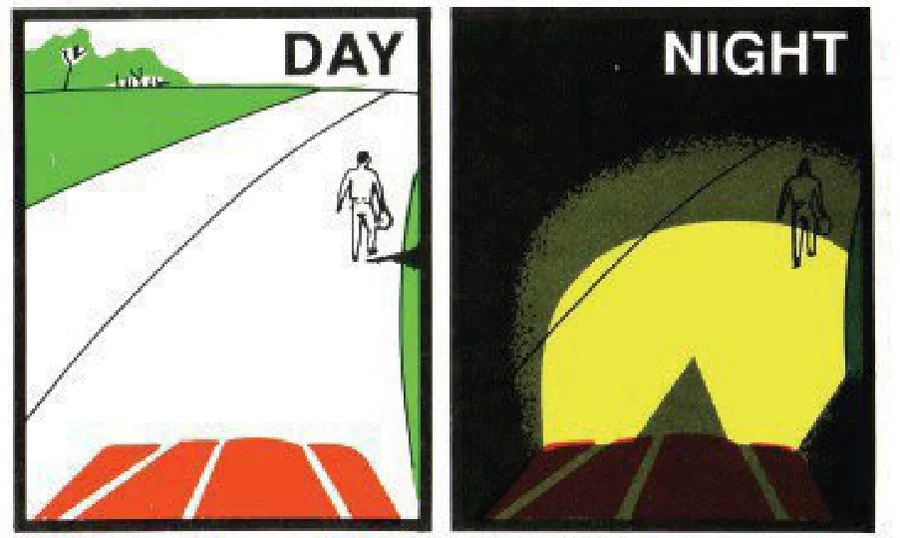
Visibility is greatly reduced at night, and you can only see as far as your headlights reach. Slow down so you never 'over-drive' your headlights, which means driving so fast you can't stop within the distance you can see.

Day vs night visibility comparison
Day vs. night: you see only as far as your headlights
500 feet

Use low beams within this distance of an oncoming vehicle, or of a vehicle you're following

Handbook p. 63 ↗

Know the rule

Use your lights between sunset and sunrise, and any other time you can't see clearly ahead for 500 feet.

Handbook p. 63 ↗

Know the rule

Don't drive with only your parking lights on. If you need lights, use your headlights.

Handbook p. 63 ↗

Know the rule

Use high beams only in open country without other cars nearby. Even with high beams, drive slower than you would by day.

Handbook p. 63 ↗

Always use your low beams:

  • When approaching another car, so you don't blind the driver
  • Where there are streetlights
  • When following another car
  • When driving in fog, night or day (high beams in fog reduce visibility)
Handbook p. 63 ↗

Know the rule

If you meet a vehicle with bright or blinding headlights, dim your lights and keep your eyes on the right side of the road.

Handbook p. 63 ↗

Know the rule

If you meet a vehicle at night with one headlight missing, drive to the far right of your lane.

Handbook p. 63 ↗

Know the rule

Never wear darkened glasses to cope with glare from headlights or off-street advertisements. At night or on dark days they only reduce your vision further.

Handbook p. 63 ↗

Put it into practice

You're on a dark country road with your high beams on when headlights appear over a hill ahead. Switch to low beams within 500 feet of the oncoming car. If its lights are blinding, keep your eyes on the right side of the road.

Check your understanding

Read the question, decide on an answer, then open it to check the explanation. These are Roadwise study questions based on the source handbook.

Within how many feet of an oncoming vehicle must you switch to low beams?
  1. 1,000 feet
  2. 300 feet
  3. 500 feet
  4. 200 feet

Answer: 500 feet

You are required by law to use low beams within five hundred feet of an oncoming vehicle, or when following within five hundred feet.
Handbook p. 63 ↗
Which headlight setting should you use when driving in fog, day or night?
  1. Low beams
  2. High beams
  3. Parking lights only
  4. No lights during the day

Answer: Low beams

Always use the lower beam in fog, day or night; high beams reduce visibility.

Handbook p. 63 ↗
What should you do if you meet an oncoming vehicle at night that has only one working headlight?
  1. Drive to the far right of your lane
  2. Stop your vehicle until they pass
  3. Move toward the center line for a better view
  4. Flash your high beams repeatedly to warn them

Answer: Drive to the far right of your lane

If you meet a vehicle with one headlight missing, drive to the far right of your lane for safety.

Handbook p. 63 ↗
Is it legal to drive at night using only your parking lights instead of headlights?
  1. Yes, if your headlights are broken
  2. Yes, on residential streets only
  3. Yes, as long as you're going under 30 mph
  4. No

Answer: No

The handbook instructs drivers not to use only parking lights; use headlights if lights are needed.

Handbook p. 63 ↗
Under what condition should you use your high-beam headlights?
  1. Anytime after sunset
  2. Only when driving in open country without other cars nearby
  3. Whenever it is raining
  4. Whenever driving above 55 mph

Answer: Only when driving in open country without other cars nearby

High beams should be used only in open country when no other cars are nearby.

Handbook p. 63 ↗
You should use your headlights any time you cannot see clearly ahead for a distance of 500 feet, even during the day.
  1. True
  2. False

Answer: True

The 500-foot visibility rule for using headlights applies any time visibility is reduced, not just at night.

Handbook p. 63 ↗
Take the lesson checkpoint in the app

More in Parking, Night Driving & Seat Belts