Michigan driving lesson · Signs, Signals, and Pavement Markings
Warning signs
A 3-minute lesson from the Michigan course. Read the rules and examples, follow the handbook page references, and check your understanding before you move on.
Warning signs are mostly yellow diamonds. They tell you what's coming — a curve, a merge, a crossing or a low bridge — so you can slow down or change lanes before you get there.
Road shape and surface:
Road Turns Left: sharp turn to the left
Road Curves Ahead: sharp curve left, then right
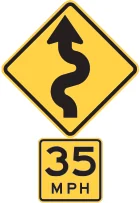
Winding Curve Ahead, 35 MPH: limit your speed to 35 mph
Obstacle in Roadway: island or obstruction ahead; drive to either side
Divided Highway Ends: becomes two lanes of traffic
Two-Way Traffic: two-way traffic begins; keep right
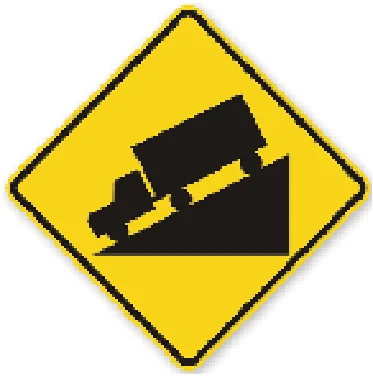
Hill: steep downslope; check brakes and gear down if needed
Slippery When Wet; Bridge Ices Before Road (even when roads are clear)
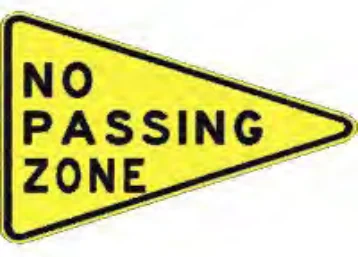
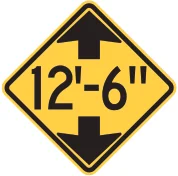
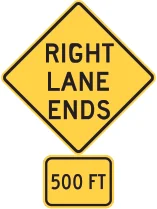
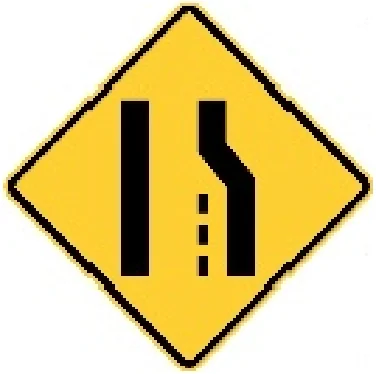
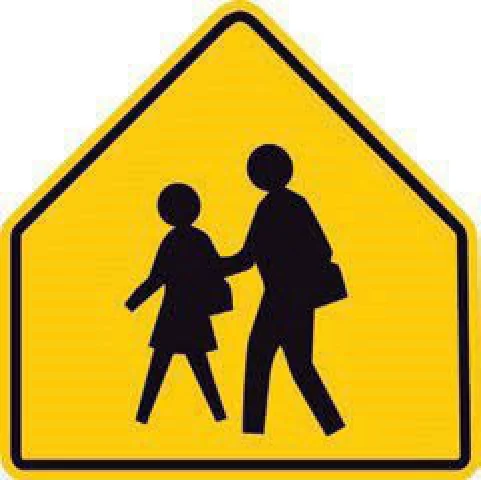
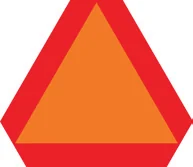
Winding Curve Ahead with a 35 mph advisory speedNo Passing Zone pennantLow clearance: 12 feet 6 inchesRight Lane Ends in 500 feetLane Ends Merge LeftHill: steep downslope aheadSchool Children PresentSlow-Moving Vehicle emblem
Put it into practice
You're driving a rented box truck that is 13 feet tall and see a 12'6" sign ahead. The structure's clearance is lower than your truck — find another route.
Check your understanding
Read the question, decide on an answer, then open it to check the explanation. These are Roadwise study questions based on the source handbook.
A sign warns "Bridge Ices Before Road." What does this actually mean?
A bridge can ice while the road is clear
Bridges ice later than the surrounding road
It only applies to trucks
Only applies during active snowfall
Answer: A bridge can ice while the road is clear
This sign cautions that a bridge can be icy even if the surrounding roads are clear.