A 3-minute lesson from the Kentucky course. Read the rules and examples, follow the handbook page references, and check your understanding before you move on.
If you're involved in a collision, Kentucky law requires you to stop, find out whether anyone is hurt or anything damaged, and give reasonable help. What you do and write down in the next few minutes matters for everyone's safety and for insurance.
If you're in a collision:
Stop at or near the scene
Stay with the vehicle until an officer arrives and has questioned everyone
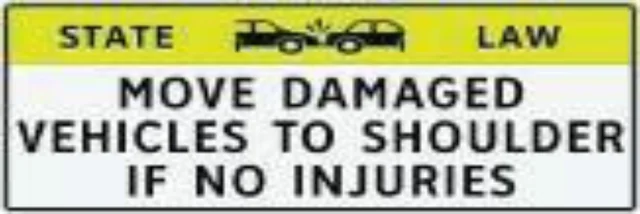
Non-injury crash: move the damaged vehicles to the shoulder (KRS 189.580(1)(b))
Get names and addresses of everyone involved and of any witnesses
If you hit a parked vehicle and can't find the owner, leave a note where it can be seen with your name, address, driver license number, license plate number, and the date and time.
Kentucky law requires any driver in a collision to immediately stop, determine the extent of injury or damage, and render reasonable assistance—including carrying or arranging transport for an injured person who clearly needs, or asks for, medical treatment.
You bump another car in traffic; no one is hurt. Move both cars to the shoulder, trade names, license numbers, plates and insurance details, photograph the damage and stay until police arrive. If no officer investigates and damage exceeds $500, report it to KSP within 10 days.
Check your understanding
Read the question, decide on an answer, then open it to check the explanation. These are Roadwise study questions based on the source handbook.
In a non-injury collision, Kentucky law (KRS 189.580) generally requires that you:
Immediately exchange only phone numbers
Move the vehicles to the shoulder
Call a tow truck before doing anything else
Leave vehicles exactly where the crash occurred
Answer: Move the vehicles to the shoulder
For a non-injury accident, KRS 189.580(1)(b) requires moving the damaged vehicles to the shoulder.