Kansas driving lesson · Special Driving Situations
Rural road driving
A 3-minute lesson from the Kansas course. Read the rules and examples, follow the handbook page references, and check your understanding before you move on.
Empty rural highways can be as dangerous as city traffic because it's easy to relax and suddenly come upon something dangerous. Kansas rural roads may be paved, gravel or dirt, each with its own hazards. Stay alert and slow down.
Rural road hazards and what to do:
Gravel or dirt: less traction; reduce speed and increase following distance; skids can occur
Rough, rippled gravel from potholes affects steering and vehicle control
Dust in dry periods: use low beams, slow down and increase following distance
Narrow roads and bridges with little shoulder and steep ditches: watch for narrow bridge signs
Be prepared to stop for oncoming traffic at narrow bridges; expect sharp dips and turns
Open bridge gratings or steel bridges: reduce speed, grip firmly, increase following distance
Blind corners from woods, corn fields or other tall crops
Hills and curves on rural roads are often steeper and sharper than on highways. Before a hill crest or curve, slow down, move to the right and watch for oncoming vehicles.
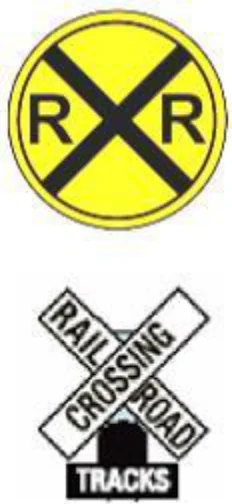
Many rural railroad crossings have only a warning sign and a white crossbuck, with no lights or gates. Always slow down, look both ways and be prepared to stop for a train.
Some rural intersections have no yield or stop signs. Approach uncontrolled intersections slowly and be prepared to stop for crossing or oncoming traffic.
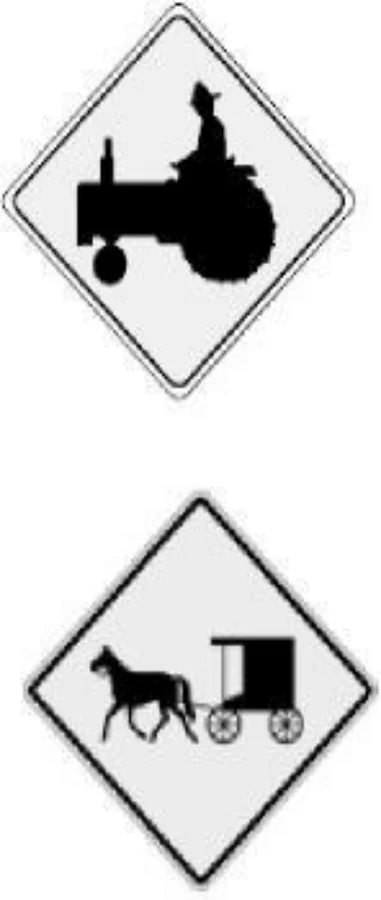
Round RR warning sign and crossbuck: often the only warnings at rural crossingsFarm machinery and horse-drawn vehicle warning signs common on rural roads
Put it into practice
You're on a dusty gravel road in August behind another car. Turn on your low beams so others can see you, slow down, and drop back farther than usual, since stopping on gravel takes much longer.
Check your understanding
Read the question, decide on an answer, then open it to check the explanation. These are Roadwise study questions based on the source handbook.
Why should you use low beam headlights on dusty gravel roads during dry periods?
So other drivers can see you better through dust
It is required on all gravel roads
High beams are illegal on gravel roads
To save fuel
Answer: So other drivers can see you better through dust
Dust can significantly reduce visibility on gravel roads, so low beams help other drivers see your vehicle.