A 3-minute lesson from the Idaho course. Read the rules and examples, follow the handbook page references, and check your understanding before you move on.
Many crashes are caused by improper turns. Signal early so others know your plan, position your car in the correct lane, and finish the turn in the correct lane.
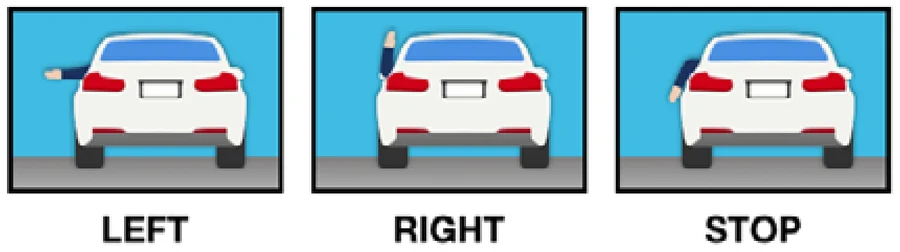
If you plan to turn just beyond an intersection, signal just after you pass through it, so other drivers aren't confused. Electric or arm signals are both allowed.
Right turn: signal, approach in the right-hand lane close to the curb, yield, watch for bikes between you and the curb, and turn into the right-hand lane. Don't swing wide.
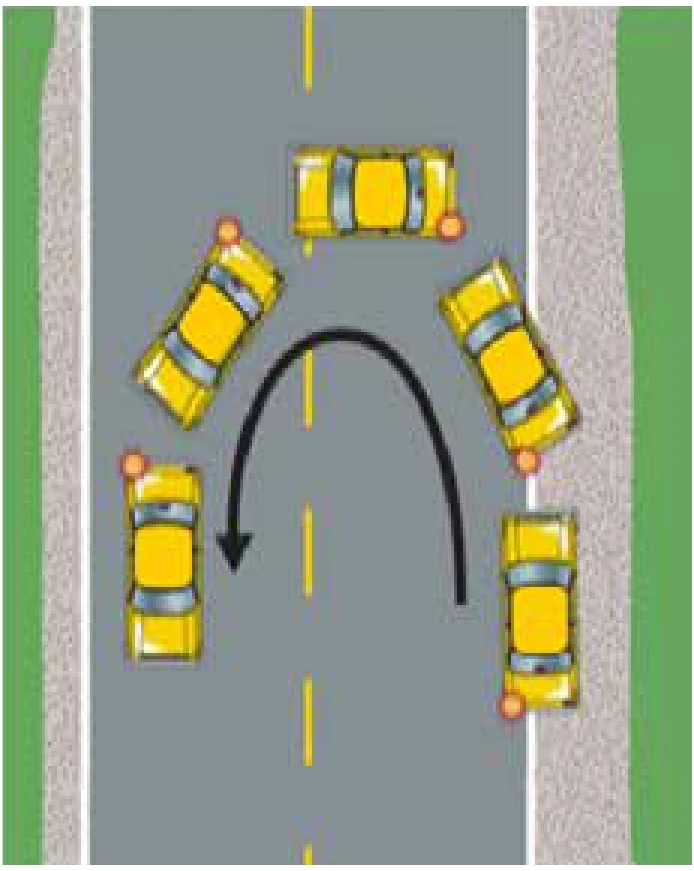
Left turn: signal, approach in the leftmost lane open to your direction (on a two-lane road, the left side of your lane), yield to pedestrians and oncoming vehicles, and turn into the nearest lane going your way. Don't cut the corner.
Where lanes are marked this way, vehicles in the left lane must turn left; the right lane may turn left or go straight. Stay in your lane until the turn is complete.
You're on a one-way street at a red light and want to turn left onto another one-way street. Stop, yield to cross traffic, and you may turn left unless a sign prohibits it.
Check your understanding
Read the question, decide on an answer, then open it to check the explanation. These are Roadwise study questions based on the source handbook.
Signals for turning must start at least how many feet before turning in business or residential areas?
100 feet
200 feet
50 feet
300 feet
Answer: 100 feet
Turn signals must begin at least 100 feet ahead in these areas.