Roadwise States Florida Driving lessons Sign colors, guide signs and stop/yield signs Florida driving lesson · Signs and Pavement Markings
Sign colors, guide signs and stop/yield signs A 3-minute lesson from the Florida course. Read the rules and examples, follow the handbook page references, and check your understanding before you move on.
Read time 3 minutes
Course unit Signs and Pavement Markings
Checkpoint questions 6
Source pages 54, 55 A sign's shape, color, symbols and words tell you what kind of message it carries before you can read it. Learn the color code first, then the few signs that control who stops and who goes.
Know the rule
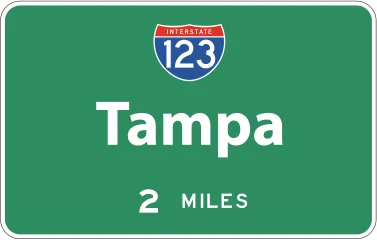
On green guide signs, East-West routes have even numbers and North-South routes have odd numbers. Florida interstate mile markers match the exit numbers.
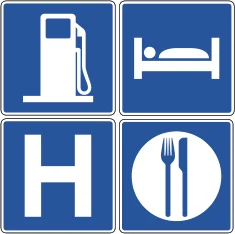
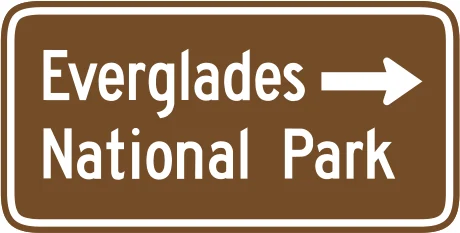
Handbook p. 54 ↗ Green guide sign: direction and distance Blue and white service signs: gas, lodging, hospital, food Brown and white sign: parks and scenic or historic areas Regulatory sign A sign that controls traffic by setting limits or telling you what you must or must not do. It is enforceable by law.
Handbook p. 55 ↗ Know the rule
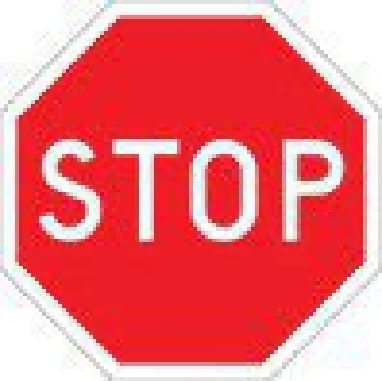
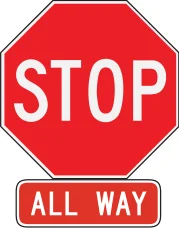
At a stop sign, stop completely before the stop line. With no stop line, stop before the crosswalk, or before the intersection where you can see approaching traffic.
Handbook p. 55 ↗ Stop sign Know the rule
At an all-way stop, vehicles go in the order they arrived. If two arrive at about the same time, yield to the driver on your right.
Handbook p. 55 ↗ All-way stop Know the rule
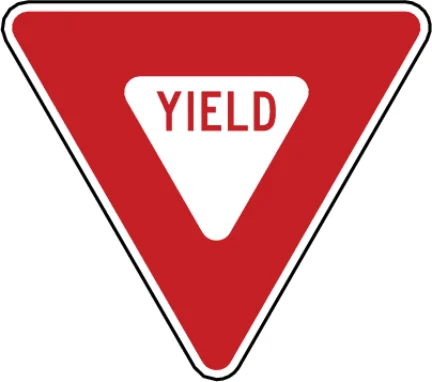
Yield: slow down and give crossing vehicles the right-of-way. If the way is clear, you may move forward slowly without stopping.
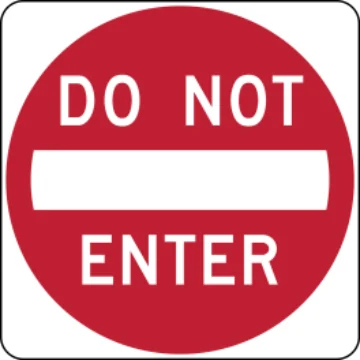
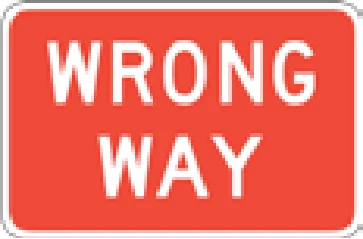
Handbook p. 55 ↗ Yield sign Red 'wrong way' signs: DO NOT ENTER: on one-way streets and roadways you may not enter WRONG WAY: you are going the wrong way; turn around immediately Handbook p. 55 ↗ Do Not Enter Wrong Way Put it into practice
You and another car reach an all-way stop at the same moment. The other car is on your right, so you yield and let it go first.
Check your understanding Read the question, decide on an answer, then open it to check the explanation. These are Roadwise study questions based on the source handbook.
A red traffic sign generally means: Construction warning General advisory information Stop, do not enter, or yield Guide or directional information Answer: Stop, do not enter, or yield
Red signs indicate Stop, Do Not Enter, Wrong Way, or Yield.
Handbook p. 54 ↗ An orange traffic sign indicates: Regulatory information Scenic area direction Guide information Construction and maintenance warning Answer: Construction and maintenance warning
Orange signs indicate construction and maintenance warnings.
Handbook p. 54 ↗ Fluorescent yellow-green signs are used for high-emphasis warnings related to: School, pedestrian, and bicycling activity Speed limits Railroad crossings only Construction zones only Answer: School, pedestrian, and bicycling activity
Fluorescent yellow-green is used for high-emphasis warning of school, pedestrian, and bicycling activity.
Handbook p. 54 ↗ Blue traffic signs are used for driver guidance and also to identify: Fire lanes Parking spaces for disabled drivers Bike lanes Emergency stopping areas Answer: Parking spaces for disabled drivers
Blue signs provide driver guidance and are also used to identify parking spaces for disabled drivers.
Handbook p. 54 ↗ At an All Way Stop sign, if two vehicles arrive at approximately the same time, who yields? Whoever is going straight yields The vehicle on the right yields to the vehicle on the left The vehicle on the left yields to the vehicle on the right Neither yields, both proceed together Answer: The vehicle on the left yields to the vehicle on the right
If vehicles arrive at approximately the same time at an all-way stop, each driver must yield to the driver on their right.
Handbook p. 55 ↗ At a Yield sign, if the way is clear, may you proceed without stopping? No, you must always come to a full stop Only if there is no other traffic sign nearby Only on divided highways Yes, proceed slowly without stopping Answer: Yes, proceed slowly without stopping
At a yield sign, if the way is clear, you may move forward slowly without stopping.
Handbook p. 55 ↗ Previous lesson Stop lines, crosswalks, turn and bike lanes Next lesson Regulatory signs: speed, lanes and turns More in Signs and Pavement Markings About the source Roadwise’s Florida course uses the driver handbook edition supplied with this study pack. This lesson cites source pages 54, 55. The linked PDF is a third-party mirror of the handbook, rather than a government-hosted page.
Open the handbook source PDF · View the source edition
For current application requirements, fees, appointments, and the format that applies to your age or license type, check Florida’s FLHSMV. Roadwise provides study material and does not issue permits or licenses.