A 3-minute lesson from the Delaware course. Read the rules and examples, follow the handbook page references, and check your understanding before you move on.
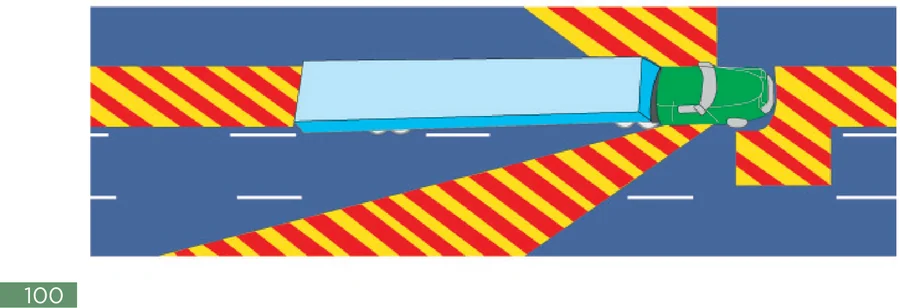
Big trucks have large blind spots, need more room to stop and swing wide to turn. Many truck-car crashes happen in the 'No-Zone'—the areas around a truck where its driver simply can't see you.
No-Zone
The danger areas around a truck—its large side blind spots, deep rear blind spot and the area just ahead—where crashes are more likely.
To pass a truck, check front and rear and move out only in a legal passing zone when clear. If needed—especially at night—blink your headlights to let the driver know you're passing.
On a level highway, passing a truck takes only three to five seconds longer than passing a car. Uphill a truck often slows, making it easier to pass; downhill its momentum may make you speed up.
Finish the pass quickly and don't stay alongside. Pull back in only when you can see the front of the truck (the cab) in your rear-view mirror, and keep your speed up afterward.
Meeting a truck from the opposite direction, keep as far to the side as possible. Wind turbulence pushes the vehicles apart; it doesn't suck them together.
Never pass close behind a truck that is backing up. Most trailers are 8.5 feet wide and can completely hide what's behind them—wait the few seconds it takes to finish.