Roadwise States Alaska Driving lessons Stops required Alaska driving lesson · Turns & Intersections
Stops required A 2-minute lesson from the Alaska course. Read the rules and examples, follow the handbook page references, and check your understanding before you move on.
Read time 2 minutes
Course unit Turns & Intersections
Checkpoint questions 6
Source pages 41, 43 Some situations always require a full stop. Know where to stop, too: behind the crosswalk or stop line, not in it.
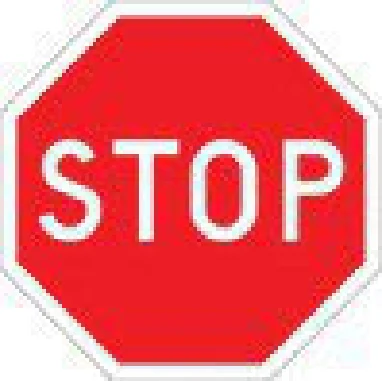
You must stop for: A stop sign A flashing red light A railroad crossing gate or flag person A red light facing you A yield sign, if necessary for approaching traffic or a pedestrian Entering a highway from a driveway, building, or alley A school bus with red lights flashing and stop arm out (meeting or following) An intersection whose traffic signals aren't working Handbook p. 41 ↗ Stop sign Know the rule
At a stop sign, stop behind the crosswalk, at the painted stop line, or behind the intersecting roadway's shoulder line. Yield to pedestrians, bicyclists and traffic before entering.
Handbook p. 41 ↗ Know the rule
At a flashing red light, stop, then proceed when the way is clear and it is safe.
Handbook p. 41 ↗ Know the rule
At a railroad crossing, stay stopped until the gates are raised or the flag person stops signaling.
Handbook p. 41 ↗ Know the rule
When entering a highway from a driveway, building, or alley, stop and yield to traffic.
Handbook p. 41 ↗ Know the rule
Drivers both meeting and following a school bus must stop when its red lights are flashing and the stop arm is extended.
Handbook p. 41 ↗ Know the rule
When the traffic signals aren't working, the intersection is uncontrolled: stop.
Handbook p. 41 ↗ Put it into practice
You're pulling out of a grocery store driveway onto a busy street with no sign at the exit. You must still stop and yield to traffic and pedestrians before entering.
A useful reminder A yield sign only requires a stop when needed for traffic or pedestrians. Every other item on the list is always a stop.
Check your understanding Read the question, decide on an answer, then open it to check the explanation. These are Roadwise study questions based on the source handbook.
At a stop sign, where should you stop? Anywhere before the intersection Only when another vehicle is present Even with the stop sign post Behind the crosswalk or stop line Answer: Behind the crosswalk or stop line
Stop behind the crosswalk, painted stop line, or the intersecting roadway shoulder line.
Handbook p. 41 ↗ What must you do at a flashing red light? Stop, then proceed when it is clear and safe Slow down only, without stopping Treat it as a flashing yellow light Stop and wait for it to turn green Answer: Stop, then proceed when it is clear and safe
A flashing red light requires a full stop, then proceed when clear and safe.
Handbook p. 41 ↗ What must you do when a railroad crossing gate is down or a flag person is signaling? Proceed carefully around the gate Stop until the gate is raised or the flag person stops signaling Wait 10 seconds, then proceed regardless Only stop if you hear a train horn Answer: Stop until the gate is raised or the flag person stops signaling
You must stop until the crossing gates are raised or the flag person discontinues the signal.
Handbook p. 41 ↗ On an undivided two-lane road, a school bus stops with its red lights flashing and stop arm extended. Which vehicles must stop? Only the following vehicle must stop Only vehicles on the same side must stop Both meeting and following vehicles must stop Vehicles may pass slowly if no children are visible Answer: Both meeting and following vehicles must stop
Drivers meeting and following the bus must both stop.
Handbook p. 41 ↗ What must you do at an intersection where the traffic signals are not working? Treat it as an uncontrolled intersection and stop Proceed at normal speed since the light usually resumes soon Only stop if a police officer is present Flash your headlights and proceed Answer: Treat it as an uncontrolled intersection and stop
An intersection with signals not working must be treated as uncontrolled, requiring a stop.
Handbook p. 41 ↗ A driver must stop and yield when entering a roadway from an alley or driveway. True False Answer: True
Entering a roadway from an alley, driveway, or building requires a stop and yield.
Handbook p. 41 ↗ Previous lesson Roundabouts Next lesson How to pass safely More in Turns & Intersections About the source Roadwise’s Alaska course uses the driver handbook edition supplied with this study pack. This lesson cites source pages 41, 43. The linked PDF is a third-party mirror of the handbook, rather than a government-hosted page.
Open the handbook source PDF · View the source edition
For current application requirements, fees, appointments, and the format that applies to your age or license type, check Alaska’s DMV. Roadwise provides study material and does not issue permits or licenses.