Vermont driving lesson · Your Vehicle: Equipment, Insurance & Ownership
Safety belts & child restraints
A 3-minute lesson from the Vermont course. Read the rules and examples, follow the handbook page references, and check your understanding before you move on.
Safety belts keep you inside the vehicle and in one position during a crash, where death and serious injury are far less likely. Vermont requires every occupant to be restrained, and children need the right seat for their age.
Know the rule
The law requires all occupants of a motor vehicle to wear a safety belt or be in a federally approved child passenger restraint system.
Lap belts fit snugly across the hips, not over the stomach. Shoulder belts go over the shoulder and across the center of the chest. Never tuck a shoulder belt under your arm or behind your back.
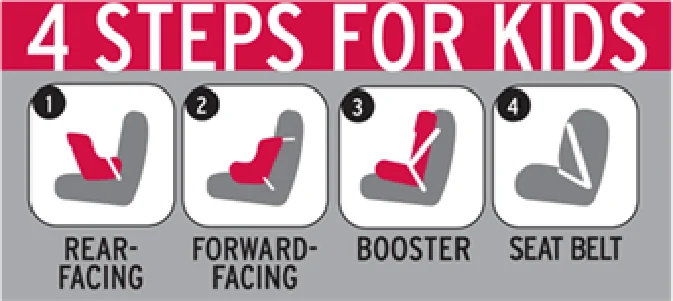
4 steps for kids: rear-facing, forward-facing, booster, seat belt
Put it into practice
You're driving three kids: a 1-year-old, a 6-year-old who has outgrown her harness seat, and a 12-year-old. The baby rides rear-facing in a harness, in the back and away from an airbag. The 6-year-old uses a booster. The 12-year-old wears a seat belt and rides in back if practical.
Check your understanding
Read the question, decide on an answer, then open it to check the explanation. These are Roadwise study questions based on the source handbook.
How must a child under 2 years old be secured in a vehicle?
In a forward-facing booster seat
With a regular adult lap belt only
In a rear-facing car seat with a harness
Held securely by an adult passenger
Answer: In a rear-facing car seat with a harness
A child under two must be properly secured in a rear-facing car seat with a harness.