Roadwise States Oregon Driving lessons Turn Signals and Hand Signals Oregon driving lesson · Turns, Intersections & Roundabouts
Turn Signals and Hand Signals A 2-minute lesson from the Oregon course. Read the rules and examples, follow the handbook page references, and check your understanding before you move on.
Read time 2 minutes
Course unit Turns, Intersections & Roundabouts
Checkpoint questions 6
Source pages 46 Signals tell other road users where you're about to go. Oregon requires them before turns, lane changes and more, and sets a minimum distance. Hand-and-arm signals are a backup allowed only in good light and clear visibility.
You must signal before you: Turn Change lanes Exit a roundabout Pull away from a curb Handbook p. 46 ↗ Know the rule
Before any of these moves, make sure you can do it safely: check traffic ahead, behind and to the side.
Handbook p. 46 ↗ 100 feet Minimum signaling distance before a turn or lane change when moving in traffic
Handbook p. 46 ↗ Know the rule
When pulling away from a curb, signal long enough to alert traffic that you're moving into the lane.
Handbook p. 46 ↗ 1,000 feet You must be able to clearly see people and vehicles this far to use hand-and-arm signals (daylight only)
Handbook p. 46 ↗ Know the rule
Use turn signal lights at night or when visibility is poor. Don't use hand-and-arm signals any time you're driving a wide or long vehicle.
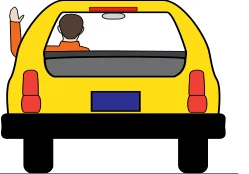
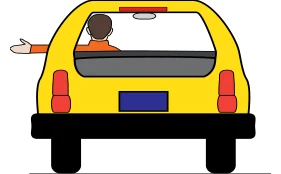
Handbook p. 46 ↗ Hand signal: right turn (arm bent up) Hand signal: left turn (arm straight out) Hand signal: stop or decrease speed (arm down) Know the rule
Don't rely only on another driver's turn signal. They may signal right and turn left, or turn without signaling.
Handbook p. 46 ↗ Put it into practice
An oncoming car's right blinker is flashing as you wait to turn left. Don't assume it will turn. Wait until you're sure it is actually turning — or has passed — before you go.
A useful reminder 100 feet to signal; 1,000 feet of visibility for hand signals.
Check your understanding Read the question, decide on an answer, then open it to check the explanation. These are Roadwise study questions based on the source handbook.
If your vehicle is moving in traffic, how far before a turn or lane change should you signal? At least 100 feet At least 50 feet At least 500 feet At least 200 feet Answer: At least 100 feet
Signal at least 100 feet before turning or changing lanes.
Handbook p. 46 ↗ Hand-and-arm signals may only be used: At night with your headlights on In daylight, when visible for 1,000 feet Anytime, regardless of visibility In daylight when you can be seen for 500 feet Answer: In daylight, when visible for 1,000 feet
Hand signals require daylight and 1,000-foot visibility.
Handbook p. 46 ↗ When must you use turn signal lights instead of hand-and-arm signals? Only above 35 mph Only when turning left At night or when visibility is poor Only on freeways Answer: At night or when visibility is poor
Signal lights are required at night or in poor visibility.
Handbook p. 46 ↗ You must signal before doing all of the following EXCEPT: Merging onto a freeway Exiting a roundabout Driving straight through a green light Pulling away from a curb Answer: Driving straight through a green light
No signal is needed to continue straight through a green light.
Handbook p. 46 ↗ You must signal before changing lanes, turning, or pulling away from a curb. True False Answer: True
Signaling is required for all of these actions.
Handbook p. 46 ↗ Hand-and-arm signals should be used any time you are driving a wide or long vehicle. True False Answer: False
Hand signals should not be used for wide or long vehicles.
Handbook p. 46 ↗ Previous lesson Driving a Large Vehicle or Towing Next lesson Making Right, Left and One-Way Turns More in Turns, Intersections & Roundabouts About the source Roadwise’s Oregon course uses the driver handbook edition supplied with this study pack. This lesson cites source pages 46. The linked PDF is a third-party mirror of the handbook, rather than a government-hosted page.
Open the handbook source PDF · View the source edition
For current application requirements, fees, appointments, and the format that applies to your age or license type, check Oregon’s DMV. Roadwise provides study material and does not issue permits or licenses.