A 3-minute lesson from the Ohio course. Read the rules and examples, follow the handbook page references, and check your understanding before you move on.
Painted lines tell you where you may drive, when you may pass, which lane to turn from and where to stop. The two key colors: white lines separate traffic moving the same way; yellow lines separate opposite directions.
With a double solid yellow line, you may cross only to turn left or to pass a slow-moving vehicle (such as a bicycle or a vehicle with a slow-moving vehicle sign).
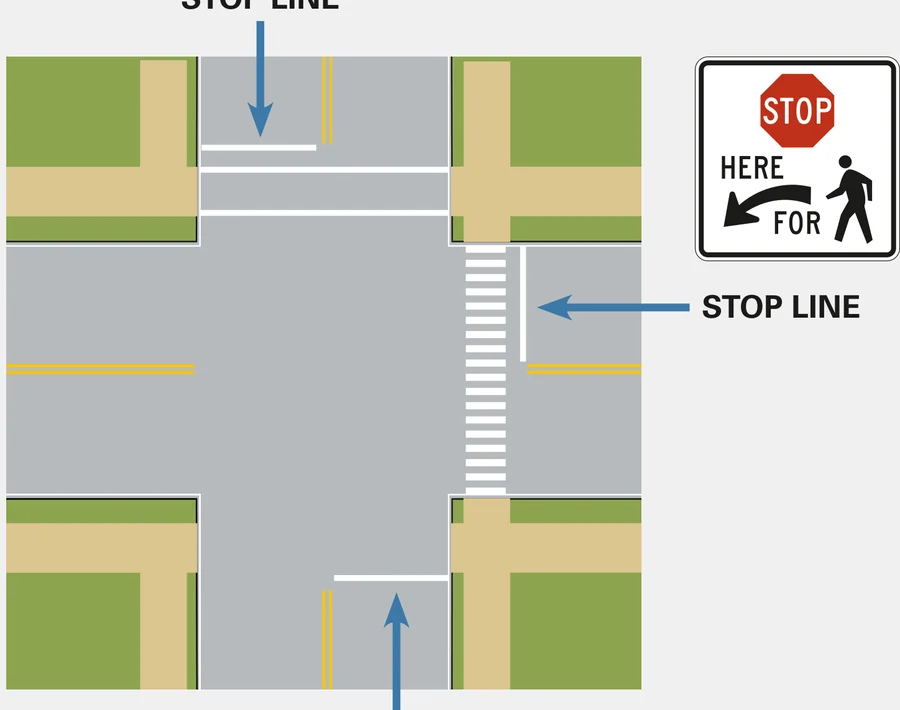
Pavement markings divide lanes, show when you may pass, show which lanes to use for turns, define pedestrian walkways, and show where to stop for signs or signals.
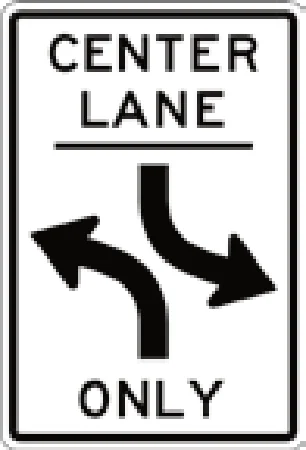
A center lane marked with a broken and a solid yellow line on each side, plus white two-way arrows. Used only for left turns, by traffic from either direction.
You're in the two-way left turn lane waiting to turn into a store, and a driver from the other direction pulls in to turn left too. That's legal — either direction may use the lane just before a left turn. Neither of you may drive along it.
Check your understanding
Read the question, decide on an answer, then open it to check the explanation. These are Roadwise study questions based on the source handbook.
What does a solid yellow line in the center of the road separate?
Traffic moving in opposite directions
Traffic traveling in the same direction
Turning lanes only
Parking lanes
Answer: Traffic moving in opposite directions
A solid yellow line separates traffic traveling in opposite directions.