A 3-minute lesson from the Ohio course. Read the rules and examples, follow the handbook page references, and check your understanding before you move on.
Every driver eventually faces an emergency. You have three tools to avoid a crash — braking, steering and accelerating — and knowing which to use, and how, can prevent a serious outcome.
Know the rule
All drivers have the responsibility to prevent crashes.
Braking: most drivers' first reaction is to stop. Most new vehicles have ABS (anti-lock braking system) to stop without skidding — see your owner's manual for how to brake with it.
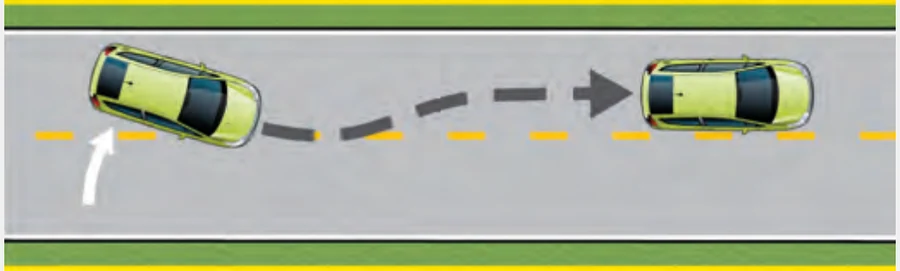
To swerve, grip the wheel with both hands and steer to avoid other traffic, then steer the opposite way to straighten out, regain control and start slowing.
When power outages leave a traffic signal dark, treat it as a four-way stop — unless a law enforcement officer is directing traffic. Proceed carefully; others may not stop.
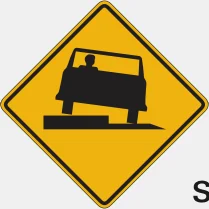
If your vehicle leaves the paved surface at an uneven drop-off, let off the accelerator, slow down gradually, and return to the pavement only when it's safe.
Your right wheels drop off the pavement edge onto a lower shoulder. Don't jerk the wheel back. Ease off the gas, slow gradually, and steer back onto the pavement when it's safe.
Check your understanding
Read the question, decide on an answer, then open it to check the explanation. These are Roadwise study questions based on the source handbook.
If your vehicle begins to skid, what should you do?
Brake hard immediately
Accelerate to straighten out
Turn the wheel opposite the skid
Ease off the brake or gas and steer in the direction of the skid
Answer: Ease off the brake or gas and steer in the direction of the skid
When skidding, release pressure from the brake or accelerator and turn the wheel into the skid.