Warning systems: detection, collision, and speed alerts
A 3-minute lesson from the Iowa course. Read the rules and examples, follow the handbook page references, and check your understanding before you move on.
These systems watch the road ahead and around you for people, obstacles, curves, and your own speed. They buy you time—but you still do the steering and braking.
Bicycle, pedestrian, and obstacle detection
Alerts you to a bicycle, pedestrian, or slow or stopped obstacle at low speeds, generally around 25 mph. Some versions apply the brakes automatically.
Beeps or shows a visual warning if you exceed the posted speed; GPS or infotainment data must be up to date. Slow by releasing the accelerator or braking lightly—don't slam the brakes.
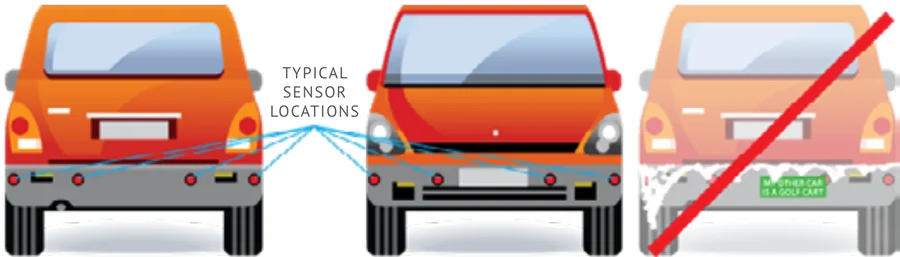
Beep faster as you near an object; a constant tone means you're close. They may miss objects flat on the ground, below the bumper, too close, or too far.
Backing out of a parking space between two SUVs, your rear cross-traffic alert sounds. Stop, check mirrors, camera, and over your shoulders, and watch for people who may walk into your path.
Check your understanding
Read the question, decide on an answer, then open it to check the explanation. These are Roadwise study questions based on the source handbook.
About how far ahead does a forward collision warning system scan the road?
Up to 50 feet
Up to 1,500 feet
Up to 100 feet
Up to 500 feet
Answer: Up to 500 feet
The forward collision warning system scans the road ahead up to 500 feet, 20 times per second.