Iowa driving lesson · Speed, Stopping & Following Distance
Braking, stopping distance, and required stops
A 3-minute lesson from the Iowa course. Read the rules and examples, follow the handbook page references, and check your understanding before you move on.
How quickly you stop depends on your vehicle's weight, size, and load, its tires, and your reaction time. Road surfaces matter too: gravel, snow, ice—even dry pavement—can make you skid if you brake too hard. The faster you go, the longer it takes to stop.
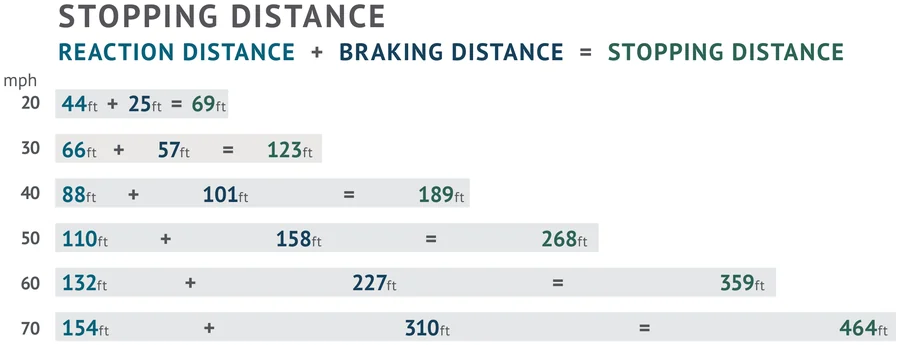
Stopping distance
Reaction distance (how far you travel before your foot reaches the brake) plus braking distance (how far you travel once braking).
If you'll stop or slow where others don't expect it, or someone is following too closely, tap your brake pedal three or four times quickly to warn drivers behind you.
You're leaving a gas station onto a city street across a sidewalk. Stop before the sidewalk and check for pedestrians, then stop before entering the street and yield to traffic.
Check your understanding
Read the question, decide on an answer, then open it to check the explanation. These are Roadwise study questions based on the source handbook.
At 40 mph, roughly what is the total stopping distance (reaction plus braking)?
189 feet
69 feet
359 feet
123 feet
Answer: 189 feet
At 40 mph, the manual lists 88 feet reaction distance plus 101 feet braking distance, totaling 189 feet.