Trucks and buses have big blind spots and need extra room to turn and stop. Disabled vehicles, farm equipment, horses and snowmobiles call for slowing down, moving over, and passing only when it's safe.
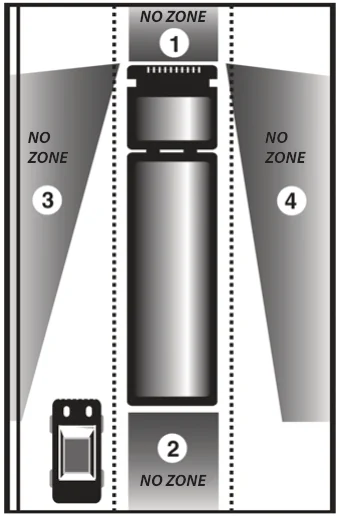
Around trucks, buses and other large vehicles:
- Stay out of blind spots and keep a position where the driver can see you in the side mirrors
- Watch their turn signals and give room. They make wide right turns, sometimes leaving space on the right
- Allow extra space, since size and weight affect steering and stopping
- Dim your headlights when following a truck at night; bright lights reflect off its mirrors
- Blink your headlights when passing a truck (especially at night) and finish the pass quickly
Know the rule
Approaching a disabled vehicle with hazard lights on a four-lane highway, change lanes away from it if it's safe. If not, slow down while approaching and passing. Don't speed up until you are well past.
Handbook p. 48 ↗Illinois law says you may not:
- Push a disabled vehicle on a rural highway, except in an emergency to remove a hazard
- Remove a wrecked vehicle from the road without removing all glass and debris
- Tow a vehicle except with a drawbar, usually no more than 15 feet apart, coupled by two chains or cables
A vehicle left on the roadway may be towed at the owner's expense after
| Road | Time |
|---|---|
| Interstate, expressway or toll highway | 2 hours |
| Highway in an urban area | 10 hours |
| Highway in a non-urban area | 24 hours |
Know the rule
Farm vehicles, construction equipment and animal-drawn vehicles may share the road. Certain slow-moving vehicles must display an orange slow-moving vehicle emblem on the rear.
Handbook p. 49 ↗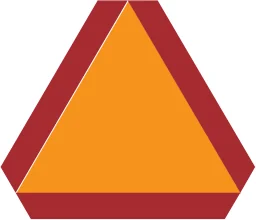
Normal speed range of slow-moving vehicles. At highway speed you close the gap very fast
Handbook p. 49 ↗Approaching a slow-moving vehicle:
- Expect wide turns, and turns right or left at any time into unmarked entrances
- Stay a safe distance behind and pass only when it's safe and legal
- Make sure the operator knows you're there and intend to pass
- It may be wider than the lane and move into your lane to avoid obstructions
Know the rule
When lights are required, a slow-moving vehicle needs a flashing amber light mounted as high as possible on the rear, visible for 500 feet in sunlight.
Handbook p. 49 ↗Know the rule
In winter you may share the road with snowmobiles. Use care in areas with snowmobile warning signs.
Handbook p. 50 ↗Know the rule
Horseback riders may use public roads except controlled-access highways and most expressways. They ride with traffic, as far right as possible. Never sound your horn near a horse or livestock. Pass with caution, ready to stop.
Handbook p. 50 ↗Put it into practice
At night you're following a semi on the highway. Switch to low beams, stay where the driver can see you in their mirrors, and pass quickly when it's safe.