Roadwise States Idaho Driving lessons Child restraints and seat belts Idaho driving lesson · Vehicle Equipment & Safety
Child restraints and seat belts A 3-minute lesson from the Idaho course. Read the rules and examples, follow the handbook page references, and check your understanding before you move on.
Read time 3 minutes
Course unit Vehicle Equipment & Safety
Checkpoint questions 6
Source pages 40, 41, 42 Crashes are the leading cause of death for American children over one year old: about 1,500 die and 100,000 are injured each year. Most of those deaths and injuries can be avoided with a properly used child restraint.
6 or younger Children this age must ride in approved child car safety seats in non-commercial vehicles
Handbook p. 41 ↗ Know the rule
The child seat law applies to cars manufactured with safety belts after January 1, 1966.
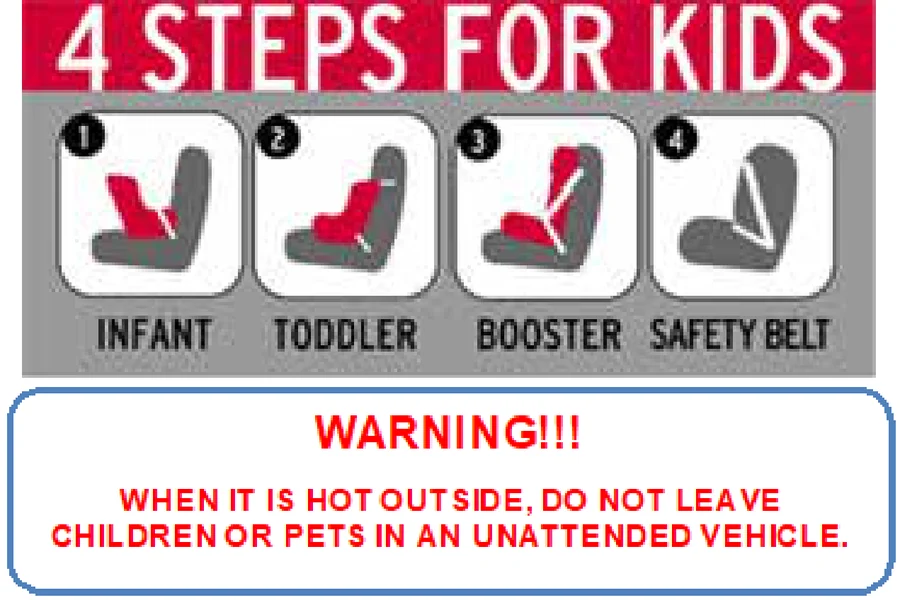
Handbook p. 41 ↗ 'Proper protection' means: Using approved safety seats that meet federal safety standards Fitting children snugly with the straps attached to the seat Securing the safety seat to the vehicle Using the safety seat on every trip Handbook p. 41 ↗ NHTSA also recommends: Read the seat manufacturer's instructions and your owner's manual for height/weight limits Install with the seat belt or the LATCH (Lower Anchors and Tethers for Children) system All children younger than 13 ride in the back seat Never put a rear-facing car seat in front of an active passenger air bag Handbook p. 41 ↗ Child seat stages: infant, toddler, booster, seat belt Know the rule
Idaho law requires ALL occupants to wear safety belts and/or shoulder straps in a vehicle factory-equipped with them.
Handbook p. 41 ↗ Know the rule
Safety belts also help drivers keep control on winding or rough roads and when swerving to avoid a collision.
Handbook p. 42 ↗ Put it into practice
You're driving your 6-year-old niece and your 11-year-old nephew. Your niece must be in an approved car seat, secured to the car and fitted snugly. Both kids should ride in the back seat, since they're under 13.
A useful reminder Idaho's car-seat law covers children 6 years of age or younger; the 'under 13' back-seat guidance is a recommendation, not the age limit of the law.
Check your understanding Read the question, decide on an answer, then open it to check the explanation. These are Roadwise study questions based on the source handbook.
Idaho law requires child car safety seats for children up to what age? 6 years or younger 8 years or younger 4 years or younger 12 years or younger Answer: 6 years or younger
Children 6 and younger must be in approved safety seats.
Handbook p. 41 ↗ Per the handbook's NHTSA guidance, children younger than 13 should ride: in the front if over 100 pounds in the back seat anywhere with a seatbelt in the front only with the airbag off Answer: in the back seat
All children younger than 13 should ride in the back seat.
Handbook p. 41 ↗ Properly used, safety belts reduce your chance of serious injury by about: 75% 25% 50% 90% Answer: 50%
NHTSA studies cited show a roughly 50% reduction in serious injury risk.
Handbook p. 42 ↗ Rear-facing car seats should never be placed: in front of an active passenger air bag behind the driver in the back seat on the passenger side of the back seat Answer: in front of an active passenger air bag
A rear-facing seat must never sit in front of an active air bag.
Handbook p. 41 ↗ Idaho's child restraint law applies to vehicles manufactured with seat belts after: January 1, 1956 January 1, 1966 January 1, 1975 January 1, 1980 Answer: January 1, 1966
The law applies to cars built with factory seat belts after this date.
Handbook p. 41 ↗ Idaho law requires all occupants to wear safety belts or shoulder straps where equipped by the factory. True False Answer: True
All occupants must use safety belts where the vehicle is equipped.
Handbook p. 41 ↗ Previous lesson Required equipment Next lesson Prohibited equipment, lights, and loads More in Vehicle Equipment & Safety About the source Roadwise’s Idaho course uses the driver handbook edition supplied with this study pack. This lesson cites source pages 40, 41, 42. The linked PDF is a third-party mirror of the handbook, rather than a government-hosted page.
Open the handbook source PDF · View the source edition
For current application requirements, fees, appointments, and the format that applies to your age or license type, check Idaho’s ITD. Roadwise provides study material and does not issue permits or licenses.