A 3-minute lesson from the Idaho course. Read the rules and examples, follow the handbook page references, and check your understanding before you move on.
A typical 12-foot travel lane is not wide enough to safely share with a bicycle. Cyclists are taught to ride at least three feet from the pavement edge to avoid debris and leave room for an emergency move, so passing them usually means moving partly or fully into the next lane.
Know the rule
Three (3) feet is the minimum passing space; higher speeds require more. Wait until you can see oncoming traffic, then pass by moving partially or fully into the other lane.
Before opening your door, make sure no cyclist is coming: reach across your body for the handle with your opposite hand. It turns you toward the mirror and over your shoulder, helping avoid the most common bicycle crash.
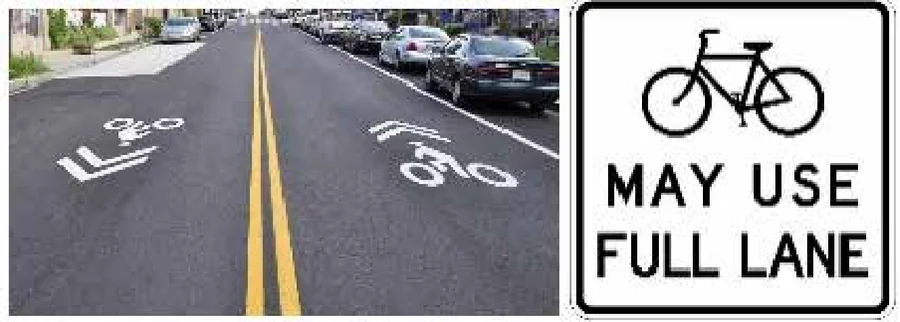
You've parallel parked on a street with a sharrow. Before opening your door, reach for the handle with your right hand. That turns your body so you can check the mirror and look back for an approaching cyclist.
Check your understanding
Read the question, decide on an answer, then open it to check the explanation. These are Roadwise study questions based on the source handbook.
When exiting a parked car near a bicycle lane, you should reach for the door handle with your:
hand nearest the door
either hand; it makes no difference
both hands, while watching the mirror
hand farther from the door
Answer: hand farther from the door
Reaching across forces a shoulder check for approaching cyclists.