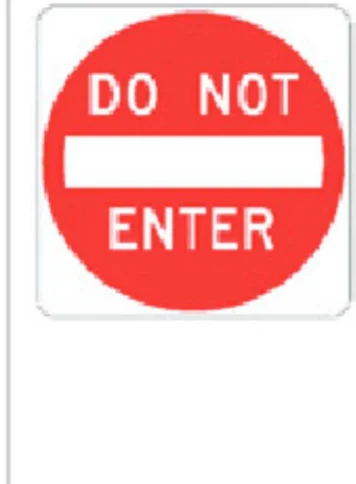
Do not enter
Entry is prohibited in this direction.
What to do: Do not enter; find another route or direction of travel.
Shape: square · Color: red
Handbook p. 30 ↗Georgia road signs
Explore 62 signs and driving illustrations from this course’s handbook edition. Each entry pairs the image with its meaning and a practical action. Use your browser’s Find command to look up a name or a word from a meaning.
Notice the shape and color before reading a sign’s words or symbol. Then connect its meaning with what you should do: stop, yield, adjust your speed, choose a lane, or prepare for a hazard. Signals, markings, and diagrams are included where the handbook uses them to explain a driving rule.
Use the source page link for the surrounding rule. Some illustrations show a complete road situation rather than a standalone roadside sign.
62 entries. Sign images and page references belong to the handbook edition used for the Georgia course.
Entry is prohibited in this direction.
What to do: Do not enter; find another route or direction of travel.
Shape: square · Color: red
Handbook p. 30 ↗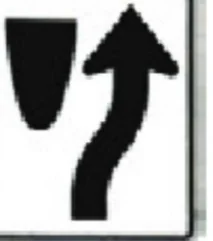
Directs traffic to pass to the right of an obstruction or median.
What to do: Keep to the right of the marked island, median, or obstruction.
Shape: rectangle vertical · Color: white
Handbook p. 30 ↗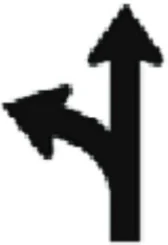
Marks a lane that may go straight or turn left.
What to do: Use this lane only to continue straight or turn left.
Shape: rectangle vertical · Color: white
Handbook p. 35 ↗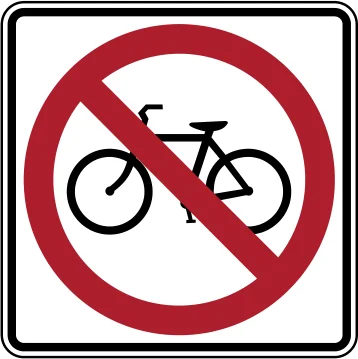
Bicycles are not allowed on this roadway.
What to do: Do not ride a bicycle here; use an alternate route.
Shape: square · Color: white
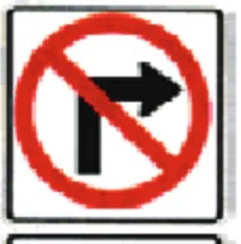
Right turns are prohibited at this intersection.
What to do: Do not turn right here; continue straight or use another route.
Shape: square · Color: white
Handbook p. 30 ↗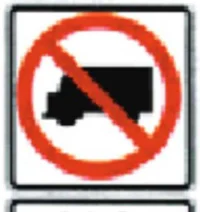
Trucks are prohibited from entering this roadway.
What to do: Do not enter if you are driving a truck; find an alternate route.
Shape: square · Color: white
Handbook p. 30 ↗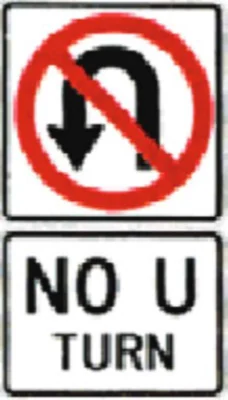
U-turns are prohibited at this location.
What to do: Do not turn around to travel in the opposite direction here.
Shape: square · Color: white
Handbook p. 30 ↗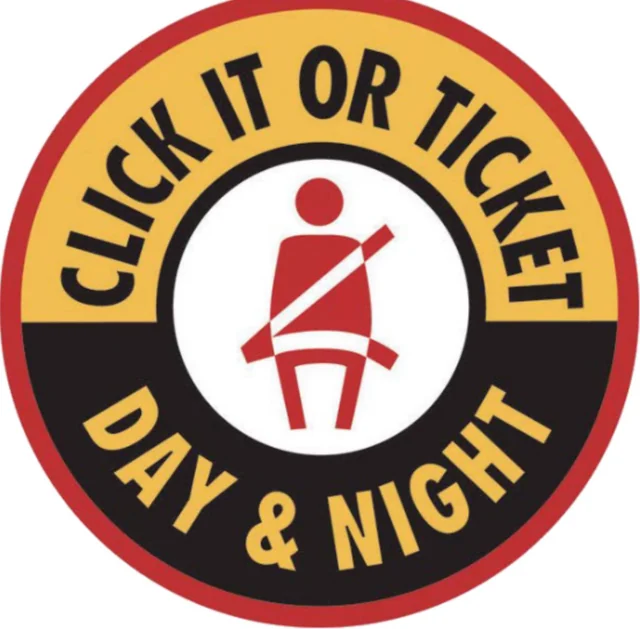
Reminds drivers and passengers that seat belt use is required by law.
What to do: Buckle your seat belt every time you drive or ride, day or night.
Shape: circle · Color: red
Handbook p. 36 ↗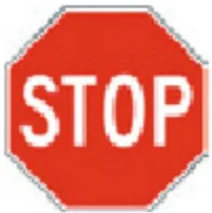
Come to a complete stop.
What to do: Stop fully at the line, crosswalk or intersection edge; go only when safe.
Shape: octagon · Color: red
Handbook p. 20 ↗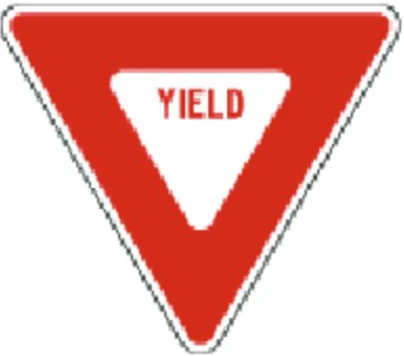
Slow down and let other traffic or pedestrians go first.
What to do: Slow or stop if needed and yield the right-of-way before proceeding.
Shape: triangle · Color: red
Handbook p. 29 ↗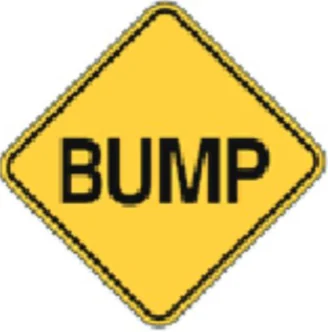
Warns of a raised bump in the road ahead.
What to do: Slow down before reaching the bump in the road.
Shape: diamond · Color: yellow
Handbook p. 31 ↗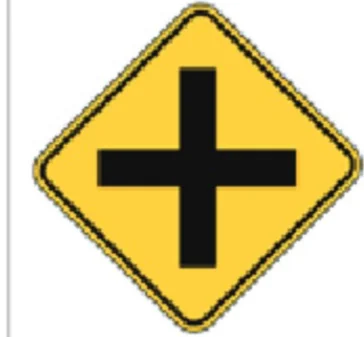
Warns of a four-way intersection ahead.
What to do: Slow down and watch for cross traffic at the intersection.
Shape: diamond · Color: yellow
Handbook p. 31 ↗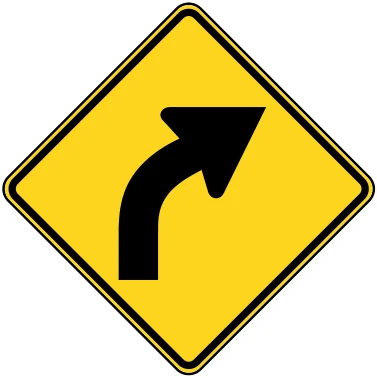
Road curves to the right ahead.
What to do: Slow down and steer smoothly through the right curve.
Shape: diamond · Color: yellow
Handbook p. 31 ↗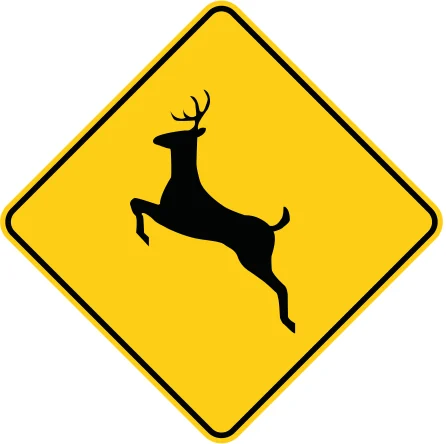
Deer may cross the road in this area.
What to do: Slow down and watch for deer, especially at dawn or dusk.
Shape: diamond · Color: yellow
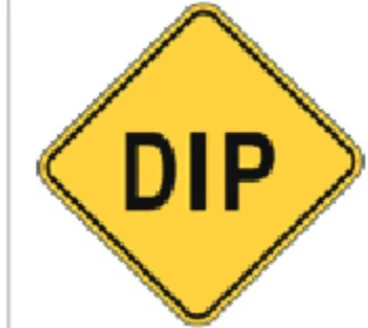
Warns of a low dip in the road ahead.
What to do: Slow down before reaching the dip in the road.
Shape: diamond · Color: yellow
Handbook p. 31 ↗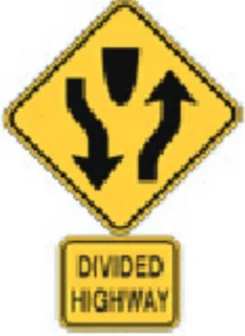
Warns that a divided highway with a median begins ahead.
What to do: Prepare to move to your side of the median as the highway divides.
Shape: diamond · Color: yellow
Handbook p. 31 ↗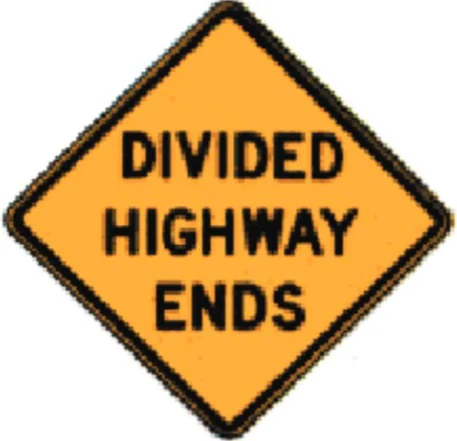
Warns that the divided highway is about to become a single roadway.
What to do: Prepare to share the roadway with oncoming traffic as the median ends.
Shape: diamond · Color: yellow
Handbook p. 29 ↗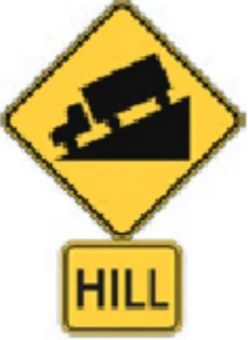
Warns of a steep downhill grade ahead.
What to do: Slow down and shift to a lower gear before the steep hill.
Shape: diamond · Color: yellow
Handbook p. 31 ↗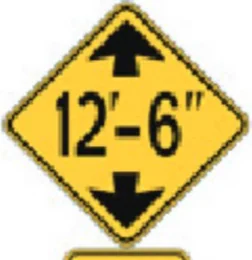
Warns of a low overhead clearance ahead.
What to do: Do not proceed if your vehicle is taller than the posted clearance.
Shape: diamond · Color: yellow
Handbook p. 31 ↗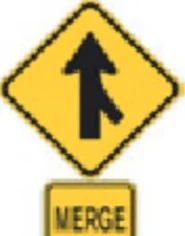
Warns that traffic from another lane will merge ahead.
What to do: Adjust speed and position to safely allow merging traffic.
Shape: diamond · Color: yellow
Handbook p. 32 ↗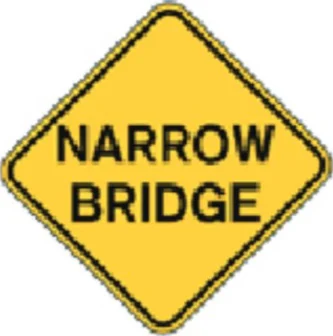
Warns that the bridge ahead has room for only two lanes.
What to do: Slow down and approach the narrow bridge with caution.
Shape: diamond · Color: yellow
Handbook p. 31 ↗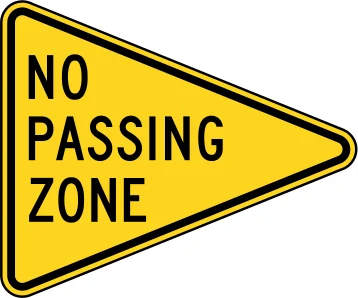
Marks the start of a section where passing is not allowed.
What to do: Do not pass other vehicles until you are past the no-passing zone.
Shape: pennant · Color: yellow
Handbook p. 32 ↗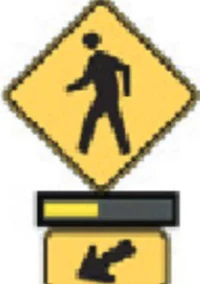
Warns of a pedestrian crossing in the direction shown.
What to do: Slow down and yield to pedestrians crossing the road.
Shape: diamond · Color: yellow
Handbook p. 32 ↗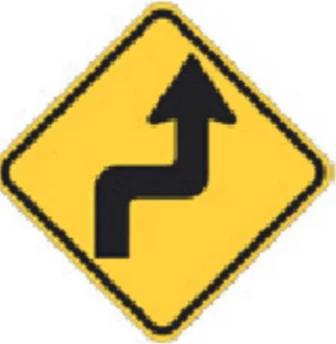
Road curves right then left ahead.
What to do: Slow down and steer carefully through both curves.
Shape: diamond · Color: yellow
Handbook p. 31 ↗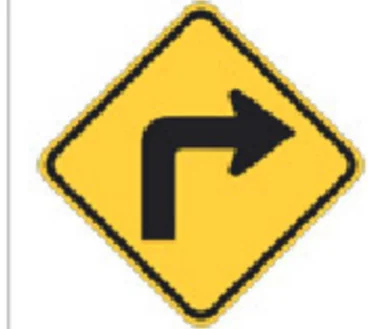
Warns of a sharp right turn ahead.
What to do: Slow down significantly before entering the sharp right turn.
Shape: diamond · Color: yellow
Handbook p. 31 ↗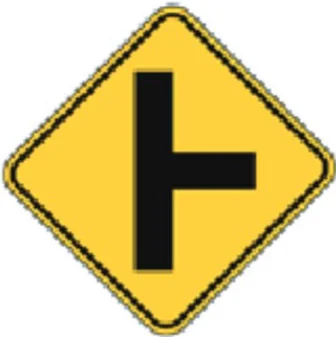
Warns that a side road joins from the right ahead.
What to do: Watch for vehicles entering from the side road on the right.
Shape: diamond · Color: yellow
Handbook p. 31 ↗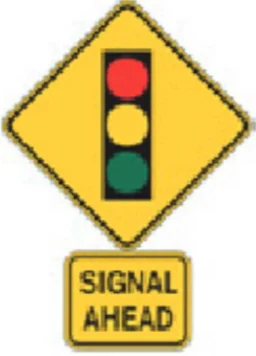
Warns of a traffic signal at the intersection ahead.
What to do: Slow down and be ready to stop for the signal ahead.
Shape: diamond · Color: yellow
Handbook p. 32 ↗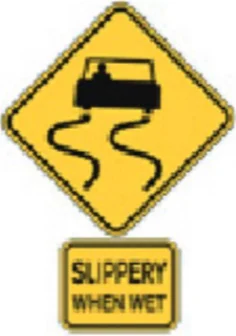
Warns that the road surface is slippery when wet.
What to do: Slow down and increase following distance in wet conditions.
Shape: diamond · Color: yellow
Handbook p. 32 ↗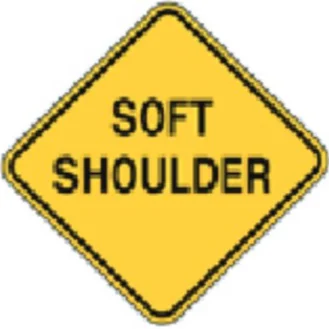
Warns that the road shoulder is soft and may not support vehicle weight.
What to do: Avoid driving onto the shoulder except in an emergency.
Shape: diamond · Color: yellow
Handbook p. 31 ↗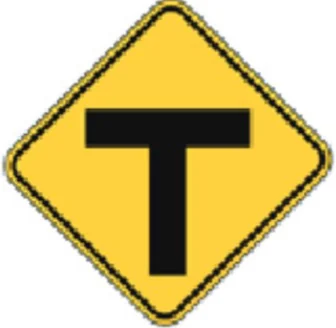
Warns that the road ends ahead at a T-shaped intersection.
What to do: Slow down and prepare to turn left or right at the T intersection.
Shape: diamond · Color: yellow
Handbook p. 31 ↗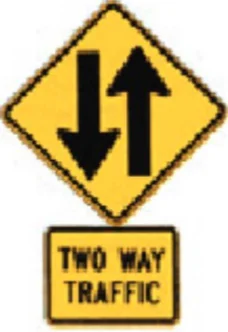
Warns that you are entering a two-way traffic roadway.
What to do: Stay in your lane and watch for oncoming traffic.
Shape: diamond · Color: yellow
Handbook p. 31 ↗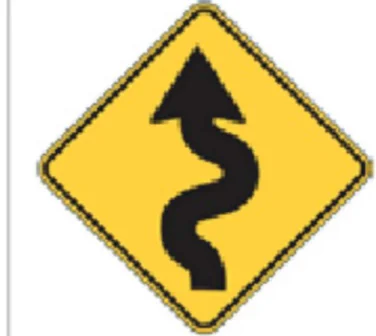
Warns of a series of curves ahead.
What to do: Slow down and be prepared for multiple curves in the road.
Shape: diamond · Color: yellow
Handbook p. 31 ↗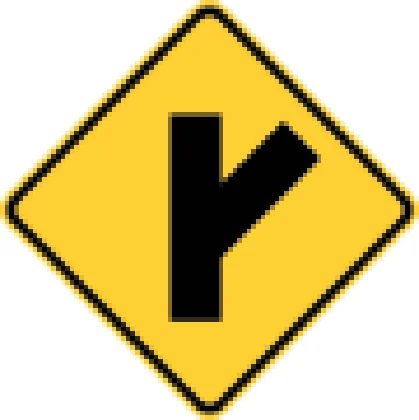
The road ahead forks into a Y-shaped intersection.
What to do: Slow down and choose the correct branch of the fork.
Shape: diamond · Color: yellow
Handbook p. 31 ↗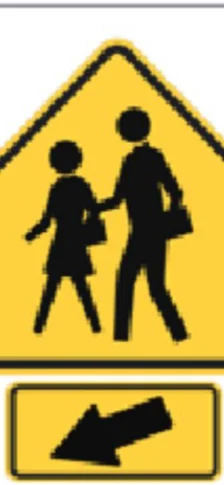
Warns of a pedestrian school crossing ahead in the pointed direction.
What to do: Slow down and watch for children crossing in the direction shown.
Shape: pentagon · Color: yellow
Handbook p. 29 ↗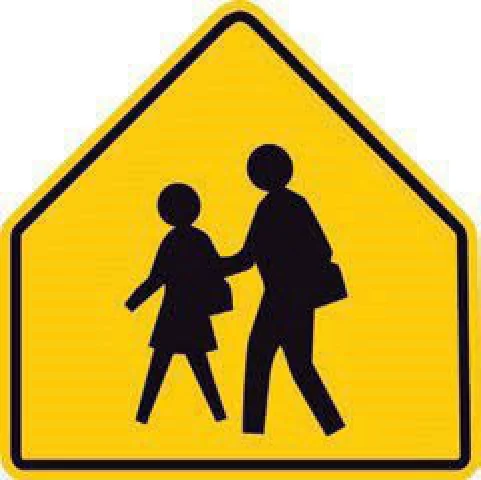
You are approaching a school area or crossing.
What to do: Slow down, watch for children, and be ready to stop.
Shape: pentagon · Color: yellow
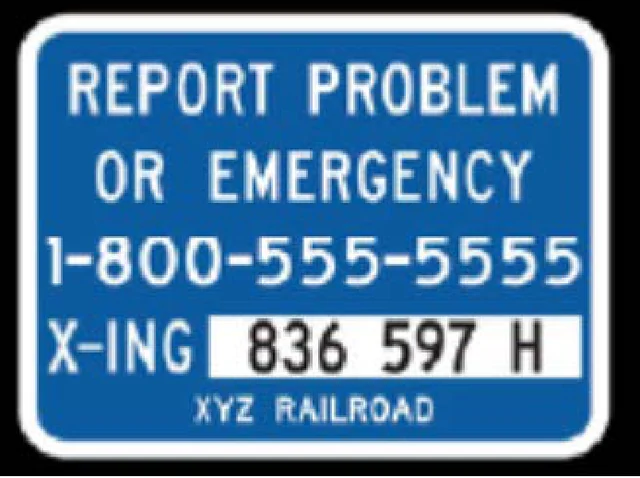
Provides a phone number to report a problem at this railroad crossing.
What to do: Call the posted number to report a stalled vehicle or crossing equipment problem.
Shape: rectangle horizontal · Color: blue
Handbook p. 22 ↗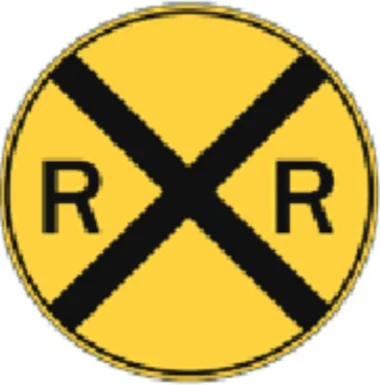
Marks a railroad crossing; trains have the right-of-way.
What to do: Slow down, look both ways, and stop if a train is approaching.
Shape: crossbuck · Color: white
Handbook p. 29 ↗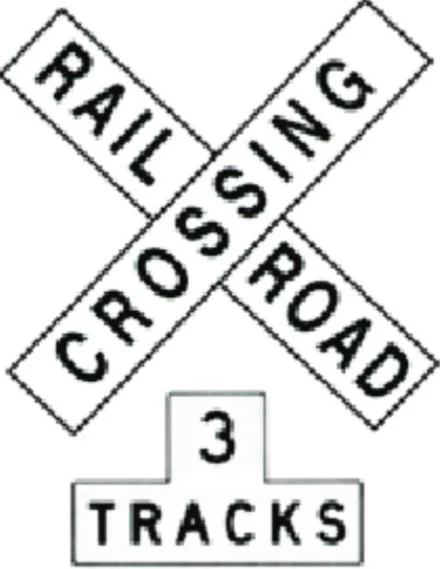
Marks a railroad crossing with multiple tracks.
What to do: Slow down, look both ways for trains on each track, and stop if needed.
Shape: crossbuck · Color: white
Handbook p. 33 ↗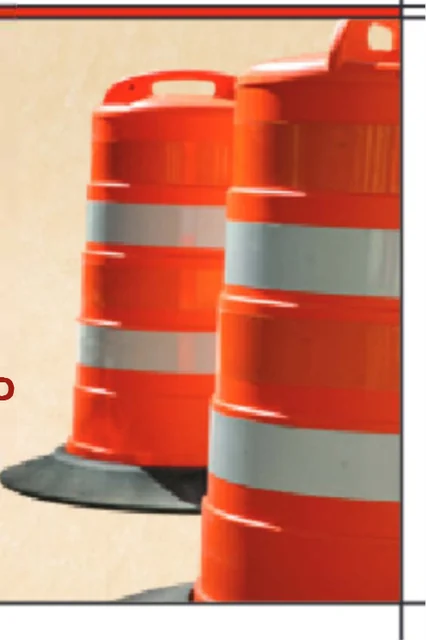
Orange drum used to channel traffic away from a hazard or work area.
What to do: Do not drive between or strike the drums; stay within the marked lane path.
Shape: other · Color: orange
Handbook p. 23 ↗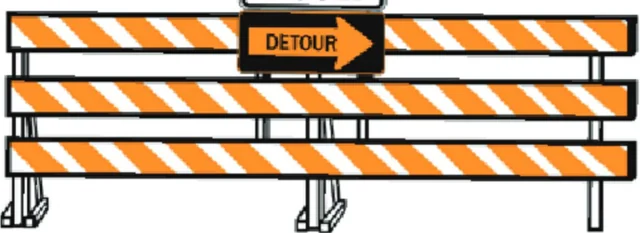
Striped barricade with a detour sign blocking the closed roadway.
What to do: Do not pass the barricade; follow the posted detour route.
Shape: other · Color: orange
Handbook p. 34 ↗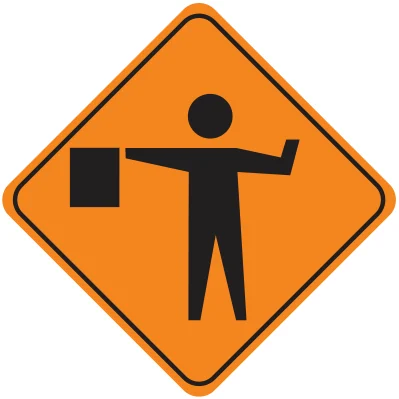
A worker will direct traffic ahead.
What to do: Slow down and be ready to stop or follow the flagger's directions.
Shape: diamond · Color: orange
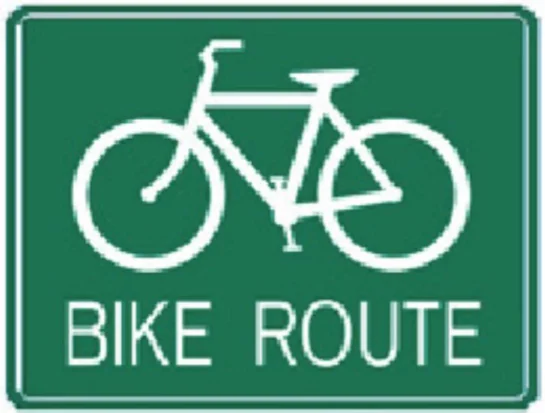
Marks an officially designated bicycle route.
What to do: Watch for bicyclists while traveling on this route.
Shape: rectangle vertical · Color: green
Handbook p. 33 ↗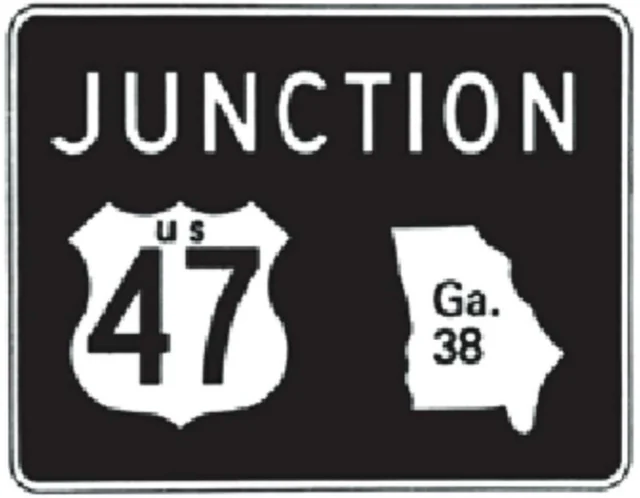
Marks where two numbered routes cross or meet ahead.
What to do: Watch for the junction and choose lanes for your intended route.
Shape: rectangle horizontal · Color: black
Handbook p. 33 ↗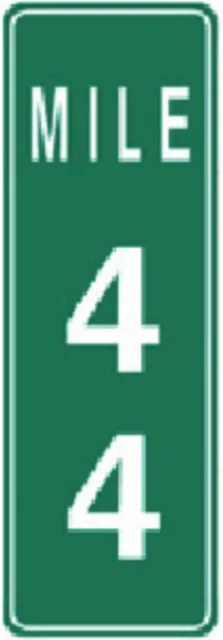
Shows the distance in miles along the highway.
What to do: Use the marker to note your location or report it in an emergency.
Shape: rectangle vertical · Color: green
Handbook p. 33 ↗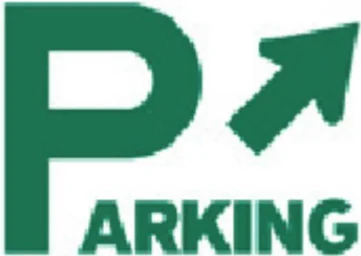
Directs drivers to a public parking area in the arrow's direction.
What to do: Follow the arrow to reach the parking area.
Shape: rectangle vertical · Color: green
Handbook p. 33 ↗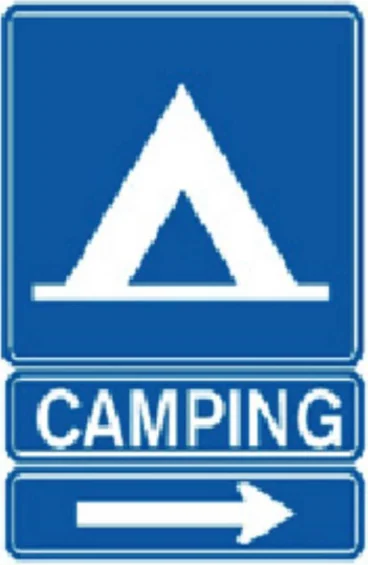
Directs drivers to a camping area in the arrow's direction.
What to do: Follow the arrow to reach the campground.
Shape: rectangle vertical · Color: blue
Handbook p. 34 ↗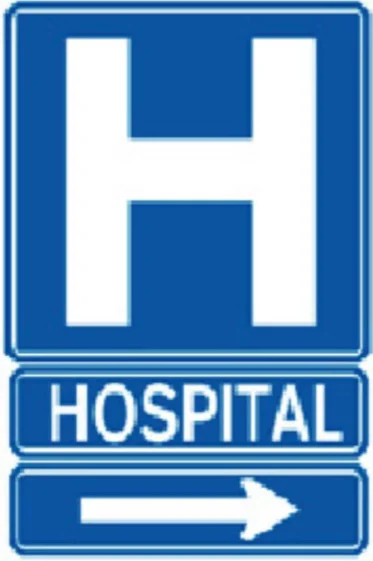
Directs drivers to a hospital in the arrow's direction.
What to do: Follow the arrow to reach the hospital.
Shape: rectangle vertical · Color: blue
Handbook p. 34 ↗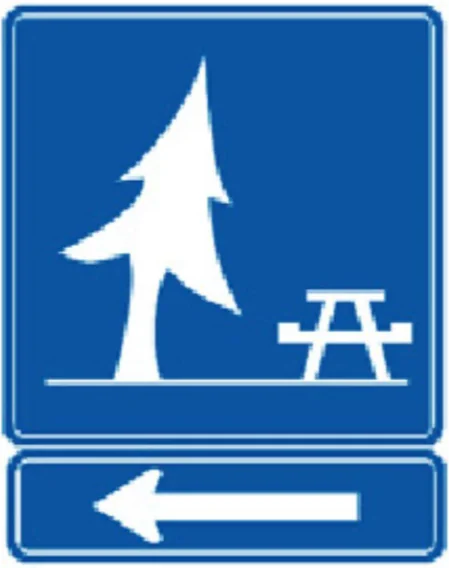
Directs drivers to a recreational area in the arrow's direction.
What to do: Follow the arrow to reach the recreational area.
Shape: rectangle vertical · Color: blue
Handbook p. 34 ↗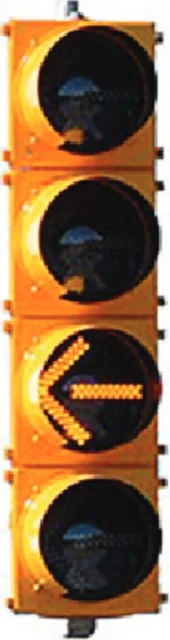
A lit yellow arrow permits a cautious turn after yielding.
What to do: Yield to oncoming traffic and pedestrians before completing the turn.
Shape: n/a · Color: n/a
Handbook p. 35 ↗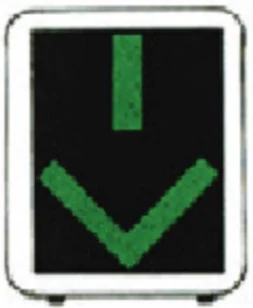
A lit green arrow shows the lane below is open to travel.
What to do: You may travel in a lane marked with a green arrow.
Shape: n/a · Color: n/a
Handbook p. 35 ↗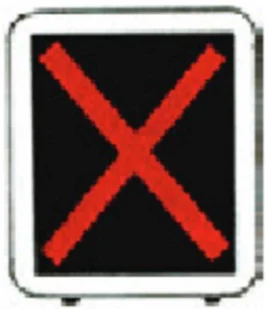
A red X shows the lane below is closed to travel.
What to do: Do not drive in a lane marked with a red X; use another lane.
Shape: n/a · Color: n/a
Handbook p. 35 ↗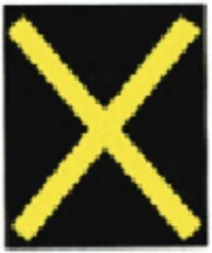
A lit X shows the lane below must be cleared.
What to do: Do not drive in a lane marked with an X; move to another lane.
Shape: n/a · Color: n/a
Handbook p. 35 ↗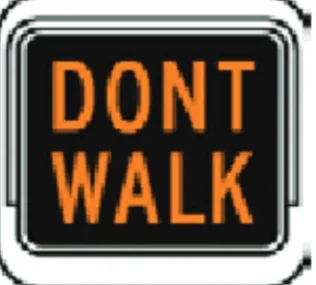
Tells pedestrians not to start crossing the street.
What to do: As a driver, do not assume pedestrians will yield; still watch for stragglers.
Shape: n/a · Color: n/a
Handbook p. 35 ↗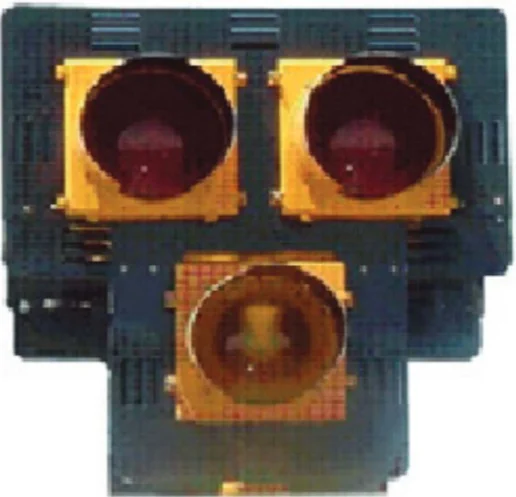
The beacon stays dark and off until a pedestrian activates it.
What to do: Proceed normally; the beacon is inactive until a pedestrian presses the button.
Shape: n/a · Color: n/a
Handbook p. 36 ↗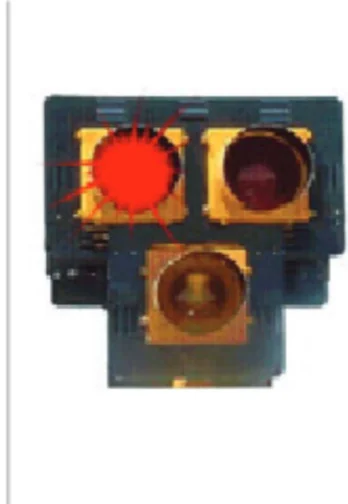
Alternating flashing red means stop, then proceed when clear.
What to do: Stop completely, then proceed when pedestrians have cleared your lane.
Shape: n/a · Color: n/a
Handbook p. 36 ↗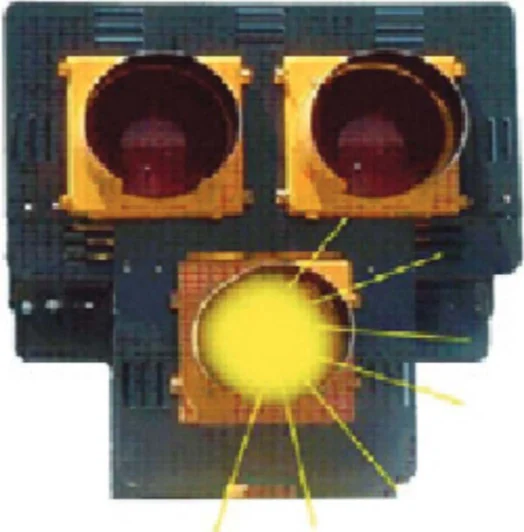
Flashing yellow warns that the beacon has just been activated.
What to do: Slow down and prepare to stop; a pedestrian may be crossing ahead.
Shape: n/a · Color: n/a
Handbook p. 36 ↗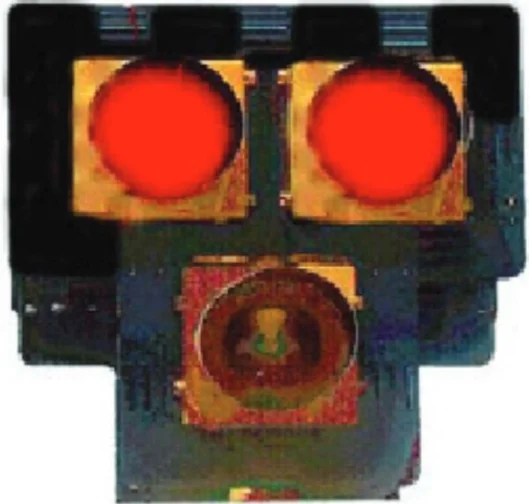
Solid red on the beacon requires drivers to stop completely.
What to do: Stop completely and remain stopped while the red lights are solid.
Shape: n/a · Color: n/a
Handbook p. 36 ↗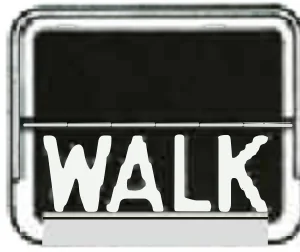
Tells pedestrians it is safe to begin crossing.
What to do: As a driver, yield to pedestrians who are crossing on the WALK signal.
Shape: n/a · Color: n/a
Handbook p. 35 ↗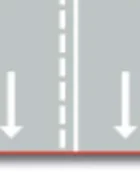
Separates lanes traveling in the same direction.
What to do: You may cross a broken white line to change lanes when safe.
Shape: n/a · Color: n/a
Handbook p. 37 ↗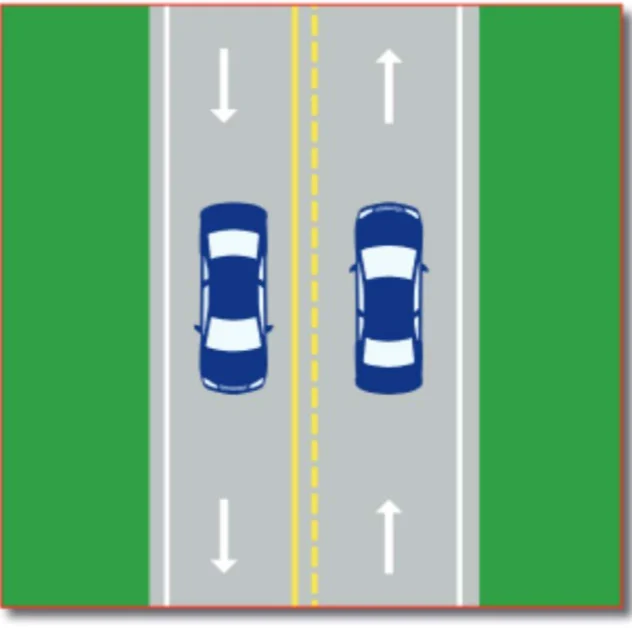
Separates two-way traffic and allows passing when clear.
What to do: Stay right of the line; you may cross it to pass when it is safe.
Shape: n/a · Color: n/a
Handbook p. 37 ↗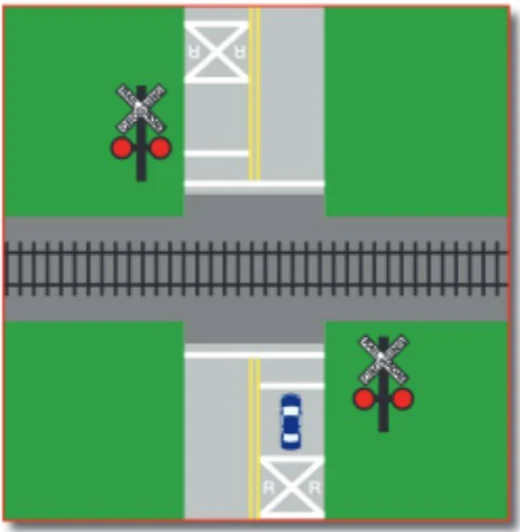
Marks the roadway approaching a railroad crossing.
What to do: Slow down, look and listen for trains, and never stop on the tracks.
Shape: n/a · Color: n/a
Handbook p. 37 ↗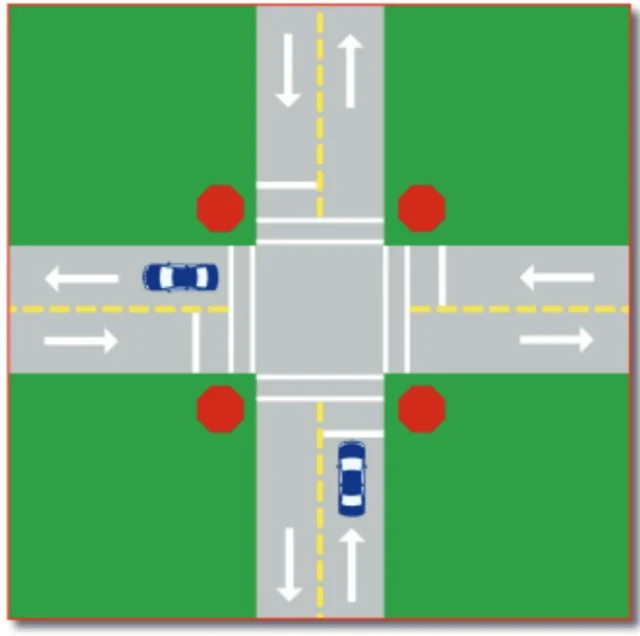
Marks the point where you must stop for a sign or signal.
What to do: Stop with the front of your vehicle behind the painted stop line.
Shape: n/a · Color: n/a
Handbook p. 37 ↗