A 4-minute lesson from the Connecticut course. Read the rules and examples, follow the handbook page references, and check your understanding before you move on.
How safely you can drive starts with the vehicle. It's your duty to make sure the car you drive is safe: a car in bad shape can break down, cause a crash, or fail you in an emergency. A few simple checks prevent most trouble.
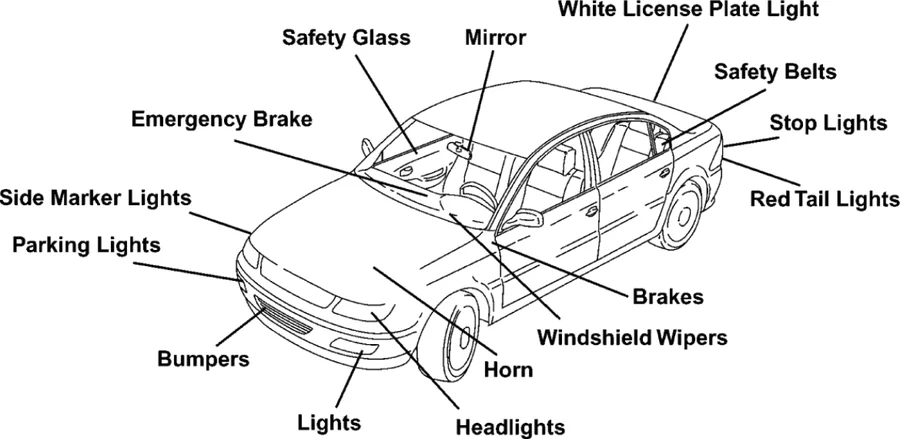
Equipment to check: lights, brakes, wipers, horn, mirrors, safety belts and glass
Have a mechanic check your brakes if:
They don't seem to be working properly
They make a lot of noise or give off an unusual odor
Check turn signals, brake lights, taillights and headlights from outside the vehicle. An out-of-line headlight can blind other drivers; if you have trouble seeing at night or others often flash their lights at you, have the headlights checked.
Clear snow, ice and frost from all windows before driving. Replace wiper blades that don't clear water well, keep the washer bottle full, clean the inside of the glass, and replace a damaged windshield.
Worn or bald tires increase stopping distance, make turning harder on wet roads, increase hydroplaning, and raise the chance of a flat. Unbalanced tires and low pressure cause faster wear, lower fuel economy, and make steering and stopping harder.
Find the recommended tire pressure (psi) in the owner's manual or on the driver's side door jamb, and check it with a tire pressure gauge. Check tires for wear and damage once every month or before a long trip.
Exhaust leaks can kill people inside a vehicle in a very short time. Never run the motor in a closed garage, and open a window if you sit in a running vehicle for a long time. Many leaks can't be heard, so have the exhaust checked periodically.
Burning fuel releases carbon dioxide (CO2), which the EPA says contributes to climate change. Buy smart (research emissions and fuel economy) and drive smart to improve fuel efficiency.
When you press the brake, your car drifts to the right and the pedal feels soft. That signals a problem in the braking system — have a mechanic check it before driving further.
Check your understanding
Read the question, decide on an answer, then open it to check the explanation. These are Roadwise study questions based on the source handbook.
A driver's vehicle pulls to one side when the brake is applied. What does this suggest?
Worn suspension shocks
An exhaust system leak
Normal tire wear that can be ignored
A braking problem needing service
Answer: A braking problem needing service
If the vehicle pulls to one side when braking, this indicates a braking system problem that should be serviced.