Roadwise States Arizona Driving lessons Lane lines: yellow and white Arizona driving lesson · Speed Limits, Signs & Markings
Lane lines: yellow and white A 3-minute lesson from the Arizona course. Read the rules and examples, follow the handbook page references, and check your understanding before you move on.
Read time 3 minutes
Course unit Speed Limits, Signs & Markings
Checkpoint questions 6
Source pages 44, 45, 46 Pavement markings guide, warn and regulate. Color is the first clue: yellow lines separate traffic going in opposite directions; white lines separate lanes going the same way and mark road edges, stop lines and crosswalks. Solid means restricted; broken means you may cross with care.
Know the rule
Yellow center lines mean two-way traffic, flowing in both directions.
Handbook p. 45 ↗ Know the rule
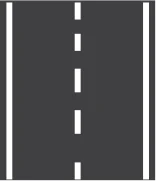
White lines separate same-direction lanes and mark the edge of the roadway, stop lines and pedestrian crosswalks.
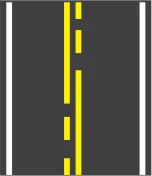
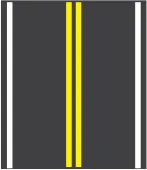
Handbook p. 45 ↗ Broken yellow center line Solid and broken yellow lines Double solid yellow lines Know the rule
When passing across a broken yellow line you face oncoming traffic — overtake and pass with extreme caution.
Handbook p. 45 ↗ Broken white lane lines Know the rule
You may cross a solid white line when merging into and out of the HOV lane.
Handbook p. 46 ↗ Know the rule
Single yellow lines may also mark the left edge of the pavement on divided highways and one-way streets.
Handbook p. 46 ↗ Put it into practice
You're on a two-lane road. The line on your side is solid yellow; the other side's is broken. Oncoming drivers may pass — you may not.
A useful reminder Yellow = opposite directions; white = same direction. The line nearest you decides whether you can pass.
Check your understanding Read the question, decide on an answer, then open it to check the explanation. These are Roadwise study questions based on the source handbook.
What does a yellow center line generally indicate about the roadway? One-way traffic only Lanes moving the same direction The right edge of the roadway Two-way traffic flowing in both directions Answer: Two-way traffic flowing in both directions
Yellow center lines indicate two-way traffic flowing in both directions.
Handbook p. 44 ↗ What does a broken yellow line generally allow, when the roadway ahead is clear? No passing under any condition Lane changes in the same direction only Passing on the left Passing on the right only Answer: Passing on the left
Broken yellow lines indicate that passing on the left is permitted when the roadway is clear.
Handbook p. 45 ↗ If you see a broken yellow line on your side paired with a solid yellow line on the other side, what does that mean for you? You are on a one-way street You may pass when the way is clear You may never pass You must always yield to oncoming traffic Answer: You may pass when the way is clear
If the broken yellow line is on your side, you may pass when it's clear; the solid line side may not pass.
Handbook p. 45 ↗ What do double solid yellow lines mean? No passing in either direction Passing is allowed in both directions The road is one-way Passing allowed with extra caution Answer: No passing in either direction
Double solid yellow lines mean passing is not allowed in either direction, except to turn left.
Handbook p. 45 ↗ A double solid white line separating two lanes going the same direction means what? Crossing it is allowed with caution It marks a bicycle lane It marks a bus-only lane Crossing it is prohibited Answer: Crossing it is prohibited
Crossing a double solid white line is prohibited.
Handbook p. 46 ↗ Broken yellow lines separate lanes of traffic moving in the same direction. True False Answer: False
False. Broken white lines separate lanes going in the same direction; broken yellow lines separate traffic going in opposite directions.
Handbook p. 45 ↗ Previous lesson Work zones Next lesson Curb colors, lane arrows & special lanes More in Speed Limits, Signs & Markings About the source Roadwise’s Arizona course uses the driver handbook edition supplied with this study pack. This lesson cites source pages 44, 45, 46. The linked PDF is a third-party mirror of the handbook, rather than a government-hosted page.
Open the handbook source PDF · View the source edition
For current application requirements, fees, appointments, and the format that applies to your age or license type, check Arizona’s MVD. Roadwise provides study material and does not issue permits or licenses.